I tried a last-minute holiday that costs less than a single day at a British spa. Malta enjoys more than 300 days of sunshine a year, and I spent three days there on a spontaneous solo trip — quickly discovering it's one of Europe's best-value breaks, combining history, beaches and walkable city life for around £295 in total.
The Value of a Maltese Escape
A spa day in the UK can effortlessly drain £150 from your wallet before you've so much as glanced at the lunch menu. So when I found myself nursing a coffee in a grand Maltese square at one of Europe's most ancient cafés, watching the morning light shimmer off golden limestone buildings after a £40 flight from London, I couldn't shake the feeling that I'd uncovered one of Europe's most outstanding-value city breaks.
Malta has long held a special place in the hearts of British holidaymakers. Yet somehow it remains slightly under the radar when weekend getaways come up in conversation. Everyone raves about Lisbon, Barcelona and Rome. Meanwhile, nestled in the heart of the Mediterranean, Malta quietly basks in over 300 days of sunshine annually, making it one of the sunniest destinations on the continent.

I spent three days there on a spontaneous solo adventure and swiftly discovered that Malta has mastered something many destinations simply haven't. It seamlessly blends a city break, a beach retreat and a history lesson into one, without demanding military-precision holiday planning.
Compact and Walkable
The first thing that works in Malta's favour is its compact size. This isn't somewhere you'll squander half your trip squinting at Google Maps, debating whether a mildly underwhelming mural warrants a 45-minute metro ride and a meltdown in the sweltering heat. Most attractions are conveniently situated near one another. The capital, Valletta, is gloriously navigable on foot.
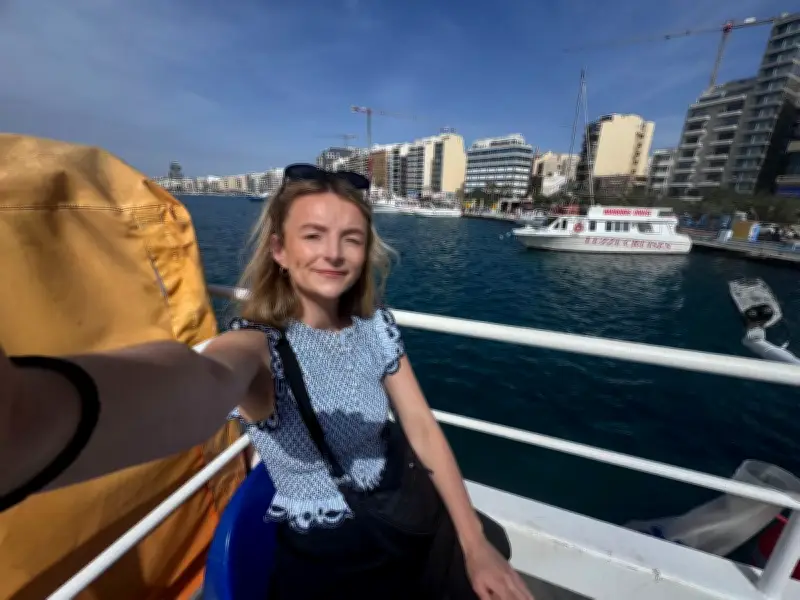
If you base yourself in neighbouring Sliema, as I did at the Preluna Hotel (roughly £200 for two nights, which includes access to its private beach club), lodging is frequently more affordable than within the capital city. And the brief ferry journey to Valletta costs merely a few euros.
Free and Historic Sights
Numerous attractions are free of charge. The Upper Barrakka Gardens provide some of the most spectacular vistas in the Mediterranean. Below, spectators assemble for the Saluting Battery (daily at 12pm and 4pm) where cannons are still discharged in a custom stretching back centuries. Personnel in period costume are tasked with the explosions which serve to announce the hour to everyone. I found it wonderful, though it appears an extraordinarily noisy and theatrical substitute for simply checking your phone. Jokes aside, it is a remarkable custom, though you need only forget it's scheduled once to comprehend why residents still flinch.
You also mustn't overlook the stunning Baroque interior of St John's Co-Cathedral (€15 for adults), a church so extensively adorned in 24-carat gold leaf that it resembles the inside of a heavenly Ferrero Rocher. Meanwhile, the city's thoroughfares do much of the heavy lifting. Elaborate balconies overhang tight alleyways while washing flaps above on lines. It's a deeply touching reminder that although Valletta was constructed by the Knights of St John to protect European civilisation from the Ottoman Empire, your idyllic view of an ancient fortress city is sometimes disrupted by a pair of enormous beige knickers blowing in the breeze.
Locals treat the sea like a public swimming pool that happens to have excellent views. Rocky platforms replace sand. Towels appear. People jump straight into the Mediterranean without the usual British negotiation involving sunbeds, parasols and passive aggressive towel placement. No one seems to be running a system. It works anyway.
British Nostalgia with Superior Weather
Malta occasionally feels like Britain left something behind and never quite bothered to come back for it. The island was part of the British Empire for more than 150 years, and the influence is still visible in ways that feel slightly surreal. English is an official language. Red phone boxes still stand in corners like they are waiting for a call that will never come.

I wandered into the local branch of Marks and Spencer to check on the progress of British civilisation. I can confirm they did not have any picky bits in the Malta store; the traditional British tapas. But they did have tinnies - the traditional fuel for a British explorer. A Monsoon sits nearby. Even a copy of that day's Daily Mirror at the local newsagent's.
Where to Dine
That fusion of influences stretches to the culinary scene. Malta borrows freely from Italy, North Africa and Britain, forging a character entirely its own. One thoroughfare that perfectly encapsulates the ambience is St Lucia Street. During daylight, it's a charming stepped alley. After dark, it becomes one of Valletta's liveliest dining destinations, with tables tumbling down the stone steps like a rather delicious avalanche. I spent my second evening at Taste savouring an Aperol Spritz and a plate of rigatoni, which seemed to accidentally on purpose precede a massive tiramisu (€25 bill).
One of Europe's Most Historic Cafés
For a richer insight into Malta's history, I discovered Caffe Cordina, amongst Europe's most venerable cafés and one of Valletta's most lasting institutions. You'll need to fight the urge to simply drift into the air-conditioned sanctuary of Starbucks just along the street for some whipped cream and remorse. Press on, because you'll be rewarded with an establishment that has spent nearly two centuries serving Maltese society.
The family's tale stretches back to 1837, when their forebears came from Italy and hawked nougat from a donkey cart. They later established a modest shop which was obliterated by a German bomb during the Second World War. However, as current proprietor Luca Cordina revealed to me, that bomb was paradoxically 'the best thing that ever happened to us'. It compelled his grandfather, Cesare, to secure a bank loan, change direction, and set up the café in its present Valletta site in 1944.
It represented an enormous risk. 'My grandfather's friends actually questioned him about the decision, calling him crazy,' Luca recalled, pointing out that the thriving square visible today was merely a garden back then. Yet Cesare had faith in the location when scarcely anyone else did. His reply to the sceptics was straightforward: 'When the sun rises, it warms everyone.'
That warmth has subsequently drawn a remarkable array of visitors, welcoming everyone from Queen Elizabeth II and King Charles to the 1984 Italian national football team. The café commands equal devotion from its workforce as its clientele, with one member of staff reportedly still serving customers at 76 years old. I enjoyed a coffee and a traditional ricotta pastizzi (€5.70 bill) and observed the world pass by - stunning.
The Silent City
My other preferred lunch destination was in Mdina, the former capital and one of the most evocative locations on the island. Fans of Game of Thrones will instantly recognise certain areas. Everyone else will find themselves passing clusters of people absolutely convinced they're standing precisely where something significant occurred and are more than happy to elaborate at length whether you enquired or not.
It's known as the Silent City due to its remarkable tranquillity, which makes a pleasant contrast to London, where the background noise is the constant beeping of a nicked Lime bike. That delightful peace was thoroughly appreciated on the rooftop terrace of the family-owned café - Fontanella Tea Garden - which is integrated into the city wall and provides one of the finest panoramic vistas available (Pizza + coffee totalled €19).
Mdina is entirely surrounded by historic walls to prevent medieval adversaries from gaining entry, though it appears they admit any old visitor these days - particularly if you're wearing shorts and clutching a bottle of Fanta Lemon.
The Verdict
Three days seemed just right. Sufficient time to explore Valletta, Mdina and the shoreline without hurrying. Brief enough that it never descended into monotony. May proved an excellent time to visit - still pleasant, not scorching, and somewhat less crowded.
Malta suits couples or solo travellers best (like myself on this trip!) who appreciate diversity without hassle. You experience history, sea dips, quality cuisine and a pedestrian-friendly city without needing to organise your day around transport arrangements or business hours.
Departing from London, one-way flights can be found for approximately £40. I travelled out from Luton and returned to Gatwick using Avios points through British Airways, which made the homeward journey feel rather satisfying. All told, the entire trip cost less than what many Londoners splash out for a single day at a spa retreat somewhere in the Home Counties.
The Cost Breakdown
- Flight from London to Malta (one-way): £40
- Preluna Hotel, Sliema (2 nights): £200
- St John's Co-Cathedral entry: €15
- Dinner at Taste (Aperol Spritz, rigatoni, tiramisu): €25
- Coffee and ricotta pastizzi at Caffe Cordina: €5.70
- Pizza and coffee at Fontanella Tea Garden: €19
- Sliema–Valletta ferry: €5
- Return flight: Not included (paid using Avios points via British Airways) - would have been about £80
- Approximate combined total: ~£295
Follow Lucy's travels on TikTok and Instagram.