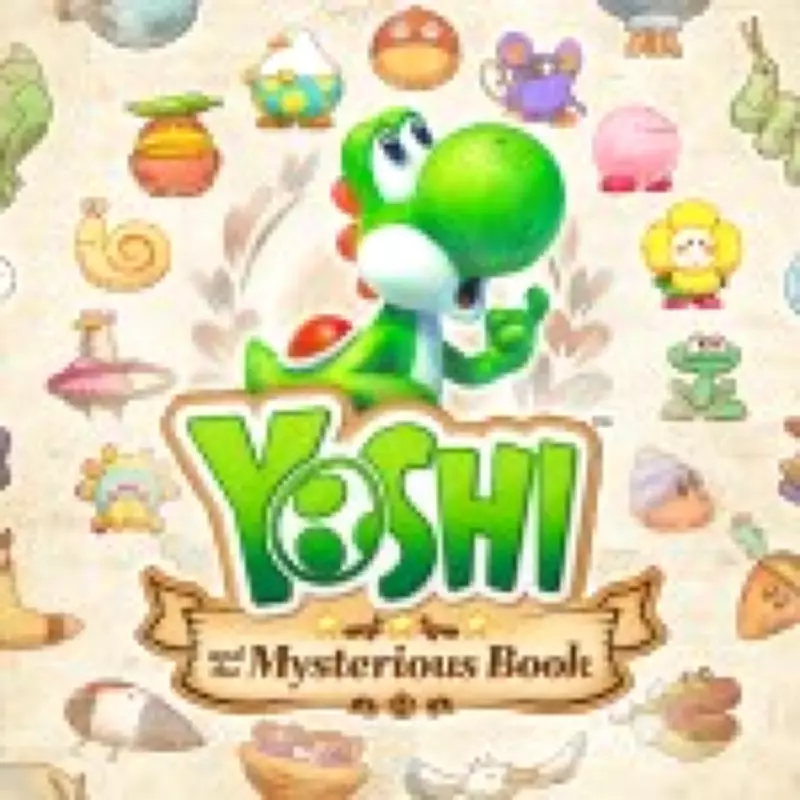
Nintendo's latest Yoshi game, Yoshi and the Mysterious Book, is far more inventive than just another 2D platformer, presenting a menagerie of bizarre new critters that open up fascinatingly unique gameplay experiences. Nintendo truly has an embarrassment of riches when it comes to widely recognizable characters, yet many have been underexploited in terms of standalone games. While Mario and Luigi thrive, Princess Peach has only a few titles to her name, none of which are very good. Donkey Kong, until Bananza, lingered in a limbo of cameos and low-budget spin-offs. Yoshi occupies a similar position: iconic in Super Mario World, but his solo career has been mostly unremarkable, with little consistency in quality or genre, though they tend to be 2D platformers.
First Impressions and High Concept Gimmick
At first glance, The Mysterious Book seems like more of the same, with a high-concept gimmick that could have worked with any character. This holds true for the first couple of hours, as the game struggles to find its footing. However, by the end, it becomes one of the most interesting games Nintendo has published in a while, even if it didn't necessarily need Yoshi. Nintendo is sometimes criticized for too many sequels, but The Mysterious Book proves that recycling characters is a way to sell games that, as new IPs, might struggle to attract interest.
Story and Setting
The story is incredibly contrived but completely unimportant. It involves Bowser Jr. stealing a talking book, which he drops and gets caught inside. The book is an animal encyclopedia with lost information. As one of variously colored Yoshis, you enter environments within the book to study animals and record their habits and abilities. The game is very mellow: Yoshi cannot die, can flutter jump infinitely, and there is little real combat. Each level focuses on a different creature, some familiar like Shy Guys and Goonies, but most are brand new.

Gameplay Mechanics and Creature Interaction
The game is freeform, encouraging you to try various moves on new critters, including eating them, but rarely telling you the overriding goal. It is usually easy to work out organically, and in-game hints are available. No two levels are the same: you might make weird blob monsters spawn into gigantic forms, hatch hula-hooping chickens, or uncover an ancient tablet depicting a slug boomerang's lifecycle. Each level is small, requiring nominal platforming skill. As you progress, you realize each creature offers unique gameplay elements too complex for a straight platformer but allowed to take center stage here. It is essentially a deconstruction of a normal 2D Mario game, where levels are designed around power-ups rather than the player.
Notable Creatures and Abilities
Many critters could be power-ups in other games: a sentient butterfly net, a jellyfish jetpack, and a skate-surfboard combo. Larger enemies can be ridden or controlled, including a giant plant that spits Yoshi out like an egg, two tunnelling creatures, and a giant fish. Others become boss battles where you rescue Bowser Jr. and Kamek. One memorable level is a child-friendly survival horror, stalked by a scythe-wielding, leaf-covered monster. The game only gets more inventive: a Mothra-like hang-glider, a giant poisonous gas cloud, and weird worm things you pull like elastic. Some concepts, like a spider creature where you throw webbing to swing across the screen, could have been the basis for a whole spin-off.
Structure and Content
The game is oddly structured: a boss battle after the sixth world with end credits, then several more worlds with bizarre creatures. Post-game content gets quite tricky, which is welcome. Although there is a primary goal per level, there are dozens of smaller ones involving unexpected uses of creature abilities to uncover hidden areas or items. Peppers or fruits alter creature status, and many have babies hiding around. You can leave and re-enter levels after achieving the main goal to discover more, with platforms out of reach and obstacles that seem interactive—and they always are. The game tempts you to return with ink blot creatures indicating stages of interest and hints before starting.

Visuals and Final Verdict
The graphics are a bit low-tech, not as good as the initial trailer suggested, but overall this is a surprisingly engrossing and inventive game. The sandbox nature could have been expanded with more variety per level, but that is what sequels are for. Unlike most recent Yoshi games, this deserves one.
Review Summary
In Short: A beguiling mix of Nintendo whimsy and sandbox platform gameplay, with more unique ideas than many franchises manage in their entire lifespans.
Pros: Clever mix of traditional 2D platforming and experimental puzzle solving, with surprisingly little hand-holding. Much more content than it first seems and highly imaginative creatures and gameplay gimmicks.
Cons: The game can seem trivial and shallow, especially in early levels. Many ideas could have been expanded further. Mediocre visuals.
Score: 8/10
Formats: Nintendo Switch 2
Price: £49.99
Publisher: Nintendo
Developer: Good-Feel
Release Date: 21st May 2026
Age Rating: 7