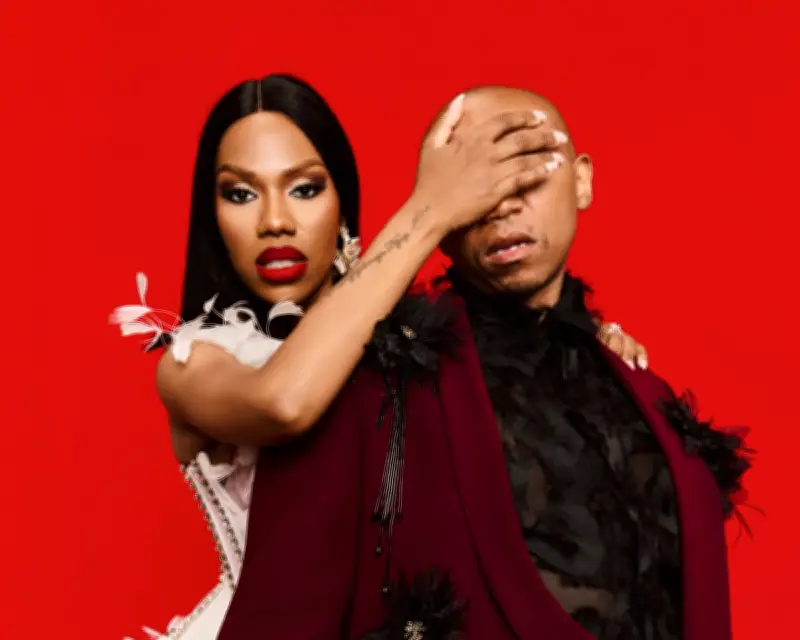
The Polygamist, South Africa's first global Netflix hit, has amassed over 23 million views in its first month, topping streaming charts in Africa and breaking into the global top five non-English series. The show, released in mid-June, has transcended cultural and language barriers, with African and Western celebrities praising it. Its protagonists have become overnight sensations, and the discourse surrounding its twists saturates social media.
A Deeper Look Beyond the Guilty Pleasure
On the surface, The Polygamist appears to be a high-gloss telenovela about infidelity. However, it quickly reveals itself as a profound rumination on tradition versus modernity and the trajectory of the African middle class. The plot centers on Jonasi Gomora (S'dumo Mtshali), a wealthy business tycoon married to social media influencer Joyce (Gugu Gumede), with three children. Jonasi claims multiple women in his orbit, but tension escalates when he seeks several wives and families, not just mistresses.
The predictable catfights over Jonasi are dramatic, with physical altercations and property damage, but the story unfolds into more sophisticated narratives. Jonasi's character is charming, playful, forceful, and persuasive, inspiring devotion despite his behavior. He creates bespoke worlds of attention for each woman, leading them to reluctantly accept polygamy as the best arrangement, preferring his intimate world over independence.

Cultural Tensions and Weaponized Traditions
When Jonasi takes a second wife, the public debate intensifies. Joyce, a public figure, cleverly owns the second marriage, promoting it as an expression of polygamy's generosity rather than humiliation. The portrayal of polygamy is nuanced, teasing out complexities in a postcolonial context. Jonasi asserts his right to polygamy as cultural authenticity, repressed by colonialism, yet he is also manipulative. As actor Mtshali told CNN: “This isn't polygamy, this is dirt.” The series leaves viewers torn between the legitimacy of African marriage rites (polygamy is legal in South Africa) and the cynical weaponization of tradition to excuse disloyalty and misogyny.
Social Mobility and Bourgeois Fetishization
The show transforms into serious dramatic art through flashbacks to Jonasi's childhood in Soweto, a township with high poverty and crime. Young Jonasi uses charm to persuade women to support his escape from poverty, a metaphor for the ravages of rapid social mobility on post-apartheid South Africans. The series lays bare the toxicity of fetishizing bourgeois values: characters squabble over iPhones, expensive alcohol, and Wagyu beef. Yet it also delves into unglamorous aspects like sexually transmitted diseases, emotionally devastated children, and physical abuse. Everyone seems trapped in Jonasi's orbit, suffering higher tithes to hold on to the rainmaker.
Love Amidst the Squallor
Despite the devastation, real love survives—the love Jonasi's wives and families retain for him, and the kindness among them. This is due to blockbuster acting, especially Noluthando Shabalala as Jonasi's daughter Mpume, delivering a tear-jerking portrayal of a young adulthood mangled by Jonasi's cruelty. Beneath the wild outfits and terrible wigs, the actors deliver exceptional performances.
A Pan-African Affair
The Polygamist is a pan-African production, adapted from a novel by Zimbabwean writer Sue Nyathi and directed by Nigerian Akin Omotoso and South Africans Nthabi Tau and Rolie Nikiwe. Strikingly, there are no white characters, no interest in explaining the calamity of townships. This entirely Black and African universe, unconcerned with translating itself to a foreign audience, paradoxically cuts through globally. Through a particular lens, it tells a universal story of how much humans tolerate for love and money.