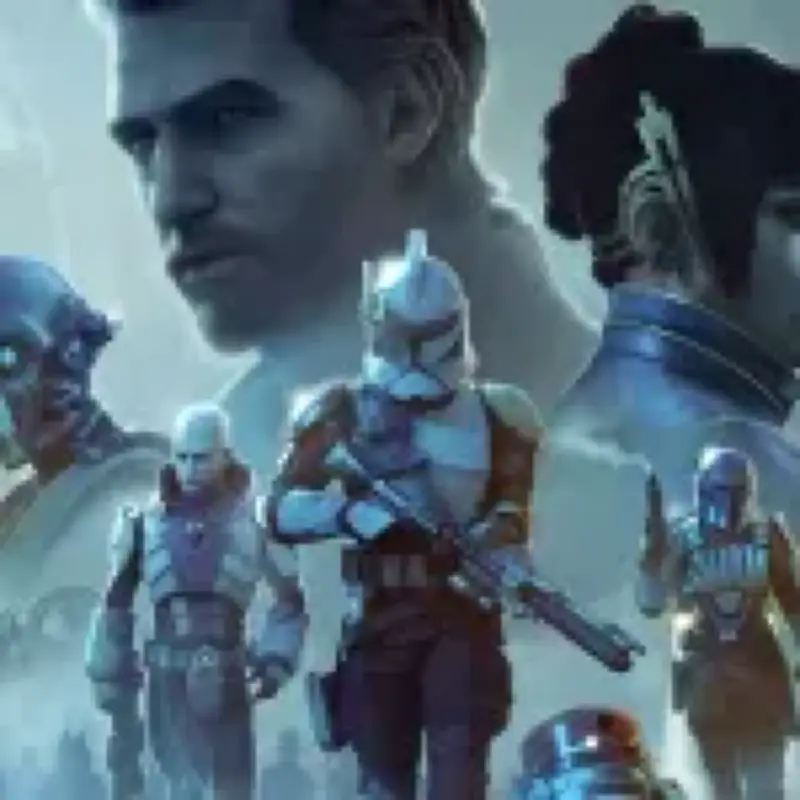
As Star Wars: Zero Company and Star Wars: Galactic Racer prepare for release, a reader argues that the franchise's best games succeed by focusing on a single fantasy rather than trying to include every element of the galaxy far, far away. The temptation to stuff a Star Wars game with Jedi, smugglers, space battles, bounty hunters, Mandalorians, lightsabers, speeders, blasters, cantinas, morality systems, crafting, multiplayer, and dozens of planets often results in a game that forgets to be good.
The Power of Focus in Classic Star Wars Games
TIE Fighter is a prime example. It didn't ask players to explore every corner of the galaxy; it asked them to sit in a cockpit and become proficient at following Imperial orders. Republic Commando avoided Jedi powers, open worlds, and morality meters, instead letting players be a clone soldier with three squadmates, concentrating on making that relationship work. Jedi: Fallen Order understood that being a Jedi should be the center of the experience, not one system among 20.
The Star Wars license has always contained an almost absurd number of possible games. Lightsabers suggest melee combat, the Force suggests powers and progression, starfighters suggest dogfighting, smugglers suggest stealth and reputation, bounty hunters suggest contracts, droids suggest hacking, and podracing suggests racing. The problem has never been a lack of ideas—it's knowing which ones to leave out.
Outlaws and the Scoundrel Fantasy
Star Wars Outlaws is a recent example that occasionally came close to becoming a giant checklist. It had multiple planets, factions, stealth, shooting, vehicles, cards, contracts, and space combat. But its best moments were when the noise quieted and the game remembered that protagonist Kay Vess was a scoundrel—sneaking into places she shouldn't be, taking jobs from criminal syndicates, and walking into cantinas. Those moments worked because they were specific, fulfilling one fantasy rather than all of them.
The difference between giving players things to do and giving them a role to inhabit becomes more important as games grow larger. An enormous map doesn't automatically make you feel like a smuggler; 20 upgrade trees don't automatically make you feel like a Jedi; a hundred side quests don't automatically make you care about the galaxy. Sometimes one good idea is worth more than ten adequate ones.
Zero Company and Galactic Racer Embrace Restraint
Star Wars: Zero Company, with its XCOM-like approach, is almost an act of restraint by modern Star Wars standards. It focuses on a small team, tactical decisions, and relationships between characters, where squadmates can ultimately be lost. The focus is on making a small group of people important enough that you care what happens to them—a harder trick than filling a map with icons.
Similarly, Star Wars: Galactic Racer appears confident about what it wants to be: a racing game first, not a Star Wars simulator with racing attached. The vehicles, handling, racing styles, and builds are the center of the experience. The fantasy is velocity, and that is enough.
The Lesson of Cancelled Projects
Star Wars has a long history of cancelled games that promised enormous things. The recently surfaced Star Wars: Magellan, an ambitious action RPG with Jedi, Mandalorians, loot, multiplayer, and several systems layered together, belongs to a tradition of projects where the ambition was to contain as much Star Wars as possible. That is not necessarily the same as making the best Star Wars game possible.
Smaller concepts remain memorable decades later. X-Wing knew you wanted to fly. Dark Forces knew you wanted a blaster. Republic Commando knew you wanted a squad. Episode I: Racer knew you wanted to go extremely fast while a Tusken Raider attempted to ruin your afternoon. Clarity is powerful.
Scale should come after identity. The question should not be how much Star Wars can fit into a game, but what particular fantasy is being made convincing. If the answer is being a Jedi, build around the lightsaber, the Force, and responsibility. If it's being a smuggler, make crime, risk, and reputation matter. If it's commanding a squad, make every soldier feel important. If it's racing, concentrate on making the corners terrifying.
The future of Star Wars games may depend less on bigger worlds and longer feature lists, and more on developers being willing to say no. No, you cannot do everything. No, you cannot be everyone. No, this game does not contain the entire galaxy. You are a pilot, a soldier, a scoundrel, or a racer—and for the next 20 hours, that is enough.