Forgotten Welsh Reggae Sound Systems: How Cardiff's Black Youth Created Their Own Future
While Wales is traditionally celebrated for rock music and male voice choirs, a remarkable and largely undocumented chapter of its cultural history unfolded in the 1970s. Against a backdrop of racial hostility and social isolation, Cardiff's Black community cultivated one of Britain's most intense dub reggae sound system scenes.
'We Were Cut Off From The Rest Of Mankind'
Growing up Black in 1970s Wales felt profoundly isolating, according to Lawrence "Tylo" Taylor. "There was nothing for young Black people," he recalls. Despite Cardiff hosting one of the UK's oldest Black communities, dating to the 19th century, daily life presented constant challenges. "As children, the police would abuse you, calling you a Black bastard," Tylo says. "There was pure racism in school and you'd be singled out by teachers and belittled. We grew up very disillusioned."
Andrew "Bingham" Binns experienced similar dislocation after moving from London to Cardiff in 1970 at age nine. "It was a culture shock," he remembers. "I didn't even know there was a Wales until I moved here." His perspective transformed after teenage visits to New York, London, and Jamaica. Bingham embraced Rastafarianism as "a defence mechanism" against turbulent times and immersed himself in reggae culture.

The Birth Of Welsh Sound System Culture
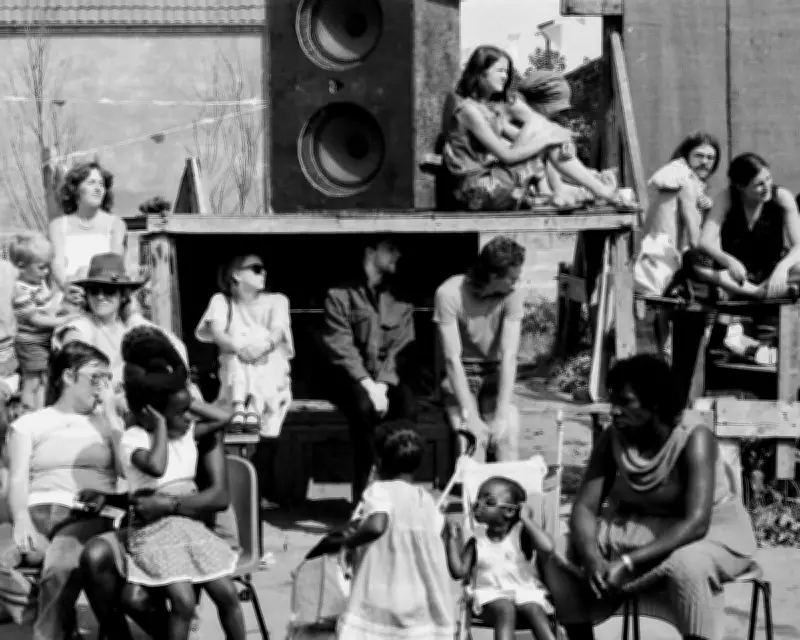
Black International pioneered Cardiff's sound system scene, followed by Conqueror Hi Power Sound System, established by Gilbert Anthony Watt in 1975. Soon after, Tylo and Gary Jemmett launched Countryman, joining crews like Lionheart and Emperor to create a bustling musical ecosystem.
Kervin Julien, who moved from London to Cardiff in the late 1970s and joined Conqueror, notes the scene's distinctive character. "They didn't have many venues or record shops. There was only chart radio, no pirates. No media. No infrastructure. But it created a community and a sense of belonging."
Sound system crews transported their speaker stacks to London, Bristol, Birmingham, Gloucester, and Huddersfield, collecting fresh records while clashing with notable systems nationwide. Their most significant local platform was Cardiff's Butetown carnival during its heyday. "When we played, you didn't have to find out where the carnival was," Bingham says. "You just followed the bassline."
Intense Rivalries And Unforgettable Parties
"There was rivalry," Jemmett acknowledges of Countryman's 1981 debut. "We took them all on and nothing was stopping us." Every crew claimed superior sound quality, with Conqueror making similar assertions. Rivalries sometimes turned destructive. "We had our speaker lockup broken into," Jemmett recalls. "Another time someone snipped the wires while we were playing to cut the sound because the power we were chucking out was unbelievable."
Finding venues required creativity. Jemmett remembers police surrounding them after accidentally tapping power from the lord mayor's house. Another booking placed them at a girl's 18th birthday party. "But they loved us," says Jemmett. "Their DJ blew his speakers trying to match us. It was great, until about 11pm when 80 bikers came in and then it all kicked off."
The Casablanca Club, a Black-owned venue, became a crucial refuge. "We couldn't go to the white clubs in town," explains Eric "Beefy" Howard of Conqueror. "You were limited. And the police would really try and clamp down on what you were doing." Tylo describes it as "a right shithole. A completely decrepit building. It had lights, power and a bar. You were lucky to have a chair. You had to stand up and dance because that's all you could do. But it was good vibes."
Preserving A Disappearing Legacy
Despite playing alongside reggae legends like Aswad, Dennis Brown, and Jimmy Cliff, Cardiff's sound system history risks fading from memory. Historian Ashish Joshi has dedicated years to tracking down audio and video footage. "I'm a Londoner and I grew up collecting tapes, going to dances and carnivals," he explains. "But there's a lot of snobbery, with people thinking there's no sounds outside of London that could test us."

Joshi maintains extensive YouTube and SoundCloud archives of digitized recordings but faces a race against time. "I'm trying to rescue stuff because it's being chucked away," he says. "It's a race against time."
Cardiff researcher Yasmin Begum continues this preservation work locally through dedicated social media platforms. "I grew up with this culture, but I don't see it reflected within galleries, libraries, archives or museums," she observes. Her connection runs deep: her father is a ragga and jungle DJ, while her great-grandmother operated a jazz pub in Tiger Bay, home to Wales's oldest multi-ethnic community.
"I grew up hearing these glorious stories of the bay," Begum says. "And that was in such contrast to my experiences after 9/11 as a Muslim Pakistani child. The stories were a wonderful world to retreat in. But all my elders either died or went to prison – I realised the onus was on me to promote and celebrate the culture."
Cultural Impact And Ongoing Challenges
Sound systems provided purpose for those feeling ostracized. "We were nobodies, we weren't even looked at," Tylo reflects. "We had no future, so we tried to make a future for ourselves. Sound systems were a statement for us to say: you've shunned us for all of your life but, look, we've made it in our own communities."
Cardiff's reputation grew nationally, with crews visiting for clashes and television program Ebony featuring the scene. Local reggae band Bismillah performed on the show in 1984, with singer Benji Webbe later fronting chart-topping metal reggae outfit Skindred. "Without the sound system in Cardiff, I wouldn't be here where I am now in a successful band," Webbe acknowledges. "That was special for me."
Yet hostility persisted. When Julien opened a reggae record shop, "the fruit and veg man from next door came to our window with a hammer," he recalls. "He tapped on it and told us to turn off our monkey music." Later, when starting a radio station promoting Black and Brown music, Julien received hate mail from racist group Combat 18 containing dog feces and razor blades.
A Fragile Legacy
By the early 1990s, as dance music and jungle emerged, the scene transformed. Conqueror disbanded, Butetown carnival paused for 16 years, and the Casablanca Club closed. "Since the club closed, everybody's scattered and some people have gone sideways," Bingham observes. "What was a bona fide dreadlock man is now a crackhead. Because when the club closed, there was no way for us to link up."
While Countryman continues operating and Butetown carnival has revived, many feel institutions should better celebrate this cultural heritage. "I can't wait for Welsh institutions to see value in reggae culture and for Black cultural archives to make a Black Wales collection," Begum says.
Bingham highlights disparities in cultural funding: "Look at the hundreds of millions spent on opera houses. All that money to get the acoustics right. They build these big, fancy buildings for posh people, so why can't they build buildings especially for sound systems to continue the culture? Because when you have two clashes going and you kick up a sound ... man, nothing better."
This remarkable story of resilience and creativity demonstrates how marginalized communities built vibrant cultural spaces against formidable odds, creating lasting musical legacies that deserve recognition and preservation.