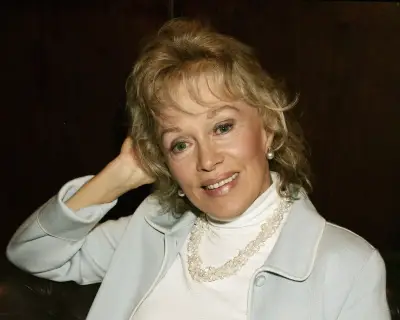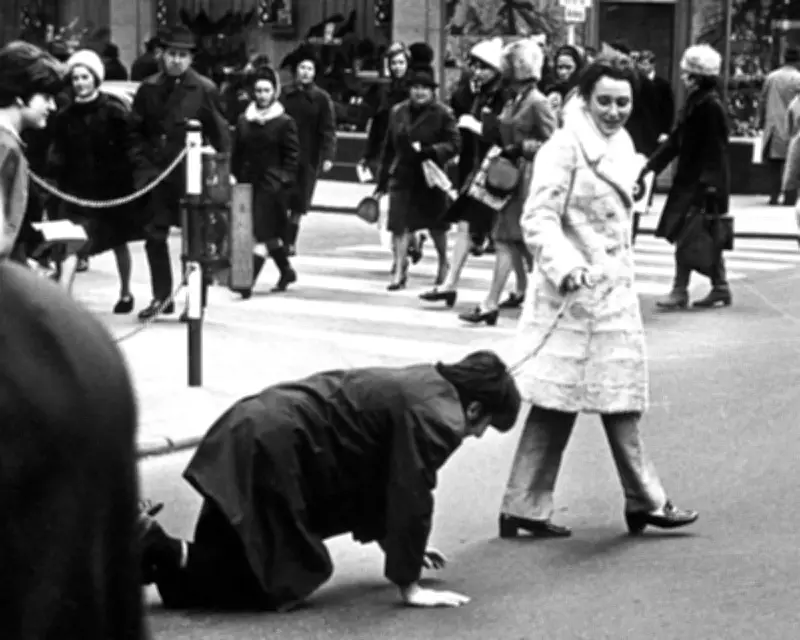
Renowned feminist artist and film-maker Valie Export has died aged 85. A punk, intellectual, feminist, theorist, brave as hell, vulnerable, and funny, Export was a hero to many women. Since the 1960s, she was driven by a fierce conviction that art and media would play an essential role in women’s liberation: that women must picture their own reality in the name of social progress.
A Manifesto for Revolution
In her 1972 manifesto Women’s Art: A Manifesto, Export wrote that women must “use art as a means of expression, so as to influence the consciousness of all of us.” What she demanded was nothing less than revolution. Her work was heavy with explicit threat and pain, making evident the violence of forcing women’s bodies to inhabit structures that were not designed for them.
Early Life and Influences
Export’s father died during the war, and she was sent to a convent with her two sisters while their mother worked as a primary school teacher. The first of her many expulsions came at age 10 when she was discovered exploring the nun’s living quarters. Her experience of girlhood was one of constraint, with little control over her own life. She longed for the self-determination that adulthood seemed to offer. At 18, she escaped her maternal home by getting married, but within a year had a daughter and realized that matrimony was a trap. “I thought: this is not my life, being married and a mother,” she later recalled. She applied for a divorce, left her daughter in temporary care, and moved to Vienna to study.

Becoming VALIE EXPORT
Through the limited options available—wifehood, motherhood, compliant domestic consumerism, or the life of a scandalous divorcee assumed to be sexually available—she came to understand she occupied a world not constructed for her needs. In 1967, aged 27, she swapped her married name Waltraud Höllinger for the moniker VALIE EXPORT, a play on a cigarette brand written in capital letters. It was a decisive rejection of patriarchal structures; she would be known neither by her father’s name nor by her ex-husband’s.
Provocative Performances
Her work was intended to explode the structures containing her—in cinema, art, and wider society. In Action Pants: Genital Panic (1969), she walked along the rows of a Munich art cinema with her exposed pubic region level with punters’ faces and plastered the walls of Vienna with posters of herself in crotchless trousers holding a gun. For Tap and Touch Cinema (1968), she constructed a theatre in a box strapped to her chest, inviting people on the street to reach into the darkness and touch her breasts while she watched them. The documentary of the performance exposes the shifting power dynamic between Export and the men who accepted the invitation. It was brilliantly subversive and unsettling.
Legacy and Influence
Export spoke with tremendous clarity about her work and the ideas underpinning it. She was forthright about the circumstances in which she produced her explosively bold early works: “Marriage, the Christian church, and the traditional side of Vienna at the time – this fossilised Nazi realm – all this influenced the work I wanted to do,” she told an interviewer in 2019. Her 1972 manifesto described how the spark kindled by women’s art might ignite far-reaching social change. It concludes by stating the importance of documenting and honouring the life and work of those who had come before, as we must now do hers: “The future of women will be the history of woman.”
I grieve her in the most selfish way: there were so many things I wanted to ask her about. Having survived decades in which women’s art was marginalised and ignored, she had so much to tell us. Like a fool, I kept delaying a planned interview. Now it’s too late. Her work remains a powerful testament to the struggle for women’s liberation and the transformative potential of art.