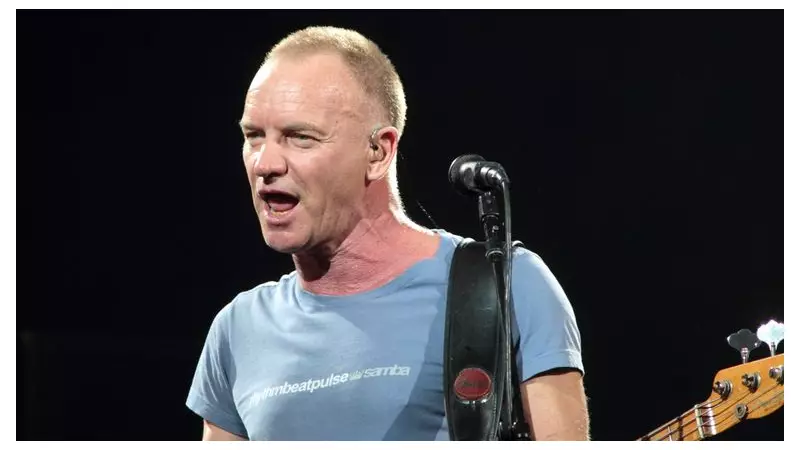
Rock legend Sting has paid £595,000 to his former bandmates in The Police following legal action over alleged unpaid royalties, the High Court has heard. The payment comes amid an ongoing dispute where drummer Stewart Copeland and guitarist Andy Summers claim they are owed more than $2 million (£1.49 million).
The Core of the Royalties Dispute
The legal battle hinges on the interpretation of "arranger's fees," an agreement where songwriter Sting would give 15% of publishing income to Copeland and Summers. The bandmates contend this arrangement, which dates back to their formation in the late 1970s, applies to all publishing income, including revenue from modern streaming services.
Their barrister, Ian Mill KC, stated in court documents filed in December 2024 that the 2016 settlement agreement entitles them to a share of money "from all publishing income derived from all manner of commercial exploitation." This includes income generated by hits like 'Every Breath You Take', 'Roxanne', and 'Message In A Bottle'.

Sting's Defence and the Streaming Question
Representing Sting, whose real name is Gordon Sumner, Robert Howe KC presented a different view in written submissions for a preliminary hearing on Wednesday, 14 January 2026. He argued the arranger's fee arrangement does not apply to streaming and should be limited to physical products like vinyl records and cassettes.
Mr Howe pointed to a "professionally drafted" agreement from 2016, which he said specifies that Sting and his company, Magnetic Publishing, only owe money on mechanical income "from the manufacture of records." He explained the central disagreement is how the terms "mechanical income" and "public performance fees" apply to streaming, which now generates significant revenue.
The barrister also confirmed Sting has paid over $800,000 (£595,000) in what were described as "certain admitted historic underpayments" since legal proceedings began in late 2024.
Historical Agreements and the Path to Trial
The case examines a series of agreements made between the band members from 1977 up to 2016. Ian Mill KC, representing Copeland, Summers, and their companies (Megalo Music, Kent Foundation Laboratories, and Kinetic Kollections), stated the 15% figure was agreed verbally by the band before being formalised in later written contracts.
The upcoming trial will determine one key issue: "whether the parties have accounted to each other for arranger's fees correctly in accordance with the terms of the 2016 settlement agreement." A preliminary hearing on the matter began on Wednesday and is set to conclude on Thursday, 15 January 2026, with a full trial expected at a later date.
This case highlights the complex challenges legacy artists and bands face when interpreting decades-old contracts in the rapidly evolving digital music landscape, where streaming now dominates revenue streams.