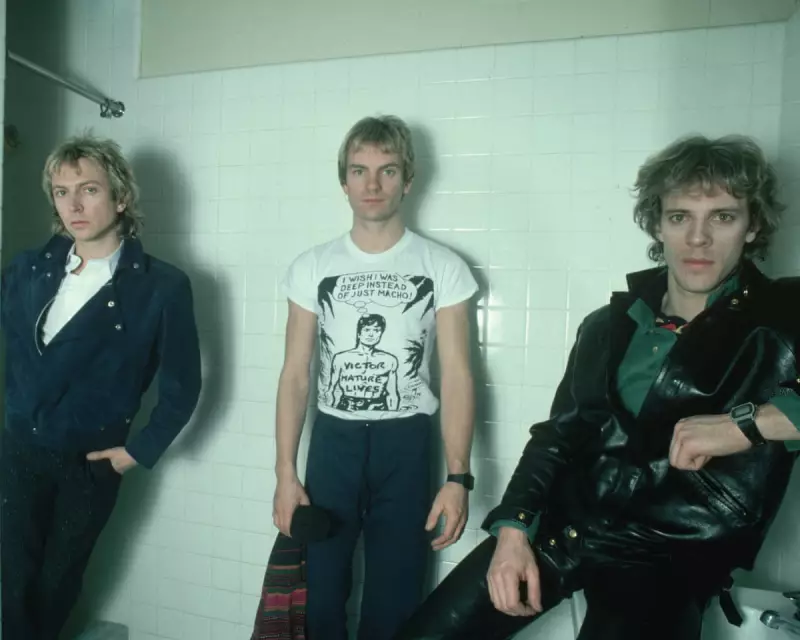
A bitter legal dispute over millions of pounds in streaming royalties has reached the High Court in London, pitting iconic musician Sting against his former bandmates from The Police.
The Core of the Royalty Dispute
The case centres on an estimated $2 million (approximately £1.5 million) in so-called "arranger's fees" that drummer Stewart Copeland and guitarist Andy Summers claim they are owed. The disagreement hinges on whether income from streaming services like Spotify should be included in these historic fee agreements.
Sting, whose real name is Gordon Sumner, has already paid over £595,000 in what his legal team describe as "certain admitted historic underpayments" since the legal action began in late 2024. However, he is contesting the broader claim, arguing the arranger's fees should apply only to revenue from physical products such as vinyl records and cassettes.

Historic Agreements Meet the Digital Age
The roots of the conflict stretch back to the band's formation in 1977. The court heard that a verbal agreement was made then for the principal songwriter—primarily Sting—to give 15% of publishing income to the other two members as arranger's fees. This was later formalised in written contracts.
The interpretation of key phrases like "mechanical income" and "public performance fees" in the context of modern streaming is now under the microscope. Robert Howe KC, representing Sting and his company Magnetic Publishing, argued that a 2016 settlement agreement is the definitive document. He stated it specifies money is owed only on mechanical income "from the manufacture of records," excluding digital streams.
In contrast, Ian Mill KC, for Copeland and Summers, contends his clients understood the 2016 agreement entitled them to a share of money "from all publishing income derived from all manner of commercial exploitation." He asserts arranger's fees have not been paid from streaming revenue, which continues to generate significant income for the band's legendary catalogue.
High Stakes for a Legendary Catalogue
The distinction is financially critical. The Police's biggest hit, Every Breath You Take, has been streamed more than 3 billion times on Spotify alone. The band, which split in 1984 after global success with hits like Roxanne and Every Little Thing She Does Is Magic, still earns substantial sums from their back catalogue.
In 2022, Sting sold his entire songwriting catalogue to Universal Music for a reported £221 million, a deal that did not include the master recordings at the heart of this performers' rights case.
The hearing is set to conclude, with a full trial expected at a later date. Its outcome could set a significant precedent for how streaming revenue is classified and shared among band members across the music industry.
This case mirrors a similar upcoming verdict involving the estates of Jimi Hendrix Experience members Noel Redding and Mitch Mitchell, highlighting a growing trend of legacy artists seeking to clarify royalty rights in the streaming era.