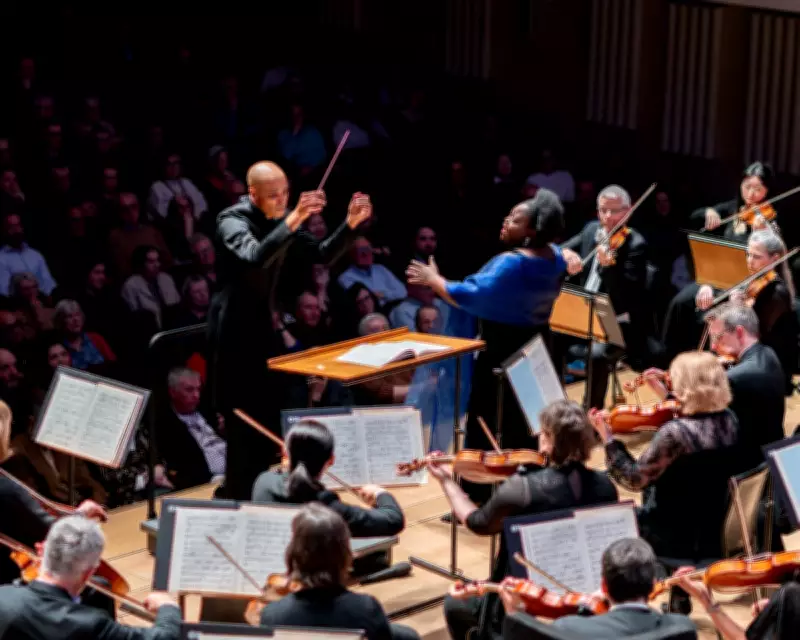
Masabane Cecilia Rangwanasha, the celebrated South African soprano, joined conductor Kevin John Edusei and the Royal Philharmonic Orchestra for a performance of Strauss's Four Last Songs at London's Cadogan Hall. The midweek audience was drawn largely by Rangwanasha's growing reputation, with one attendee noting, "We're here for her," pointing to her name on the program. Rangwanasha, winner of the song prize at the 2021 Cardiff Singer of the World and the prestigious Herbert von Karajan prize at the Salzburg Festival, proved why she is considered a major talent in the classical music world.
A Voice of Sumptuous Beauty
Rangwanasha possesses a voice of remarkable, almost indecent beauty, coupled with serious musicality. Her interpretation of Strauss's autumnal farewells to life, art, and love is still evolving, but the makings of a generational performance were evident. In "Frühling," she was youthful and wide-eyed, delivering the song with an airy wonder. The central songs were imbued with a backlit glow, which she allowed to suffuse and engulf the texture in the welcome release of "Im Abendrot."
Orchestral Shortcomings
However, the Royal Philharmonic Orchestra's accompaniment was a letdown. The ensemble delivered an oddly pinched and poorly tuned account, resisting the expressive invitations extended by conductor Kevin John Edusei. The composer's evanescent closing chords landed with a thump rather than the intended delicacy. Only the lovely horn solo that closes "September" hinted at what might have been possible with better execution.

Concert Opener and Beethoven's Symphony
Intonation issues also plagued the concert's opener, Canadian composer Samy Moussa's 2024 "Adgilis Deda: Hymn for Orchestra." The work's filmic swell needed greater scope within its compact 12-minute structure to justify its epic climaxes with gong and brass.
In contrast, the orchestra returned to the stage for Beethoven's Symphony No. 7 with renewed vigor. This performance was taut, energized, and precise, fizzing with kinetic charge. Edusei exaggerated dynamics and speeds, leaning into the work's wildness, discontinuities, and abrupt changes of direction. The result was a dazzling but often disconcerting account—a Rossinian scherzo that bordered on parody and a finale of manic intensity, obsessively returning to fanfares surging toward Beethoven's first-ever triple fortissimo.
Overall Impression
If Rangwanasha's Strauss had the audience saying goodbye to life, Beethoven's Seventh provided the electric shock treatment that brought them convulsively back. Despite the RPO's shortcomings in the Strauss, Rangwanasha's performance underscored her status as a soprano to watch, with the potential for truly classic interpretations in the future.