The Historic Premiere of Puccini's Turandot at Milan's La Scala in 1926
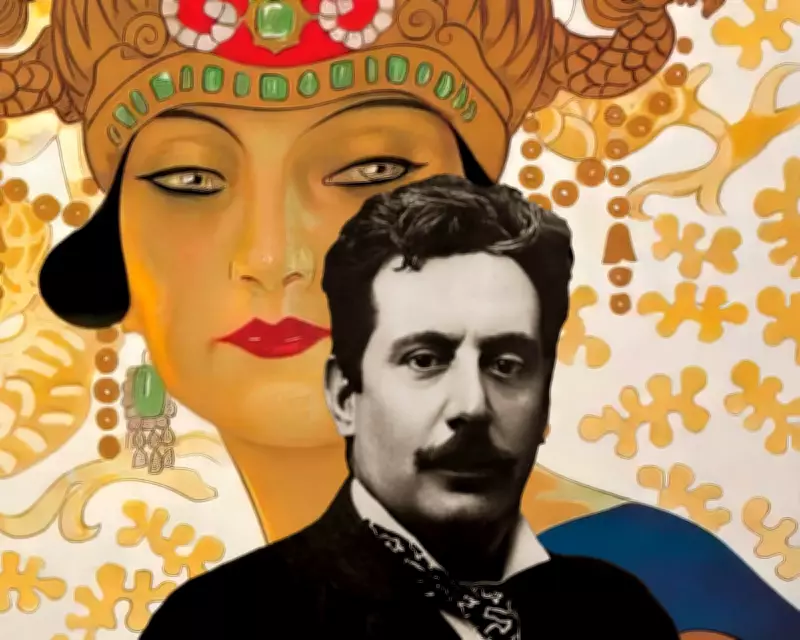
On April 25, 1926, the musical world witnessed a momentous event as Giacomo Puccini's posthumous opera Turandot premiered at Milan's illustrious Teatro alla Scala. This performance occurred nearly a year and a half after the composer's death, generating immense public anticipation across Italy. The production was eagerly awaited, with interest rivaling that of Arrigo Boito's Nerone, another work unveiled after its creator's passing.
The Completion of Puccini's Final Masterpiece
Details emerged regarding the opera's state at Puccini's demise, revealing that the work was remarkably close to completion. Puccini had sent the majority of the score to his publisher, leaving only the finale unfinished. The composer's friend, Franco Alfano, undertook the solemn duty of completing the opera based on Puccini's existing materials and distinctive stylistic cues.
In a poignant letter to his librettist, Puccini reflected on his labor, stating, "It seems to me that I have labored well. I have put all my soul into this opera. We shall see if my vibrations synchronise with those of the public." This sentiment underscored his dedication amidst evolving musical trends that often marginalized emotional expression.

A Night of Unprecedented Splendor and Emotion
The premiere at La Scala was a historic occasion, with Arturo Toscanini conducting and the theater overflowing with Italy's social elite. As the orchestra's first notes resonated—characteristically Puccinian in their melody—the audience was deeply moved, transforming the event into a ceremonial tribute to the national maestro rather than merely a theatrical presentation.
The opera's bizarre Oriental subject, reminiscent of Madame Butterfly, was enhanced by the music's sweetness and power. Florentine artist Galileo Chini designed the stunning scenery, drawing from his experience decorating a palace for the King of Siam. The cast featured soprano Rosa Raisa as the Chinese princess Turandot and Maria Zamboni as Liu, with tenor Miguel Fleta portraying the ardent prince.
The libretto by Giuseppe Adami and Renato Simoni significantly contributed to the opera's success, eliciting repeated applause and encores. Enthusiasm peaked at the conclusion, where Toscanini halted the performance at the point Puccini had left it unfinished, honoring the composer's wish to announce his death at that juncture. For future performances, Alfano's completed finale would be included.
Breaking New Ground with a Grotesque Fantasy
Turandot represented a departure for Puccini, adapting Carlo Gozzi's 17th-century grotesque play, later revised by Friedrich Schiller. The libretto offered ample opportunity for Puccini's lyrical, sentimental, and dramatic flair, captivating a sold-out Scala audience a week in advance.
The opera unfolds in a fantastical Peking, where a crowd gathers to witness the execution of a prince who failed to solve Princess Turandot's three riddles—a premise that showcased Puccini's innovative storytelling. The premiere solidified Turandot as one of Puccini's greatest achievements, celebrated for its emotional depth and artistic brilliance.