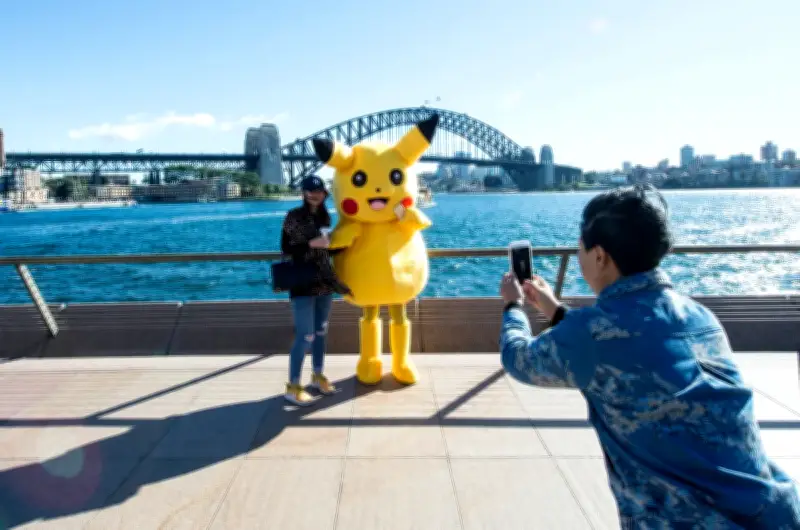
Pokémon, now the world's largest media franchise, celebrates its 30th anniversary in 2025, having transformed from a source of moral panic in Australia to a cultural mainstay generating trading cards valued up to $16.5 million at auction. The franchise, which debuted in Japan in 1996 and arrived in Australia via Cheez TV in September 1998, has sold over 400 million Game Boy games worldwide, according to the article's author, Patrick Marlborough.
From Cheez TV ritual to national craze
Marlborough recalls that for a generation of Australians, Cheez TV, which premiered in 1995, was a daily ritual, dominating the children's breakfast market by 1998. He describes sitting in a white plastic chair watching 90 minutes of cartoons hosted by Jade and Ryan, feeling resentment when Princess Diana's death coverage bumped Earthworm Jim. In September 1998, the hosts introduced Pokémon, a Japanese cartoon that Marlborough says filled him with "meteoric magic and wonder" as he watched the opening theme.
Created by Satoshi Tajiri, developed by Game Freak, and released by Nintendo as a swan song for the Game Boy, Pokémon quickly became a schoolyard phenomenon in Japan before taking two years to reach the West. In Australia, it crash-landed via Cheez TV, and within a month, Marlborough's life revolved around the quest to "catch 'em all." The Game Boy games, which asked players to explore the Kanto region, collect creatures, and battle, sold more than 400 million copies worldwide.
Moral panic and school bans
Despite its popularity, Pokémon faced intense backlash. A 1999 Channel Seven news feature claimed it could be "turning our children to witchcraft and violence," citing Sunshine Coast pastor Chas Gullo. Another Seven anchor joked that "Pocket Monster" was an apt description given the cost. ABC radio's Mark Colvin warned parents about the slogan "gotta catch 'em all," questioning if it referred to characters or the company's aims for every primary school child. A reporter noted 151 creatures with names like Pikachu, Meowth, and "Giber" (though no such Pokémon exists).
The Pokémon Trading Card Game, released in mid-1999, turned recess into a chaotic trading scene, with Australians spending $11 million on cards in the first two months. This led to school-wide bans, which at some schools sparked protests. Marlborough's own school held a sit-in at a special assembly, with students explaining Gengar to the principal. Media hysteria extended to claims of addiction, animal abuse (from Peta), robberies, and old wives' tales of kids jumping off buildings thinking they'd evolved into Pidgeotto.
Community and global connection
Marlborough argues that the backlash missed Pokémon's genius: to catch 'em all, players had to interact and trust others, making community a requirement. He cites personal experiences: a cousin returning from Japan with Japanese cards, a Canadian exchange student swapping US-exclusive toys for rare Yowies, and sharing Pokémon with Sri Lankan kids who spoke no English. He writes, "Millions of kids around the world knew what a Cubone was and, for me, that made my life in Perth feel a little less isolated."
Today, Pokémon remains in the national zeitgeist, though it still attracts controversy, including a wave of hobby-shop burglaries driven by the inflation of card values, with the most valuable cards auctioning for $16.5 million. Despite teachers', parents', and media's doubts, Pokémon's staying power has proven the kids right, as it remains the largest media franchise with games, toys, a new theme park, and even crockery. Its emphasis on simple joys and uniting people through the question "do you want to have some fun?" keeps it at the top of the food chain.