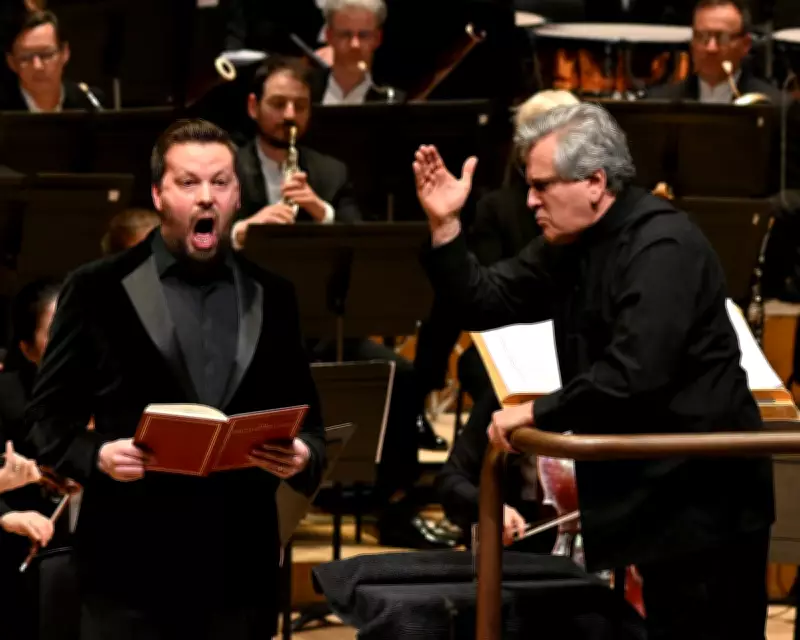
In a stunning display of musical drama, Antonio Pappano conducted the London Symphony Orchestra in a powerful rendition of Edward Elgar's "The Dream of Gerontius" at the Barbican in London. This religious oratorio, celebrated for its operatic flair and transcendent beauty, was brought to life with a theatrical intensity that captivated the audience, featuring David Butt Philip in the titular role of Gerontius.
A Dramatic and Operatic Interpretation
Elgar's masterpiece, often hailed as his greatest oratorio, delves into Roman Catholic themes with a score that avoids dry philosophical debates in favor of emotional and spiritual grandeur. Pappano's approach emphasized the work's inherent theatricality, transforming the performance into a gripping narrative journey. From the prelude's Wagnerian undertones, which conveyed a palpable sense of urgency and fleeting time, to the nuanced handling of Elgar's intricate textures, Pappano masterfully guided the orchestra through the oratorio's expressive arc.
Heroic Performances and Vocal Excellence
David Butt Philip delivered a heroic portrayal of Gerontius, seamlessly transitioning from delicate whispers in head voice to powerful, resonant top notes. His primal cry of "Take me away!" was particularly hair-raising, evoking deep emotional responses from listeners. Emily D'Angelo, as the Angel, offered a deeply moving performance with her polished mezzo-soprano, especially in the tender aria "Softly and gently," though some diction clarity was occasionally lost. William Thomas impressed as both the Priest and Angel of the Agony, his rich bass voice commanding attention over the orchestra and chorus.

Orchestral and Choral Brilliance
The London Symphony Orchestra performed with exceptional precision, adeptly responding to Pappano's dynamic shifts in mood and tempo. Meanwhile, the London Symphony Chorus, meticulously prepared by Mariana Rosas, uncovered novel details within the familiar musical framework. Their pinpoint diction and thoughtful phrasing highlighted often-overlooked lines, whether in angelic praises or demonic complaints. However, the constricting Barbican stage led to some aural separation issues, as the semichorus was embedded within the main choir, slightly affecting the overall acoustic clarity.
This performance underscored why "The Dream of Gerontius" remains a cornerstone of classical repertoire, with Pappano's direction ensuring that its climactic moments, such as the chorus of "Praise to the Holiest" and the soul's glimpse of the Deity, felt profoundly earned and impactful.