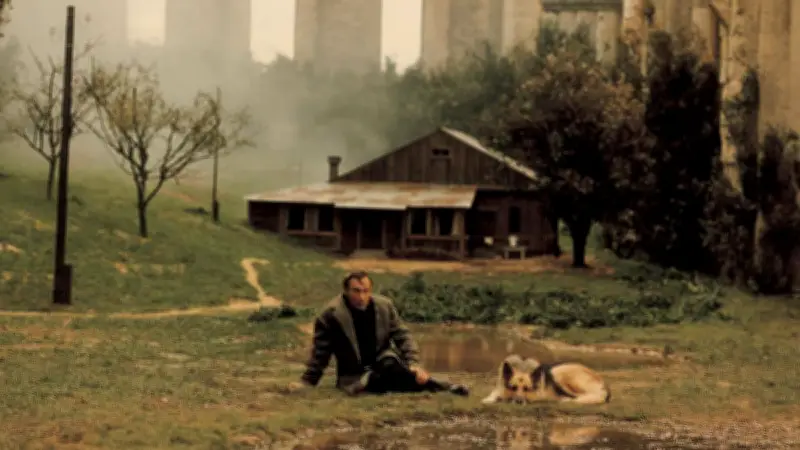
Tarkovsky's Masterpiece Explores Alienation and Belonging
Andrei Tarkovsky's 1983 film Nostalgia is a mysterious, imagist cine-poem that delves into themes of alienation and belonging. The title signifies a yearning not just for a lost time or place, but for something else entirely, accompanied by a profound anguish that the present existence is unsatisfactory. The film draws from the poetry of Tarkovsky's father, Arseny Tarkovsky, which is quoted throughout.
A Scholar's Existential Crisis in Italy
The story follows a distinguished Russian scholar, Andrei (played by Oleg Yankovskiy), who travels to Italy to research the life of the fictional Russian composer Pavel Sosnovsky. Sosnovsky had previously journeyed to Italy but was overwhelmed by homesickness and returned to Russia. Andrei's interpreter, Eugenia (Domiziana Giordano), is reading Tarkovsky's poetry in an Italian translation, but Andrei coldly tells her to throw the book away, asserting that "poetry is untranslatable, like the whole of art." The film itself is a translated work, set in Italy and co-written with Italian screenwriter Tonino Guerra, who collaborated with Fellini and Antonioni.
Breakdown and Paralysis in Tuscany
Upon arriving in the Tuscan spa town of Bagno Vignoni, Andrei appears to suffer a breakdown or emotional paralysis. He is unable to engage with his surroundings and instead experiences silent inner dialogues and monochrome dreams or memories of his family in Russia. His gloomy reticence frustrates Eugenia, who is attracted to him and hopes for a connection. She visits a famous church without him and witnesses birds flying out of the breast of a statue of the Blessed Virgin.

The Holy Fool: Domenico's Madness
Andrei and Eugenia become intrigued by a local homeless man, Domenico (Erland Josephson), who is considered a lunatic. Domenico notoriously imprisoned his wife and children in his house to protect them from what he believed was the imminent end of the world. Now, he believes that carrying a lit candle across the town's baths without extinguishing it can save humanity. Andrei sees parallels between Domenico's family and his own. Eugenia explains Domenico's situation as a result of Italy closing its asylums, but Andrei views him as an intensely Russian figure: the holy fool, the wanderer, the poor man who is also Christ.
Contrast Between East and West
Eugenia represents a more Western European figure: passionate, sexually adventurous, and furious at Andrei's unavailability. She has a criminal boyfriend in Rome. The film's third act shifts from the bucolic countryside to the crowded capital of Rome, a move reminiscent of the shift in Tarkovsky's Ivan's Childhood. Eventually, Andrei returns to Bagno Vignoni, where the baths have dried out, symbolizing the end of the world. He begins the slow, lugubrious process of walking across them with a lit candle.
The Absence of God and the Drained Waters
Like Tarkovsky's subsequent film The Sacrifice, Nostalgia deals with the absence of God. Domenico's imprisonment of his family was based on the belief that the end was near, yet he may not see himself as rebuked—perhaps his family emerged into a world that had indeed ended, a world where God is no longer believed in. The waters of the baths have evaporated, leaving only the bulbous, dirty shapes of the walls and floor. The film is an unimprovably stark, sad exploration of longing and loss. Nostalgia is in UK cinemas from 24 July.