Mike Westbrook: The Jazz Visionary Who Redefined British Music
Mike Westbrook, the celebrated musician, composer, and bandleader, has passed away at the age of 90, leaving behind a profound legacy in the world of jazz. His career, marked by innovation and collaboration, spanned from intimate London clubs to grand international stages, cementing his status as one of Britain's most significant jazz figures.
Early Beginnings and Rise to Prominence
Westbrook's journey into jazz began in the 1950s while studying in Plymouth, where he formed his first band, a workshop ensemble focused on exploring the dynamic between composition and improvisation. This early experimentation set the tone for his lifelong dedication to pushing musical boundaries. In 1968, his Concert Band performed the final set at Ronnie Scott's Old Place in London's Chinatown, captivating a capacity audience that queued from the club to Shaftesbury Avenue. This moment highlighted his emerging talent for weaving together diverse jazz styles into something uniquely stirring and contemporary.
A Diverse and Prolific Career
Throughout his career, Westbrook demonstrated an unparalleled versatility, seamlessly integrating various musical forms. He adapted the works of his hero, Duke Ellington, and the Beatles' Abbey Road, while also setting William Blake's poetry to music. His collaborations extended to theatre pieces with John Fox and the Welfare State, and he led his brass band through French villages, often working alongside his second wife, singer and librettist Kate Westbrook. In 1992, he made history by performing his arrangements of Rossini's arias at the Albert Hall as part of the BBC Proms, marking the first jazz concert in the festival's main programme.

International Recognition and Later Years
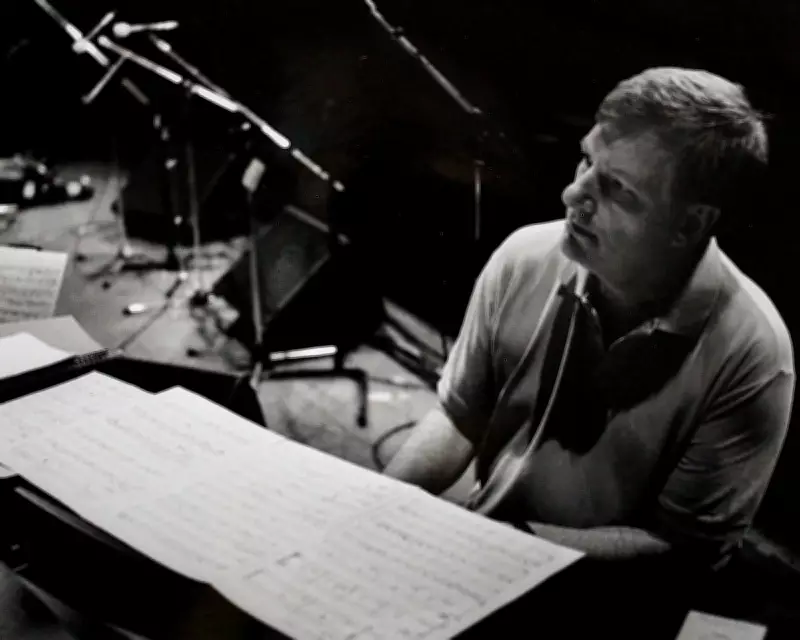
Despite his English roots, Westbrook found deep appreciation abroad. In 1984, French festivals commissioned On Duke's Birthday, a suite celebrating Ellington. In 1992, Sicily hosted a Mike Westbrook music festival, featuring a 25-piece ensemble. His final years included intimate solo piano recitals, where he blended gospel, folk, pop, and jazz standards into a heartfelt tapestry, showcasing his inclusive and humanistic approach to music.
Personal Life and Legacy
Born in High Wycombe and raised in Torquay and Plymouth, Westbrook was influenced by his parents' love of music and theatre. He taught himself piano after starting on the trumpet, drawing inspiration from jazz greats like Ellington and Louis Armstrong. After moving to London in 1963, he formed a sextet that gained attention, leading to residencies at Ronnie Scott's and the Little Theatre Club. His albums, such as Celebration and Marching Song, reflected his growing artistic ambitions.
Westbrook's later works included major orchestral pieces like The Cortège and Big Band Rossini, often featuring classical musicians. He was appointed OBE in 1988. He is survived by his wife Kate, two children from his first marriage, and three stepchildren. His final performance of the Westbrook Blake took place in Blackheath in 2025, underscoring his lifelong commitment to jazz as a collaborative and ever-evolving art form.
As Westbrook once said, "Being a jazz musician is for life. There's no retirement, no pension. And there's always the lure of the next gig, the next project, which is going to be your best yet." His legacy lives on through his music, inspiring future generations to embrace creativity and social justice in jazz.