Royal Liverpool Philharmonic Concert Review: Apocalyptic Occultism Meets Victorian Politeness
The Royal Liverpool Philharmonic Orchestra, under the baton of conductor Daniela Candillari, presented a concert of stark contrasts at Philharmonic Hall in Liverpool. The program juxtaposed Elgar's genteel Serenade for Strings with Mark Simpson's cataclysmic oratorio The Immortal, followed by Sibelius's Second Symphony, creating an evening that promised explorations of life and death but often left audiences suspended in between.
Elgar's Salon Victoriana as Polite Prelude
Elgar's much-loved Serenade for Strings, which received its unofficial premiere in 1892 by the Worcester Ladies' Orchestral Class, served as the perfect piece of salon Victoriana to open the concert. This more-tea-vicar, bone-china-and-bread-and-butter composition provided an intimate, gentle scene-setter that stood in dramatic contrast to what followed. The performance was dainty and refined, with even the typically nagging viola rhythms rendered more bumblebee than wasp, establishing a context of polite musical conversation.
Simpson's The Immortal: A Victorian Seance Unleashed
Mark Simpson's 2015 oratorio The Immortal represents a cataclysmic celebration of Victorian occultism, inviting audiences to experience a musical seance. Inspired by nineteenth-century spiritualism, the work sets texts collated by Melanie Challenger that represent the scattered anxieties, pleas, and nonsense of automatic writing produced by mediums of that era. These are contrasted with words from Frederic Myers, founder of the Society for Psychical Research, whose obsession with the afterlife stemmed from the suicide of his childhood sweetheart.

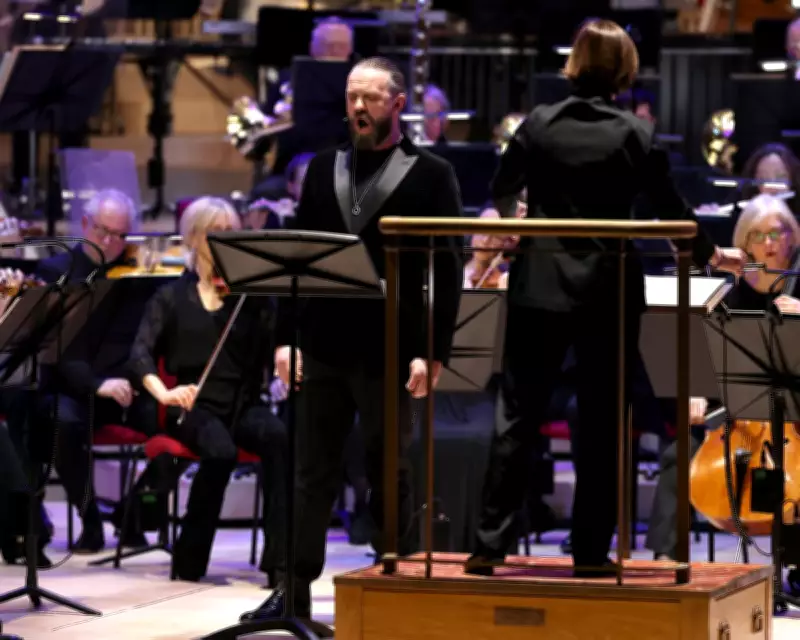
Where Victorian mediums relied on concealed wires and ectoplasm for atmosphere, Simpson deploys an entire orchestra complete with harp and percussion battery, choir, and solo baritone. Despite some thinning of texture since its premiere a decade ago, this remains a work of impossibly dense, deliberately impenetrable, apocalyptic textures. Conductor Daniela Candillari, making her Royal Liverpool Philharmonic debut, maintained control throughout, but the amplified howls and shrieks from vocalists of Exaudi and soloist Rory Musgrave often overwhelmed the musical narrative.
Sibelius's Symphony Lacks Climactic Buildup
The concert concluded with Sibelius's Second Symphony, where Candillari's approach smoothed the craggy Finnish fells into something resembling the rolling Malvern Hills. While the Allegretto movement displayed lovely translucent, glacier-clear qualities through the first half, the performance provided a climactic payoff without sufficient buildup from the good-natured, pastoral beginning. The ominous timpani rumble that launches the second movement brought no real clouding-over, and the scherzo offered speed without genuine tension.
Musical Execution and Overall Impression
The concert featured excellent individual contributions, particularly from baritone Rory Musgrave, though his amplification seemed unnecessary given the already dense orchestral textures. The visual spectacle of bows moving and wind players breathing created compelling theater, even when specific sounds became lost in Simpson's complex mix. Ultimately, this was a concert of fascinating contrasts that highlighted the Royal Liverpool Philharmonic's versatility but left some musical promises unfulfilled, hovering between life and death without fully committing to either realm.