When Natasha Landers first bought her Walthamstow home in 2000, she paid £135,000 for it, with a £3,000 deposit. But that relatively low figure came at a price: there was no central heating, and the electrics needed to be completely rewired. And with a toddler in tow, it wasn’t easy.
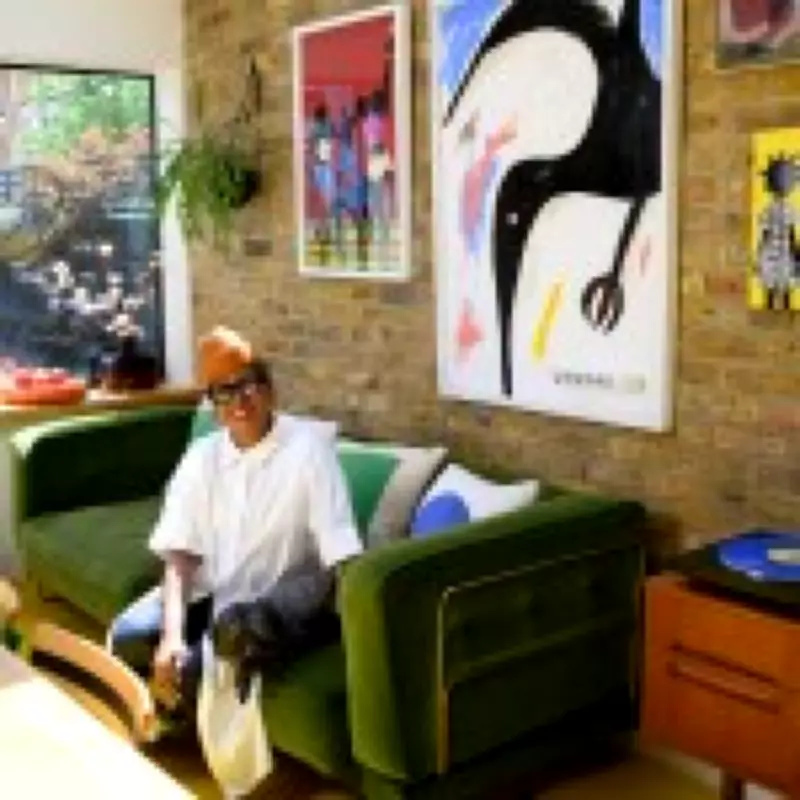
A quarter of a century later, though, and she’s still there, but much has changed. For a start, the home is now worth close to a million. She’s brought her personality into the space and started renting out her home as a filming location to various production companies. Plus, her eclectic hallway, which has a repurposed gym floor, earned her the accolade of Best Hallway at the 2025 Ufurnish Awards.
Tell us about yourself!
I’ve been in the interior design business for about 15 years now, and my property is a location house. It’s rented out for editorials, adverts, and films. I’m the co-founder of the Lemon Seed Project, which turns my home into a gallery for Black artists. People buy a free ticket. It shows that art can be translated onto your walls.

Whereabouts is your property? What do you think of the area?
I’ve lived in Walthamstow in East London for almost 30 years. For a long time, I wanted to move back to Hackney, which is where I’m originally from. That was mostly nostalgia, but actually, this is home now. In terms of transport, it’s brilliant. I’ve got an Overground within 5 minutes’ walk that takes me to Liverpool Street, and the Victoria Line takes me through the West End or to South London. It’s a green area, and I’m in walking distance of Epping Forest, the wetlands, and the marshes.
When did you move in?
July 2000. It was the coldest July ever, and it was made even worse because there was no central heating. I’ll always remember it.
How would you say the area has changed since 2000?
Walthamstow has been gentrified quite a lot. When I moved onto my street, the estate agents tried to sell it as being on the borders of the village, which it isn’t, because I live in the Wood Street area. Now, that doesn’t really matter, because Walthamstow has distinct areas. There are more boutique shops, cafes, and plenty of building work. It’s definitely become more of a destination, and I think one of the reasons for that is that Hackney has become too expensive. Newer people don’t often stay for too long.
How much did your property cost you when you bought it?
£135,000.
How much was your deposit?
£3,000.
What is the monthly cost of living here now, both mortgage and bills?
Next year, I’ll finish paying my mortgage. I’ve got it down to about £25,000, and I took my last fixed rate last year (4.8%). Whatever is left when that’s finished, I’m just going to pay off. The mortgage currently costs me around £680 per month. I’m very fortunate. Just before I bought, people were handing in their keys to the bank because interest rates were really high. But when I went to buy my first house, property prices were low. I stayed there for two years, and it almost doubled in price, from £65,000 to £120,000. That’s what enabled me to buy this. Many places in Walthamstow have passed the million-pound mark in the last five years or so, and my property is probably worth almost that amount. I find it ludicrous.
How did you find this property? What made you choose it?
It was always about where I could get the most for my money, and when I found this house, I had a one-year-old. I loved Victorian properties, and this had the bones of what I wanted, it being a reasonable size, with a garden. It was in really bad condition, but that’s what made the price lower.

Did you have any issues when you first moved in?
I had no central heating, and the electrics needed doing. Throughout the whole living room, there were two single socket points. One at each end. The windows were rotting, and they were a burglar’s delight. You could just pull the glass out and then slip through. One of the gas fires was leaking, so it had to be condemned. About six months in, it was raining outside, and I realised it was raining in the house, too. I also talk about slow renovation. The things that immediately had to happen were done within the first year, and the next big renovation was the kitchen, which was done 10 years ago. There were different stages, and it all depended on money. I didn’t have it.
It being a location house, have you had any cool projects filmed here?
I was approached by a location agent just after lockdown. It wasn’t something that I’d ever thought about. We’ve had a range of things, including an Old El Paso advert. They used my kitchen and repainted it in terracotta orange, and they put yellow vinyl over the drawers. It didn’t look the same. There’s a contract which says they put it all back. Many production companies look for locations because it’s cheaper to make changes to somewhere than recreate a whole kitchen in a studio. But you’d never know that was my kitchen! We’ve had music videos in here, and quite a few editorials. It’s inspiring for me, seeing how they do things. If you’re going to do this, though, you have to be okay with strangers being inside your house. One artist had a crew of 50, which in a small, terraced house, is a lot. We also had a shoot for a short film about a one-night stand, and they used my bedroom for that, so you have to be comfortable.
Why did you start sharing your interiors journey on Instagram?
I’ve always been into interiors. I started my business quite late in life, and I just wanted to share ideas. I found my tribe, which is people who like colour. Not everybody likes my style, and that’s okay. Sometimes, people say things like “I wish I had as much money as you.” But actually, they don’t know me. I bought this house by myself, and it has beautiful pieces in it, but I didn’t have a money tree. I came from a working-class family and grew up on a council estate.
What’s the inspiration for your interior decor style?
I get inspiration walking down the street or going into a restaurant. I stayed in a hotel in Shoreditch, and there were these massive yellow glass coat hooks. I thought they’d make amazing, oversized doorknobs, so I bought the last four left (they’d been discontinued), and they’re still here in the kitchen and the downstairs toilet. In the living room, I wanted to experiment with colour blocking. I’m rebellious, so I didn’t want to just do a chimney breast in one colour. Art is important to my space, but if it wasn’t, I wanted it to look like there was art on the walls. I also found a photograph of a café on Pinterest, and they’d used copper piping to create lighting on the ceiling. I loved it. I showed an underfloor heating guy and asked if he could try it. He gave it a go, and so we created a copper pipe lighting installation. It looks like a piece of art, and it has a nod to the Tube map in the way that it meanders.
What was it like winning the Ufurnish Best Hallway Award in 2025?
It was a bit of a shock to win, because the competition was so strong. I’ve got a narrow, Victorian hallway. I have a reclaimed gym floor from Poland. It’s maple, with different blocks of colour. Apparently, the panel loved that I’d experimented with it. It was a really affirming process.
What are your plans for the future, in terms of housing?
My long-term plan is to move abroad. I’d sell and get something smaller in London, so that I’ve got somewhere to come back to. I’d then release the equity.