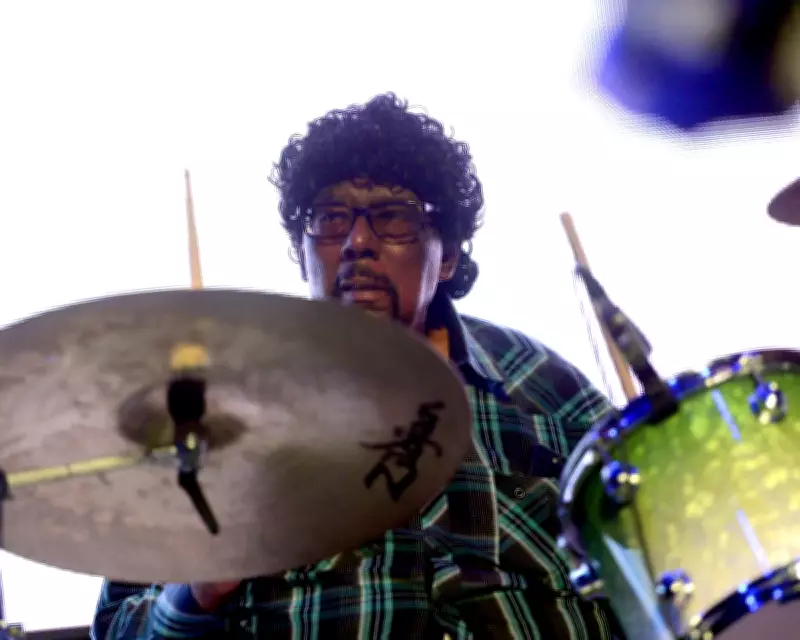
James Gadson: The Drummer Who Defined an Era of Iconic Music
James Gadson, the masterful drummer whose rhythmic genius powered some of the most memorable hits of the 1970s and beyond, has died at the age of 86. Throughout his extensive career, Gadson demonstrated an extraordinary ability to find "the pocket"—that elusive musical space where rhythm becomes both profound and irresistibly compelling.
The Foundation of Dance Music
In genres ranging from R&B and soul to funk and disco, Gadson's contributions were foundational. He provided the driving force behind Bill Withers' timeless anthem "Lean on Me," Marvin Gaye's sensual "I Want You," Diana Ross's hypnotic "Love Hangover," the Jackson 5's energetic "Dancing Machine," and Gloria Gaynor's empowering "I Will Survive." His work extended to numerous other classics including Smokey Robinson's "Cruisin'" and Peaches & Herb's "Reunited."
Gadson approached dance music with both simplicity and sophistication. "Most grooves, especially for dance music, are very simple," he explained in a 2007 interview with Modern Drummer magazine. "Even so, to learn them, you have to slow them down. I think you have to slow it all down and simplify it. Then you can kind of feel whether it's danceable or not."

A Versatile Musical Journey
Born in Kansas City on June 17, 1939, Gadson began his musical journey singing in a doo-wop group called the Carpets with his brother Tutty. After serving two years in the U.S. Air Force, he returned home determined to pursue drumming professionally. His early career included touring with Hank Ballard, the originator of the Twist, and playing in jazz ensembles before moving to Los Angeles in the late 1960s.
In Los Angeles, Gadson joined Charles Wright's band, which would become known as the Watts 103rd Street Rhythm Band. Wright famously instructed him to "just play it straight," leading to the creation of the laconically funky rhythm on "Express Yourself," later sampled by NWA. This marked Gadson's transition from jazz complexity to the disciplined simplicity required for commercial success.
The Studio Musician's Legacy
Gadson became part of Los Angeles' elite group of first-call session drummers, following in the footsteps of legends like Earl Palmer and Hal Blaine. His versatility allowed him to work across diverse musical landscapes, contributing to albums by Boz Scaggs, Elkie Brooks, Leonard Cohen, Rickie Lee Jones, Paul McCartney, Lana Del Rey, and multiple projects with Beck.
He described Los Angeles as "the melting pot of rhythm," blending influences from New Orleans' "second line" rhythms, Mississippi shuffles, Motown beats, Chicago's new jack swing, Latin patterns, and disco's four-on-the-floor approach. This eclectic mix created what he called "a dip of this and a dash of that"—a signature style that attracted collaborations with artists ranging from BB King and Ray Charles to Herbie Hancock and Sturgill Simpson.
Live Performances and Lasting Influence
While much of Gadson's work occurred in recording studios, his talents were showcased during memorable live performances. In 1972, he appeared on BBC2's The Old Grey Whistle Test as part of Bill Withers' band, performing "Ain't No Sunshine" and "Use Me." This performance preceded the legendary Live at Carnegie Hall album that captured Withers and his band at their peak.
Gadson's drumming was characterized by subtlety rather than showmanship. His rapid 16th notes on hi-hat or snare with a single stick demonstrated technical mastery without drawing attention away from the song. Similarly, his syncopated bass-drum patterns on "Love Hangover" elevated disco beyond simple four-on-the-floor rhythms.
Enduring Impact and Final Years
Gadson's work has been extensively sampled by hip-hop and breakbeat artists, including NWA and Kendrick Lamar, ensuring his rhythmic innovations continue to influence new generations of musicians. His final recordings included contributions to albums by Keith Urban and Michael Kiwanuka, demonstrating his enduring relevance across musical eras.

He is survived by his wife Barbara, whom he married in 1968, their children, grandchildren, great-grandchildren, and a sister, Robbie. James Gadson's legacy as a drummer who could find "the pocket" in any musical context remains firmly established in the annals of popular music history.