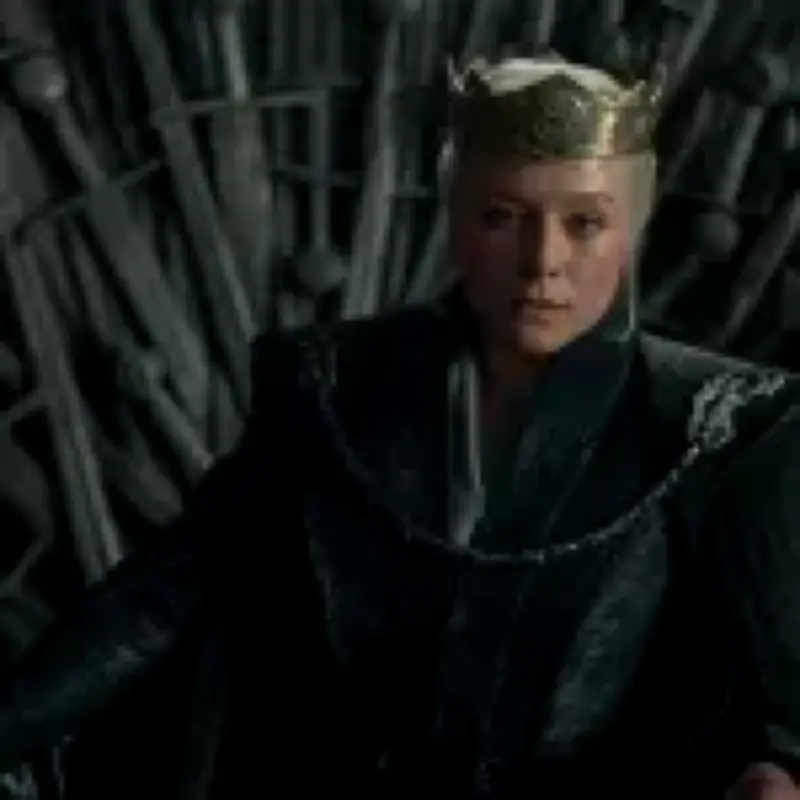
House of the Dragon is repeating a troubling pattern from Game of Thrones: a once-admired female character, Rhaenyra Targaryen (Emma D'Arcy), is now spiraling into madness as she holds power, according to a critical analysis published by Metro. The show, an adaptation of George R.R. Martin's book detailing the Targaryen dynasty's fall, has creative licence to improve female representation but instead relies on tired tropes, the article argues.
Women in Westeros: A Recurring Problem
The critique, written by freelance entertainment reporter Kitty Chrisp, points out that within the fantasy world of A Song of Ice and Fire, there is a systemic issue with how women are portrayed, from the books to the TV adaptations. Despite the presence of dragons and other fantastical elements, the creators have failed to imagine a single truly likeable woman who possesses power, wit, and intelligence while embracing femininity. The article notes that while a patriarchal world may be realistic, the lack of imaginative female characters is not.
Chrisp highlights that the show could have introduced a Tyrion-esque or Jon Snow-type female character—someone good, kind, funny, clever, and universally adored—but instead, the female characters fall into familiar archetypes. Rhaenyra is described as pig-headed and laughably bad at ruling, while Baela (Bethany Antonia) is forgettable, Laena (Nanna Blondell) was dry on screen, and Mysaria (Sonoya Mizuno) never cracks a joke. Helaena (Phia Saban) cannot cope, and Alicent Hightower (Olivia Cooke), though multifaceted, is not particularly likeable.
Femininity Rejected for Likability
The article draws a comparison to Game of Thrones, where Arya Stark (Maisie Williams) became a fan favourite by rejecting femininity and adopting masculine traits. Chrisp argues that this sends a problematic message to teenage girls: to be liked, women must tone down their femininity and fit in with men. The piece acknowledges that depicting a traditionally feminine woman as a paragon could be reductive, but it suggests that in a world where goodness is rare, it would be radical to have a good woman triumph, written so that audiences root for her.
The critique notes that TV has shown it can create flawed yet captivating women, citing Fleabag and Killing Eve as examples, but House of the Dragon fails to do so. The article calls for a female character comparable to Tyrion Lannister or Jon Snow—someone powerful, celebrated, and adored without conforming to masculine ideals.
Looking Ahead to Season Four
Chrisp expresses hope that in season four, Baela might come into her own, but she is not optimistic about the current cast. She suggests that new female characters could change the tide for the women of Westeros, but she is not holding out for it. The article concludes that while women should be celebrated in all their varying gradients of femininity, it would be nice if a woman could be powerful and adored without trying to fit in with the men, especially in a show where anything is possible.
House of the Dragon is available to stream on HBO Max, Sky, and NOW.