Gillian Anderson is stepping into brand new territory with her latest film, Teenage Sex and Death at Camp Miasma, marking her first foray into horror. The film is far from a standard fright flick, serving as a tongue-in-cheek homage to slashers combined with a bracingly bold take on female sexuality. Just seconds in, there is a fountain of vibrantly crimson blood shooting several feet in the air after a body is stabbed in a murderous frenzy.
Anderson's New Direction and Cannes Success
'It does, it feels that way,' Anderson – who has played roles as varied as Margaret Thatcher, a sex therapist, and FBI Special Agent Dana Scully in The X-Files – told Metro of her new direction with the movie. 'It feels new and unique but I'm very proud of it, and proud to be a part of it. I just can't wait for it to properly come out because I think people are really going to like it.'
Many already have since the Cannes Film Festival in May, where it premiered, with five-star review raves from critics. The film has been dubbed a 'bizarre pop-cultural black mass of fiercely believed-in trash and kink' and a 'Miasma-sterpiece'. It won the Queer Palm and has steadily been building word of mouth buzz before reaching British shores this week.
Plot and Themes of Female Sexuality
From I Saw the TV Glow's Jane Schoenbrun, Camp Miasma's premise sees intellectual young filmmaker Kris (Hannah Einbinder) hired to direct a rebooted instalment of a previously popular but now problematic '80s slasher franchise. After becoming obsessed with casting the reclusive actress who played the original 'final girl' in the first film (Anderson) – and after tracking her down to the abandoned campground where the series used to film, and where she now lives – the two descend into sexual and psychological chaos together.
'When we were making it, we were really excited about the stuff we were getting and how it was looking and feeling. So to see that recognised feels really validating,' shares Einbinder of the meta-slasher film's reception so far.
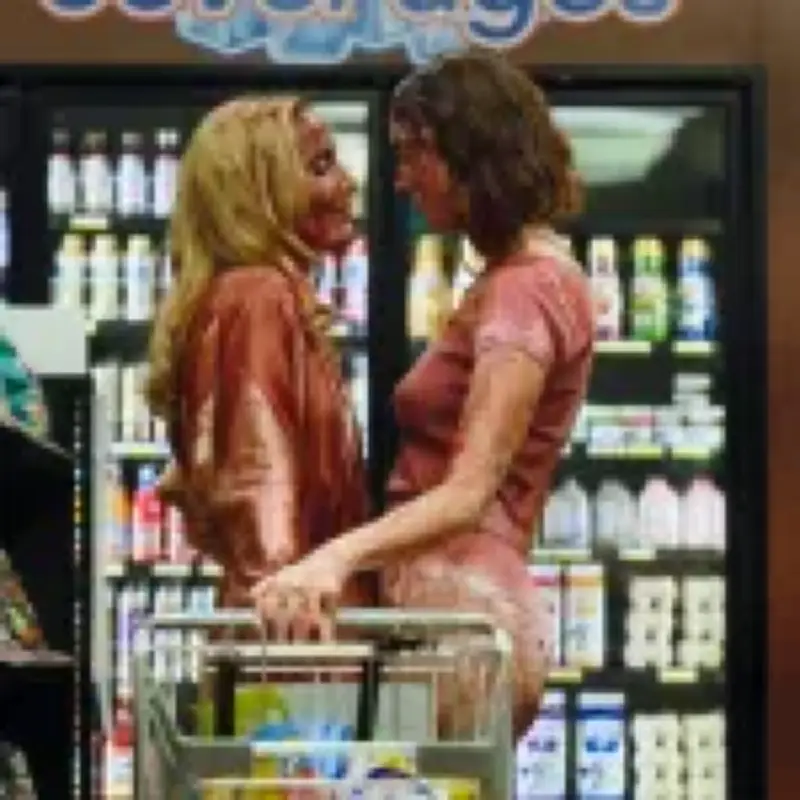
But Camp Miasma is not just about gory spurting blood (although they both end up covered in it) and murder (although there is a lot of that); it is also about sex – and specifically women learning to revel in the pleasure of it. This is a familiar topic for Anderson, who edited a collection of anonymous female sexual fantasies – including one of her own – for 2024 bestseller Want, with an 'even more daring' follow-up, fittingly titled More, being published next month.
Pushing against the more squeamish boundaries placed on female sexuality and how it is usually depicted is not why she signed up for the film, although she understands the surface-level connection. 'I guess given that I've spent the last couple of years talking about fantasy and women's sexuality and pleasure, it made a lot of sense as to why I would do it or be the one that was asked to do it. It felt 'of a piece',' she accepts.
Intimate Performances and Character Development
Camp Miasma's focus on sex and death together, two things intrinsically linked in slasher films, is something Schoenbrun heavily leans into, calling the franchise's ghostly recurring villain who lurks at the bottom of the lake 'Little Death'. Meanwhile, Kris reveals that she can only shoot for an orgasm if she fantasises that she is the sexualised 'final girl', a kink she developed from a formative childhood attachment to the first film starring Anderson's Billy Presley – and which Billy suggests they explore together.
'I think it's important, what Jane is saying through this film. I know they [Schoenbrun] talk light-heartedly about just wanting it to lead to people having good sex – which of course is true and great! – but it's so much deeper than that,' adds Anderson. 'And the depth and the narrative feels similar to what I hear from women through the book and conversations that I've had around it, in terms of women and sexuality and pleasure, and the complexities and shame.'
Anderson and Einbinder share a very vulnerable and raw connection onscreen, which becomes at points almost mortifying to watch in its intimacy, as if the audience is intruding on something not meant for public consumption. 'It's hard to build chemistry. I think you just have it or you don't,' says Einbinder. 'Gillian and I also did such extensive preparation that when we came to start rehearsing the scenes, we both had a lot to offer. We had in-depth conversations about why we were doing what we were doing, and how we were doing it and why it was important for it to feel a certain way.'
Anderson also points out that, as there is so much of the film that is 'outside of the realms of reality' in its meta murderous fantasy scenes, the elements of human intimacy 'needed to feel as real and intimate as possible in order to balance out the rest of it'. 'It felt important to get that aspect of it right. But it's also a bit of a breath of relief, in a sense. Human relief, somehow,' she adds.
Anderson makes a memorable entrance as glamorous faded star Billy, speaking with a Dolly Parton-esque drawl and exuding Sunset Boulevard vibes. 'I was trying to steer her away from Sunset Boulevard because that felt too obvious, almost – and I know that we made a choice of a turban at one point,' admits Anderson. 'But the accent was important to me from early on. That was a real gateway into her, it felt like it tied me to 'final girl' vibes in a way because the particular Southern [accent] has a lot of strength but a lot of vulnerability in it.'
She speaks about 'piecing together' Billy in an extremely open and collaborative approach that also understands restrictions like budget. Anderson suggested the dramatic Twiggy-inspired eye make-up, while Schoenbrun prompted Billy's deep, back-of-the-throat cackle, which the actress ably (and slightly alarmingly) demonstrates again. 'That says so much about who she is and her spirit and her personality, and not in a million years would I imagine that she might have done that!' laughs Anderson. 'But the fact that, all of a sudden, that was entered into the collection of character traits takes you on a whole other journey in terms of her.'
Horror Genre Resurgence and Release
Anderson is also working alongside Einbinder, who – despite her own Emmy success with hit comedy series Hacks – is remarkably only taking on her second-ever acting role here, after the HBO show, having previously worked as a stand-up comic. 'Gillian has such a clear process. She wants to really understand her physical choreography and motivations. Just watching her craft Billy, I feel it gave me permission to really dive into wanting Kris to feel even more real and to make distinct choices,' Einbinder recalls.
This year has been a stellar one for horror, with Einbinder acknowledging an even more appreciative public appetite for it, thanks to the huge success of Backrooms and Obsession. Cannes also gave a major platform to The Substance the year prior to Camp Miasma, and it ended up a five-time Oscar nominee. Anderson brings up Get Out too, when discussing the genre's resurgence and the sense of a shift in the industry towards taking it more seriously. 'I do absolutely feel that way,' says Einbinder, before adding with a laugh: 'Hopefully we're contributing!'
Teenage Sex and Death at Camp Miasma releases in UK cinemas on Friday, August 21.