DJ Shadow Opens Up About Career Crossroads and Creative Philosophy
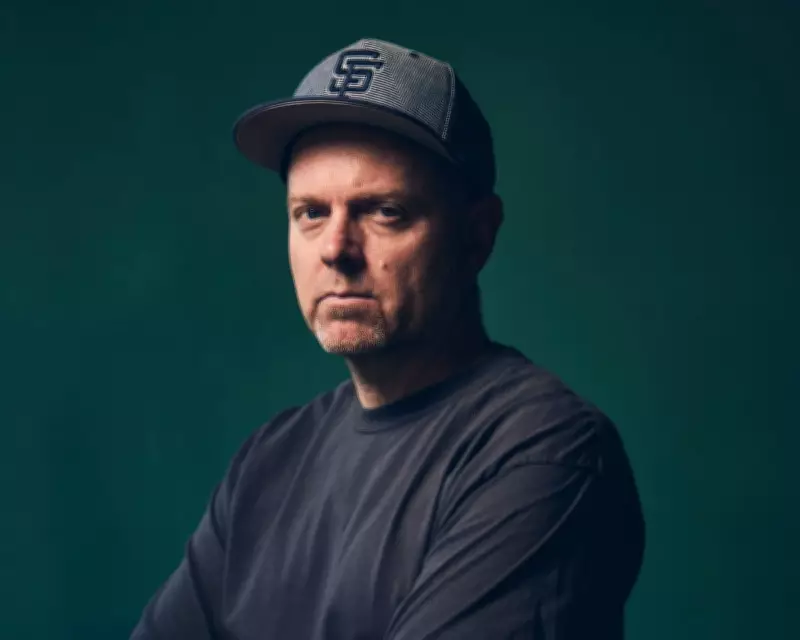
In a revealing interview, Josh Davis, better known as DJ Shadow, shares insights into his decades-long career as a hip-hop producer, remixer, and dedicated crate-digger. The artist discusses everything from missed collaborations to his evolving approach to music production and the looming shadow of artificial intelligence over creative industries.
Missed Opportunities and Evolving Production Methods
Reflecting on career decisions, Davis reveals he passed on working with Deftones on their seminal 2000 album "White Pony" due to concerns about maintaining his hip-hop credibility. "I was nursing a hip-hop image and reputation," he explains, "so I was wary of working with anything that felt too alternative or rock-oriented." While not a regret, he acknowledges it as a significant missed opportunity in his musical journey.
The conversation turns to his recent shift toward sample-free production on albums like "The Mountain Will Fall" and "Our Pathetic Age." Davis attributes this evolution to both practical and creative considerations. "There have been times in my career where I've wondered: at the end of the day, am I going to own only 15% of my catalogue because of all the samples?" he admits. Beyond clearance issues, he emphasizes his desire to explore new creative avenues: "I became known as somebody trying to be on the vanguard of making music with samples, but I always knew I would want to make music in as many different ways as possible."

Influences from Twin Peaks to Choose Your Own Adventure
When asked about non-musical influences, Davis points to David Lynch's groundbreaking television series "Twin Peaks" as particularly formative. "The way David Lynch approached the narrative process was so unusual," he recalls. "I always thought: what if I applied that same sense of adventure to my songs?" He also cites childhood Choose Your Own Adventure books as influencing his unconventional approach to album structure, including playing with track numbering and song lengths.
The discussion of influences naturally leads to Kraftwerk, whom Davis describes as "a touchstone for every phase of my career." He traces his discovery of the German electronic pioneers from hearing "Tour de France" at age 11 to later understanding their profound influence on hip-hop through Afrika Bambaataa's sampling of "Trans-Europe Express." "Their music continues to be singular," he asserts. "There's nobody else I can compare them to. They're often imitated, never duplicated."
The AI Question and Record Collecting Philosophy
Addressing contemporary concerns about artificial intelligence, Davis expresses both hope and apprehension. "I hope for the best and anticipate the worst," he states. "It keeps me up at night, not just on a music basis, but as a human." He compares AI's potential impact to previous technological shifts: "I can clearly remember a time before the internet and social media, and life has changed in so many ways with the advent of those technologies. AI seems bigger than both of them combined."
Despite technological advances, Davis maintains his commitment to physical record collecting, describing his approach as "curatorial" rather than investment-driven. In a surprising revelation, he shares that he gave away his most expensive record to another collector for free. "It felt liberating to do so," he explains. "It helped me remember what digging is about. The value is more about what I assign to something as a music lover."
UK Influences and Current Projects
The producer acknowledges the influence of UK scratch DJs, particularly the group Hijack featuring DJ Supreme and DJ Undercover. "They were super influential," he notes, describing how he sought out British music publications like Melody Maker and NME during a time when American media was "really rock'n'roll-centric."
Davis recently contributed a remix of King Gizzard & the Lizard Wizard's "Black Hot Soup," describing the process as "quick and painless" and motivated by a desire to "touch different audiences and kind of raise eyebrows." He reveals he rarely receives such requests, making each opportunity particularly meaningful.

As he prepares for the release of "The Mo' Wax Singles 1993-1997" via Pias Catalogue, Davis reflects on his artistic philosophy: "It's all about continuing to push forward as a creator." His journey from sampling pioneer to multifaceted musician continues to evolve, driven by what he describes as "a genuine pace" of artistic development rather than reaction to trends or expectations.