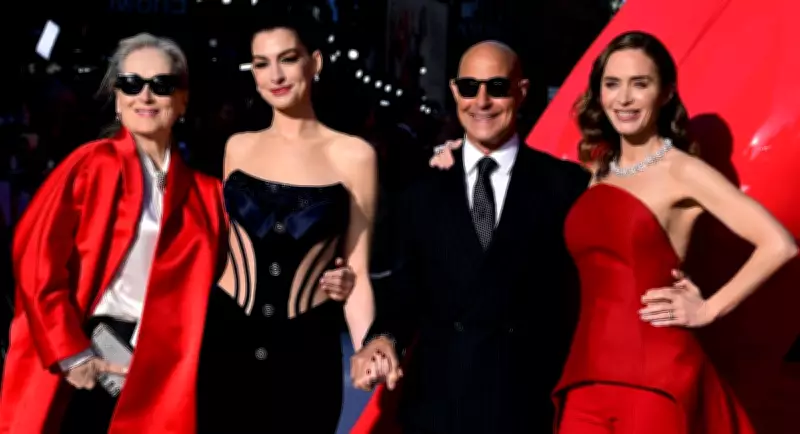
Meryl Streep, Anne Hathaway, Stanley Tucci, and Emily Blunt graced the London premiere of The Devil Wears Prada 2 on Wednesday, marking a highly anticipated return to the fashion world. The sequel, set two decades after the original, delves into the revolution within the fashion industry, where luxury brands have overtaken once-dominant magazine editors.
A Glamorous Premiere at the National Gallery
The after-party was held at the National Gallery, where Donatella Versace held court under Paul Delaroche's painting The Execution of Lady Jane Grey. Streep, reprising her iconic role as Miranda Priestly, wore a red satin Prada coat and black sunglasses, a nod to both the film's title and Anna Wintour. Editors from across Europe enjoyed fried chicken with caviar and mac and cheese under silver cloches.
It is ironic that the fashion industry's most glamorous moment in years comes from a film that satirizes its decline. Screenwriter Aline Brosh McKenna expressed surprise at the warm reception from businesses the film pokes fun at. The plot follows Priestly's struggle to steer Runway magazine through the collapse of print publishing, a storyline described by attendees as "close to the bone."

Industry Shift and Cultural Impact
The sequel highlights an industry transformed by digital disruption and the evaporation of gatekeeping. Director David Frankel noted that fashion's appeal remains timeless, as humans are drawn to beauty and identity. The original novel by Lauren Weisberger was once seen as high treason by fashion insiders, with brands refusing to lend clothes. Now, the sequel boasts eager participation from luxury houses and cameos from industry icons like Versace.
The film reflects a broader cultural shift away from institutional power, where shoppers no longer blindly follow trends dictated by editors. Frankel described the media business as "frightening," with contraction and AI threats, but he sees Miranda as a heroic figure navigating rough waters.
Anna Wintour's Enduring Influence
The publicity around the sequel underscores Anna Wintour's resilience. Despite stepping down from American Vogue, she appears on the magazine's cover with Streep, signaling her continued dominance. The cover also highlights changing attitudes toward older women, featuring two 76-year-old women photographed by 76-year-old Annie Leibovitz and styled by 84-year-old Grace Coddington.
Brosh McKenna praised fashion's ability to create iconic women with staying power, citing Coco Chanel, Diana Vreeland, and Iris Apfel. The industry's age-old sexism is being challenged by celebrity power, allowing women like Streep and Wintour to maintain enduring personal brands.
Fashion Inflation: Then and Now
The 20-year gap between films has seen significant price increases in designer items. A Chanel jacket worn by Anne Hathaway's character cost about $4,800 in 2006; now it is priced at £6,430, an 80% increase. Fendi Baguette bags jumped from $1,500 to £2,750, a 147% rise. Jimmy Choo shoes, once $385, now cost £625, up 122%. Hermès scarves, a trademark of Miranda Priestly, rose from $320 to £520, a 119% increase.
These examples illustrate the phenomenon of "fash-flation," where luxury goods have become even more exclusive and expensive over time.