The Birth of a Legend: CBGB's Humble Beginnings
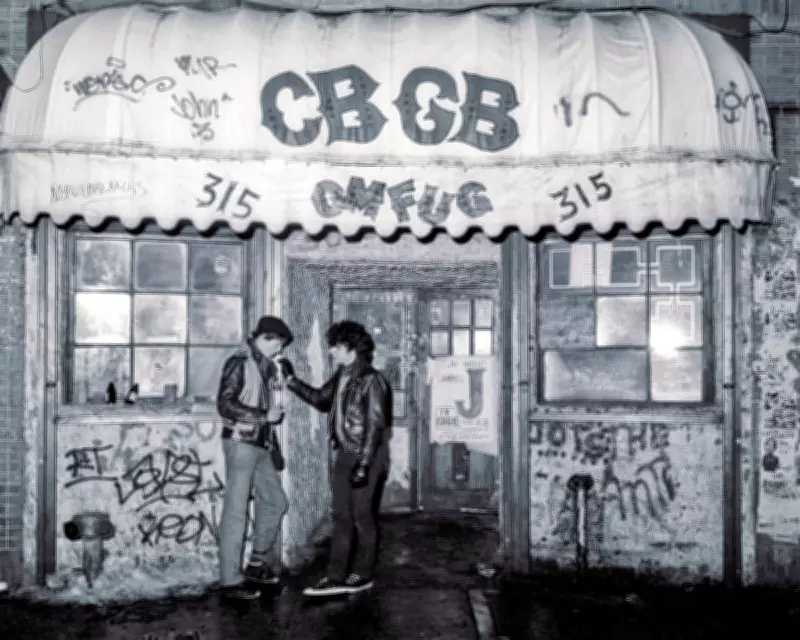
Half a century ago, a dilapidated dive bar in New York's East Village began attracting attention as an unexpected hub for revolutionary rock music. What started as whispers in small-circulation music magazines soon became a pilgrimage site for celebrated musicians, record label executives, hip journalists, and the influencers of that era. Everyone was making a beeline for 315 Bowery, the unassuming address that would become ground zero for punk and new wave movements.
The Visionary Behind the Venue
The CBGB story centers on Hillel "Hilly" Kristal, a former marine and folk singer born in 1931 to Russian Jewish immigrants. After serving in the military and singing in folk clubs, Kristal booked artists for the Village Vanguard jazz club before opening his own Greenwich Village bar called Hilly's. When neighbors complained about "loud music" forcing its closure in 1969, Kristal made a strategic move to 315 Bowery, reasoning that no one would complain about noise on New York's "skid row" where his next-door neighbor was the Palace Hotel, which mainly catered to homeless people.
From Country to Punk: An Unexpected Evolution
Initially calling his new establishment Hilly's on the Bowery, Kristal started by promoting underground jazz concerts. However, when a motorcycle gang made the bar their Bowery base and scared off the jazz crowd, Kristal renamed the venue CBGB & OMFUG on December 10, 1973. The acronym stood for Country, Bluegrass, Blues & Other Music For Uplifting Gourmandizers, reflecting Kristal's original vision of a roots music venue. Despite this intention, Kristal proved flexible, happily hosting any musicians who could draw a crowd.

The Laboratory of Sound: CBGB's Creative Explosion
In early 1974, fledgling rock band Television—led by Tom Verlaine and Richard Hell—requested to play the venue. Though initially unimpressed by their stark, angular sound, Kristal gave them a Sunday night residency. For their third gig, Patti Smith and her guitarist/producer Lenny Kaye were in the audience, witnessing what Kaye describes as "a changing-of-the-guard moment." Soon, Smith's band also secured a residency, and for six epic weeks, the two groups shared sets at CBGB, creating what Kaye calls "a laboratory of sorts" where both bands could develop their ideas and sound.
The Rise of Iconic Bands
As more bands played CBGB—with Kristal booking them based on the dictum "original music only"—a distinctive scene began taking shape. The Ramones made their CBGB debut on August 16, 1974, with their signature look of ripped jeans and leather jackets already in place alongside their fast, sharp songs. After their performance, Kristal famously told Joey Ramone: "No one is going to like you guys, but I'll have you back." Blondie debuted a couple of months later, followed by Patti Smith in February 1975 and Talking Heads in June. Mink DeVille would become the house band, and the first issue of Punk magazine in January 1976 championed CBGB's bands, giving the scene its definitive name.
The Punk Sensibility Takes Hold
"I always think when punk was given a definition in England that it became less of an unpredictable art," reflects Lenny Kaye. "It had a very specific sound that was somewhat exclusionary to other sounds. And what I like about the 'punk' that came out of CBGB is its sensibility. It meant you were starting over, that you were presumptuous to be able to stand up there and say: 'I'm going to make something new and I'm not going to shy away from it.'"
Celebrity Attention and Cultural Impact
Soon, notable figures like Lou Reed, Iggy Pop, John Cale, David Bowie (with bodyguard), Brian Eno, and Malcolm McLaren began frequenting CBGB. Seymour and Linda Stein, regular attenders themselves, signed both Ramones and Talking Heads to Sire Records. Back in London, McLaren modeled his teenage charges the Sex Pistols on CBGB mainstay Richard Hell, adopting his short, spiky hair, ripped T-shirts with slogans, and Blank Generation-style anthems. The release of Ramones' eponymous debut album on April 23, 1976, signaled a cultural uprising, and Kristal, aged 45, suddenly found himself a godfather of punk.

The Gritty Reality of CBGB
CBGB's growing status meant that even Andy Warhol—often spotted at glitzy disco Studio 54—could be found rubbing shoulders with rock'n'roll riffraff. Robert Frank and Robert Mapplethorpe dropped in, as did William Burroughs and Allen Ginsberg, while Divine and John Belushi enjoyed letting out their inner punks by jumping on stage. Yet this intense attention didn't change the venue's essential character. Photographer Gary Green's book When Midnight Comes Around documents CBGB from 1976 to 1986, with photos that even in black-and-white exude grime, showing surfaces covered in graffiti and overflowing ashtrays.
"New York was gritty, dirty and poor in those days," says Green. "And CBGB reflected that." The club's toilets were notoriously filthy, where celebrities and music executives experienced punk rock at its most elemental. "The club was bleached every morning," notes Lisa Kristal Burgman, who worked at CBGB across 1976 and 77. "It was the clientele who made it messy." Kaye adds with laughter: "The bathrooms were never cleaned. It was gross, but great."
International Recognition and Changing Times
Rising bands now queued to play CBGB. The Damned became the first British band to perform there in 1977, introducing UK punk—already a media sensation—to American audiences. In 1977, AC/DC made their New York City debut at CBGB, stunning jaded New Yorkers with their fierce attack, while the Police received an enthusiastic response to their 8pm and midnight sets in 1978, despite being unloved and unsuccessful at home. Beyond the bands who achieved fame, CBGB hosted thousands who never experienced commercial success, with Kristal regularly booking four groups a night and adding weekend matinees for hardcore bands playing to underage audiences in the 1980s.
The End of an Era
If CBGB didn't change, New York City certainly did. Gentrification swept through the Bowery, bringing bankers and boutiques while corresponding rent increases put Kristal in conflict with his landlord, who claimed he owed $90,000. Though Kristal won the court case, he agreed to vacate when his lease ended in 2006. On October 15, 2006, Patti Smith and Lenny Kaye performed until the early hours, with Smith reciting a long list of names of CBGB denizens who had died across its 33-year existence during the final number. After they left the stage, Kristal locked the venue's doors, and the world's most celebrated dive bar joined the city's ghosts.
Legacy and Commemoration
Kristal would soon announce plans for a Las Vegas location to launch a new CBGB outpost, but lung cancer claimed him on August 28, 2007, before he could realize this vision. Today, CBGB lives on through the fashion line Kristal launched—selling branded clothing and jewellery made him a millionaire—and through a Brooklyn punk-themed festival. Most importantly, CBGB's legacy endures in the music itself, now celebrated on CBGB & OMFUG: A New York City Soundtrack 1975-1986, a comprehensive four-CD box set drawing on the club's halcyon years.
From Television and Blondie through to Sonic Youth and Beastie Boys—alongside lesser-known bands like Nihilistics, Marbles, and Peroxide—the collection serves as a remarkably thorough document of an era when New York City was cheap to live in and artistic rather than commercial. As compiler Rob Tannenbaum notes, having played CBGB twice himself: "I can assure you the bathrooms were just as rank as they are reputed to have been... We didn't care—we knew we were standing on sacred ground."