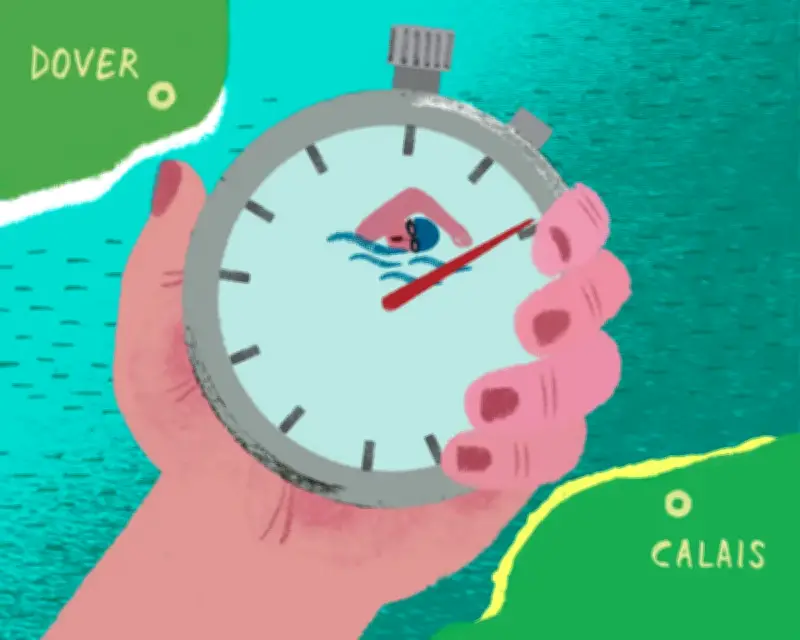
The first person to swim the English Channel unaided, Captain Matthew Webb, covered nearly 39 miles instead of the expected 21 due to tides and weather, a feat that took 21 hours and 45 minutes and ultimately popularized swimming as a sport, though his life ended tragically at age 35. This story is now the subject of The Captain, a one-man show at the Edinburgh Fringe running through August, performed by comedian Adam Riches.
A Show About a Forgotten Hero
Riches, who previously created a show about Jimmy Connors' 1991 US Open run, narrates Webb's story in the persona of Fred Beckwith, the promoter who trained Webb at Lambeth Baths. The audience never meets Webb himself but learns about his journey through Beckwith's eyes. The show's interactive elements, including chanting "Pull. Breathe. Kick. Glide," turn the audience into participants in a communal celebration of endurance.
Before Webb, swimming in Europe had little tradition, as noted by Leonardo da Vinci in his 16th-century notebooks, where he wondered why humans, unlike other animals, must learn to swim. In the show, Beckwith claims that "swimming, pre-Captain Webb, wasn't an act in itself – it was merely a counterpoint to drowning," though this isn't entirely accurate. In 1810, Lord Byron crossed the Hellespont (now the Dardanelles in Turkey) in just over an hour, despite a club foot, and wrote a poem about it.
Webb's Swim and Its Legacy
Webb's near-fatal crossing in 1875, which took him from Dover toward Calais but ended up covering nearly double the distance, inspired many imitators, including Agnes Beckwith, Fred's daughter, who set records swimming 20 miles of the Thames from Westminster to Richmond and back to Mortlake. Olympic swimming also owes a debt to Webb: the first modern Games in 1896 held races in the Mediterranean Sea, where athletes faced 13ft waves, and gold medalist Alfréd Hajós later said, "my will to live completely overcame my desire to win."
The Channel became the ultimate test of endurance swimming, a status it retains in some ways. Gertrude Ederle's 1926 crossing, the fastest of its day and the first by a woman, became as famous as Webb's. Ederle's memory inspired Lynne Cox, who became the first woman to cross the Cook Strait and the first person to traverse the Bering Strait between the US and the Soviet Union, a Cold War effort in freezing waters.
A Cautionary Tale for Modern Sport
Webb's story serves as a cautionary tale: he died at 35, chasing fame and fortune that never lasted. In today's content-driven age, sport is often consumed as fleeting entertainment, a byproduct of the middle classes' 19th-century appetite for leisure. Yet sport's physical science and measurement of human progress still speak deeply, as seen in modern feats like breaking the two-hour marathon barrier or Katie Ledecky's dominance in distance swimming. Webb's ghost, later immortalized in a poem by John Betjeman, did something everyone but him believed impossible, a reminder of sport's enduring power to inspire.