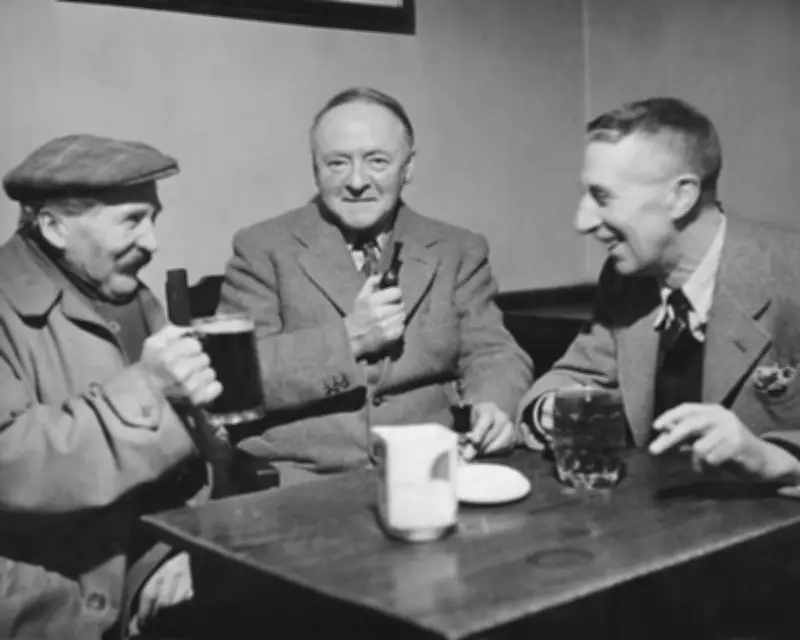
Arnold Bax, the British composer who served as master of the king's music for the final decade of his life, represents a fascinating yet overlooked chapter in classical music history. His work, characterized by its hyper-romanticism and unrestrained emotional depth, has become increasingly unfashionable in contemporary programming, particularly at events like the BBC Proms.
The Decline of a Prolific Composer
Born in 1883 into a wealthy London family, Bax enjoyed the financial freedom to pursue his artistic passions without constraint. This independence allowed him to develop a distinctive style that drew from diverse influences, including Russian exoticism, Celtic folklore, and the rugged landscapes of north-west Scotland. He even adopted the pseudonym Dermot O'Byrne to write poetry inspired by Irish themes, showcasing his multifaceted creativity.
Bax's avoidance of World War I service due to a heart condition further insulated him from societal pressures, enabling him to compose with a rare sense of artistic liberty. His fans celebrate this freedom as the source of his genius, while critics often view it as a lack of discipline.

A Proms Presence Fades
The decline in Bax's popularity is starkly evident in the BBC Proms archive. Throughout the 1930s, 1940s, and early 1950s, his seven symphonies were regular features at the festival. However, since then, his appearances have dwindled dramatically. The last performance of a Bax symphony at the Proms was in 2011, conducted by Andrew Litton, featuring the Second Symphony. More recently, in 2022, John Wilson included Bax's tone-poem Tintagel in a program, but these instances remain rare exceptions.
Tintagel, inspired by Cornish legends and Arthurian myth, exemplifies Bax's ability to evoke vivid, sea-swept imagery through orchestral Technicolor. A recent recording by Antonio Pappano with the London Symphony Orchestra has reignited interest in this piece, highlighting its emotional intensity and lack of restraint.
The Unfettered Imagination of Bax's Symphonies
Bax's symphonic works defy conventional structural norms and eschew folk traditions in favor of a deeply personal, imaginative approach. His music is marked by an excess of sensation, with lush orchestrations that push tonal harmony to its limits without breaking it. The First Symphony, for instance, opens with a complex interplay of woodwind sonorities, brass fanfares, and orchestral surges that create a microcosm of his artistic vision.
Influences from composers like Debussy, Strauss, Sibelius, and Holst are discernible, yet Bax's style remains uniquely his own. The Second Symphony conjures mythical landscapes where dragons breathe and mountains heave, while the Third and Fifth Symphonies conclude with radiant epilogues that showcase his sublime creativity.
New Music Highlights at the Proms
While Bax's absence is notable, the current Proms season offers exciting premieres and performances. Thea Musgrave, at 97 years old, will debut her Bassoon Concerto, Out of the Darkness, on August 23, performed by Amy Harman. Other highlights include Gabriela Ortiz's Revolución Diamantina, a powerful score addressing female oppression, and Thomas Adès's Inferno and Purgatorio, inspired by Dante's works.
Additionally, the UK premiere of Édith Canat de Chizy's Skyline and Betsy Jolas's Tales of a Summer Sea celebrate diverse musical voices, underscoring the festival's commitment to innovation.
Why Bax Deserves a Comeback
Arnold Bax's music, with its wild, wilful, and unfashionable qualities, offers a refreshing contrast to more restrained contemporary works. His legacy as a master of the king's music and a composer of profound emotional depth warrants renewed attention. As the Proms continue to evolve, revisiting Bax's symphonies could enrich the classical repertoire, reminding audiences of the power of unrestrained artistic expression.