The Resurgence of Alice Coltrane: A Cosmic Jazz Pioneer
Nearly two decades after her passing and over half a century since her most acclaimed albums, Alice Coltrane is finally receiving the recognition she deserves. Her first biography, Cosmic Music by Andy Beta, has been published, and a major exhibition dedicated to her took place in Los Angeles last year. Musicians from mainstream pop to experimental genres are now championing her work, leading to a surge in cosmic jazz harpists on festival lineups worldwide.
Overcoming Sexist Criticism and John Coltrane's Shadow
For years, Alice Coltrane's contributions were overshadowed by the legacy of her late husband, the legendary saxophonist John Coltrane. Sexist critics often dismissed her radical compositions as "soft-headed and incoherent rambling," with gendered assumptions about softness and prettiness thinly veiled in their assessments. The male-dominated critical establishment largely excluded her from the jazz canon, unlike John's peers such as Yusef Lateef and Pharoah Sanders.
Steven Ellison, also known as Flying Lotus, her grandnephew and a renowned psychedelic electronic musician, recalls, "As I was growing up, it seemed like everyone just wanted to ask her about John Coltrane." However, Cosmic Music emphasizes that Alice was integral to the radicalism of John's late career, particularly from the masterpiece A Love Supreme onward. They were partners in both spiritual and musical exploration, with Alice providing stability after John quit heroin and they started a family.

A Formidable Musician in Her Own Right
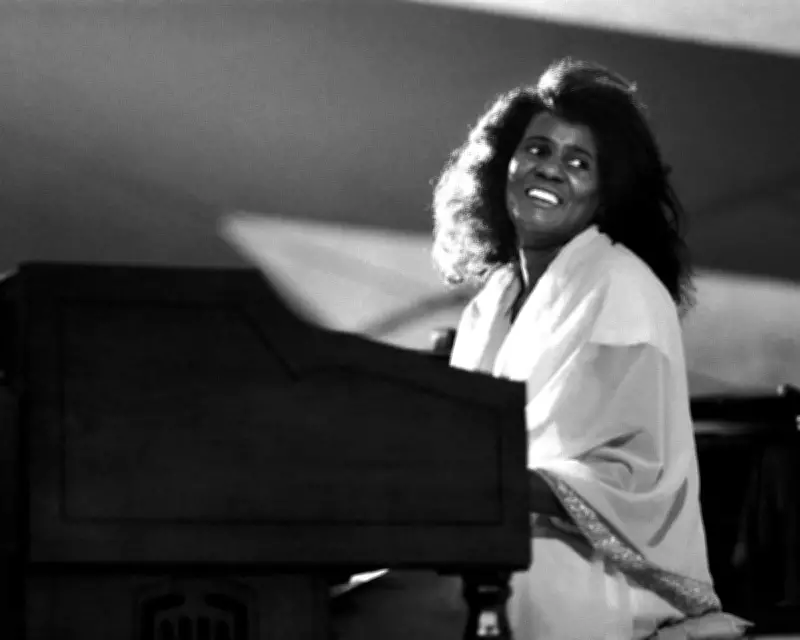
Before meeting John, Alice McLeod was already a formidable pianist, "known as a badass on the scene," according to Carlos Niño, a longtime collaborator of Flying Lotus. Her skills were honed in Detroit's gospel churches, and by her mid-teens, she was playing Stravinsky and Rachmaninov for pleasure. After John's death in 1967, her solo work expanded dramatically, incorporating global instrumentation, Hindu meditational discipline, lavish orchestral arrangements, and the harp, which became her signature instrument.
Welsh harpist Amanda Whiting explains, "With Alice Coltrane, the music, the chords, it just isn't moving around so much, and there's much more room for layers, it creates soundscapes." American composer Adrian Younge adds, "Alice Coltrane took the harp, an instrument of angels and orchestras, and made it sound like the cosmos breathing."
Influence Across Genres and Generations
Despite critical dismissal, Alice Coltrane's influence spread far beyond jazz. Rock stars like Jerry Garcia and Carlos Santana championed her work, while bands such as Sonic Youth and Radiohead absorbed her experimentalism. By the 2000s, her name appeared on tracks ranging from Paul Weller's dreamy Song for Alice to the doom-drone of Sunn O)))'s Alice. Her records permeated DJ culture, reaching hip-hop, trip-hop, and broken beat scenes, with artists like Cypress Hill sampling her music.
Drum'n'bass artist Adam F praises her "emotional and spiritual force," noting, "The way she blended jazz, devotion and total experimentation echoes through so many generations of musicians." Richard Russell of XL Recordings credits her album Journey to Satchidananda with rewiring his life during a period of personal change, calling it "a proper mind expander, a reset tool."
Modern Resonance and Spiritual Legacy
In the 21st century, Alice Coltrane's music has gained underground ubiquity, influencing a new generation of UK jazz musicians. Sheila Maurice-Gray of Kokoroko recalls learning her songs as a teenager, describing them as "very, very spiritual, and also there's an accessibility that is to do with leaning into her feminine energy." Even during her time in the Shanti Anantam ashram, where she focused on spiritual community and recorded cassettes later released by David Byrne's Luaka Bop label, her impact persisted.
Pop star Doja Cat, who lived in the Santa Monica mountains commune from ages eight to twelve, has credited Coltrane's minimalist, hymnal music with influencing her performance and persona. David Byrne points to this connection, highlighting the cover of the Luaka Bop record as evidence of her reach.

A Timeless Message in an Era of Chaos
Today, in a time of global chaos, Alice Coltrane's music resonates more than ever. Thurston Moore of Sonic Youth notes that her expressions of "love overcoming greed through the power of art have become more essential today more than ever." Broadcaster Zakia Sewell sees in modern artists like Khruangbin and Alabaster DePlume, who are indebted to Coltrane, a response to "people's appetite in a time of crisis for stuff that goes beyond pop structures."
Her music, even at its most meditative, retains echoes of Detroit churches, the blues, and her early days as a "badass" in bebop clubs. Cosmic Music charts her life of struggle and achievement, but as Steven Ellison summarizes, "It's been such an interesting and beautiful thing to see the new generation fall in love with Alice Coltrane." Her legacy continues to inspire, proving that true artistry transcends time and criticism.