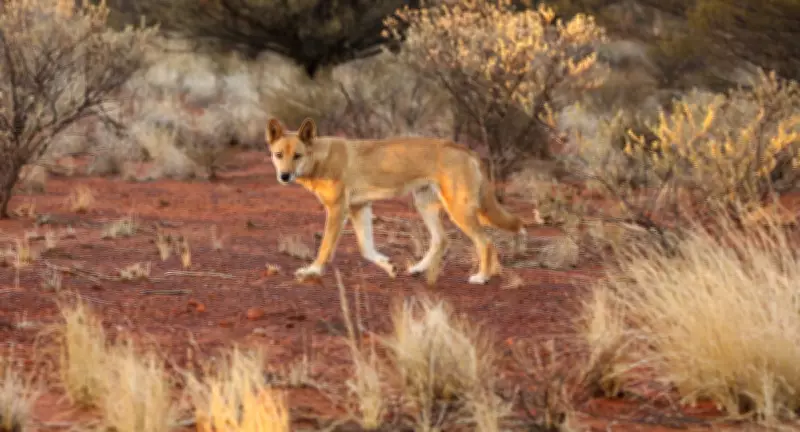
A new documentary titled Moort: Calling Dingo Back to Country is calling on Australian governments to move away from eradication policies and toward solutions that benefit both farmers and the culturally significant apex predator. The film explores the deep relationship between First Nations people and dingoes across south-west Western Australia, where the animals have nearly vanished.
The Story Behind the Documentary
Carol Pettersen, a Menang and Nadju Noongar elder, recalls hearing dingoes calling through the dark during her childhood in the 1940s, when her family lived deep in the bush around the Fitzgerald River. She describes the dingo howl as a song that evokes home. However, she has not seen a dingo in the wild for 70 to 80 years.
Across Australia, dingoes were once widespread but have been shot, trapped, poisoned, and fenced out of pastoral regions since colonisation. The 5,614-kilometre dingo fence running through Queensland, New South Wales, and South Australia is a visible symbol of this eradication. Many Aboriginal communities say the loss is both cultural and ecological, as dingoes are held in stories, totems, and songlines.
Advocacy and Cultural Exchange
Sonya Takau, a Jirrbal woman and founder of Dingo Culture, began her advocacy about 15 years ago after encountering two dingoes on a railway line. She found that policy was shaped largely by livestock interests, with little regard for First Nations cultural authority. Dingoes are often grouped with wild dogs under biosecurity laws and treated as pests, allowing landholders to kill them.
Takau argues that this framing ignores both their cultural significance and ecological role. Dingoes keep Country healthy by controlling overgrazing and reducing pressure from feral cats and foxes. Through her advocacy, she met Alix Livingstone, founder of Defend the Wild, and together they worked to centre Aboriginal voices in dingo conservation. This led to a cultural exchange that brought rangers from Queensland and northern NSW together with Aboriginal corporations on WA's south coast.
The Film and Campaign
The documentary Moort: Calling Dingo Back to Country grew out of that exchange. In February, it was screened at WA parliament, where custodians called on the state government to remove dingoes from pest classifications and phase out 1080 baiting and strychnine-laced foothold traps. Livingstone says the campaign is about shifting support from killing programs to coexistence measures such as better fencing, guardian animals, and practical help for landholders.
Voices from the Film
Zac Webb, a Wadandi conservationist who appears in Moort, grew up knowing dingoes only through absence. He describes how early-settler dingo culling became almost a sport, and his own great-grandfather was paid to shoot wildlife for farmers. Webb points to Wooleen Station, a cattle station where dingoes were allowed to return, leading to vegetation recovery and improved water flow. For Webb, the dingo's absence is an intergenerational problem, and coexistence must be learned.
Pettersen, who once felt alone in her grief, says the film brought Aboriginal people together from across the country, and the love for dingoes came through. "It's something we hold dear nationally, as Aboriginal people across Australia. It is family. It's our kinship," she says.
Screenings
Moort: Calling Dingo Back to Country and Wooleen: Utilising Dingoes as a Management Tool are screening together at Brunswick Picture House, NSW, on 17 May and Evans Head, NSW, on 13 June, with more screenings around Australia to come.