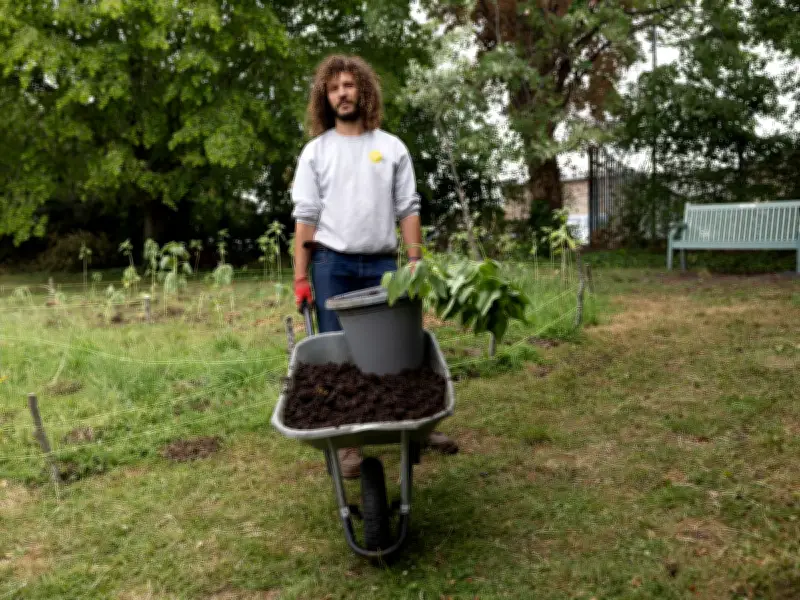
City Hall must implement a London-wide 'Right to Grow' framework to allow communities to turn unused public land into food gardens, campaigners have said. Several councils, including Southwark, Hackney, and Hounslow, have already rolled out such a policy, enabling wasteland to be transformed into new allotments, community gardens, and orchards.
Demand for growing space far exceeds supply
Demand for growing space continues to significantly exceed supply, according to campaigners. A recent Greenpeace Freedom of Information request found at least 30,500 Londoners are on allotment waiting lists, with 16 boroughs closed to new applicants. In Camden, waiting times can reach up to 12 years. In Islington, there are just 106 allotment plots for approximately 17,000 households with no garden access.
Campaigners call for coordinated citywide approach
The Greater London Authority (GLA) has been asked to develop a model that all 32 boroughs and the City of London can sign up to, ensuring uniformity across the capital. A new report from the London People's Assembly on Food, Nature and the Right to Grow outlines 12 demands for London-wide action to make the city 'greener and more edible' by 2035. These include a City Hall-inspired framework, dedicated community growing officers in every borough, and embedding food growing into future health and planning strategies.

City Hall urged to cut red tape
Kalpana Arias, Assembly Organiser and campaigner for the London-wide Right to Grow Campaign, told the Local Democracy Reporting Service that backing the Right to Grow would be an easy win for City Hall. 'We want the GLA to implement the Right to Grow within its food and housing policies so it's easier for boroughs to sign onto the framework,' she said. 'We have a lot of ambition, but institutions need to match that and get rid of the red tape that's still there. We need to strengthen biodiversity and improve food security within London. Gardening within cities can seem like a nice hobby, but for a lot of working-class communities, the relationship with land and space is so important.'
She added: 'We're never going to make London completely food independent, but we're looking to shed a light on the fact that the capital imports 94 per cent of their food. This can add an extra layer of resilience when supply chains become disrupted.'
Southwark cited as model borough
Arias cited Southwark as a good example of having a clear process for residents, with a dedicated officer lead who people can pitch projects to for evaluation. She noted that more boroughs are signing on, with Hounslow being the latest, but emphasised the need for a more coordinated effort across the city.
Deputy Mayor supports green space expansion
City Hall has come out in support of increasing access to London's green spaces. Deputy Mayor for Environment Mete Coban said: 'It’s a matter of social and environmental justice. That’s why at City Hall we’ve planted 640,000 new trees, and enhanced and created more than 2,000 football pitches of green space across the city. We’re also empowering communities across the city to transform their blue and green spaces through the Mayor's £12million Green Roots Fund. This includes projects that galvanise positive environmental action, boosting biodiversity, planting trees, enhancing blue spaces and growing food.'
He added: 'The benefits of nature should be for everyone and we are committed to making this the reality as we build a greener, healthier and more resilient London for everyone.' City Hall officials did not confirm whether they will draw up a Right to Grow framework.