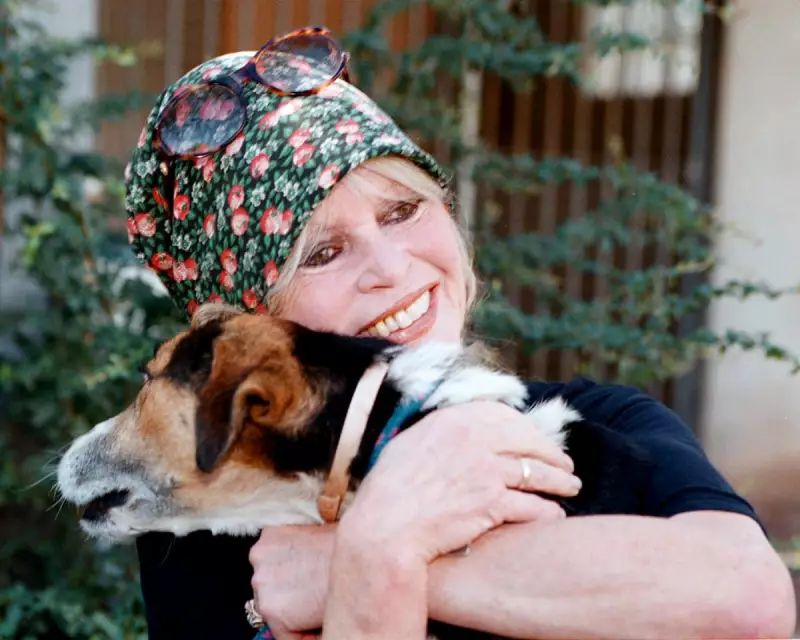
The death of French cinema legend Brigitte Bardot has reignited discussion about her deeply complex legacy. Hailed as the "French Marilyn Monroe," Bardot was the first major film star to channel her immense fame into supporting France's far-right political movement, a stance she maintained for over three decades.
A Political Life Intertwined with Animal Activism
Bardot, who quit acting to dedicate her life to animal welfare, always insisted she wished to be remembered solely for that struggle. She leveraged her status to petition French presidents from Charles de Gaulle to Emmanuel Macron on issues like seal fur imports and elephant poaching. However, her public persona became equally defined by her divisive political commentary and steadfast support for the anti-immigration National Rally (RN) party and its predecessors.
Up until her passing, Bardot expressed contentment at the RN's rising electoral prospects ahead of the 2027 presidential race. Her political journey was deeply personal; she met her husband, Bernard d'Ormale, a former adviser to Jean-Marie Le Pen, through the Le Pen family in the 1990s. She remained married to him until her death.
Convictions and Controversial Commentary
Bardot's image is significantly complicated by her five convictions for inciting racial hatred. These stemmed from remarks often targeting Muslims, describing an "invasion" of foreigners in France, and derogatory comments about inhabitants of the French island of Réunion.
In her final book, Mon BBcédaire, published just weeks before she died, she declared the right – her term for Le Pen's party – was the "only urgent remedy to the agony of France." She lamented the country had become "dull, sad, submissive, ill, ruined, ravaged, ordinary and vulgar."
She was a vocal supporter of Marine Le Pen, praising her presidential bids in 2012 and 2017 and famously stating "she is the only woman … who has balls." Le Pen, in turn, frequently cited Bardot – whose likeness once modelled for Marianne, the symbol of the French Republic – as an icon of Frenchness.
A Legacy of Contradictions
Bardot's political energies were uniquely channeled. While resolutely right-wing, she claimed to work with any politician who advanced animal rights, once praising leftist Jean-Luc Mélenchon for his vegetarianism. Her threats were dramatic, including a 2013 pledge to seek Russian citizenship if elephants in a Lyon zoo were euthanised, though she later criticised Vladimir Putin after the invasion of Ukraine.
In her later years, she was openly critical of the #MeToo movement, defending actor Gérard Depardieu before his recent sexual assault conviction and stating in a final TV interview, "Feminism isn't my thing … I like men."
Following her death, RN president Jordan Bardella paid tribute to her as an "ardent patriot." As Marine Le Pen's party stands closer than ever to power, Bardot's legacy remains a potent and controversial mix: a global symbol of beauty and animal compassion, inextricably linked to a lifetime of far-right advocacy and racially charged rhetoric.