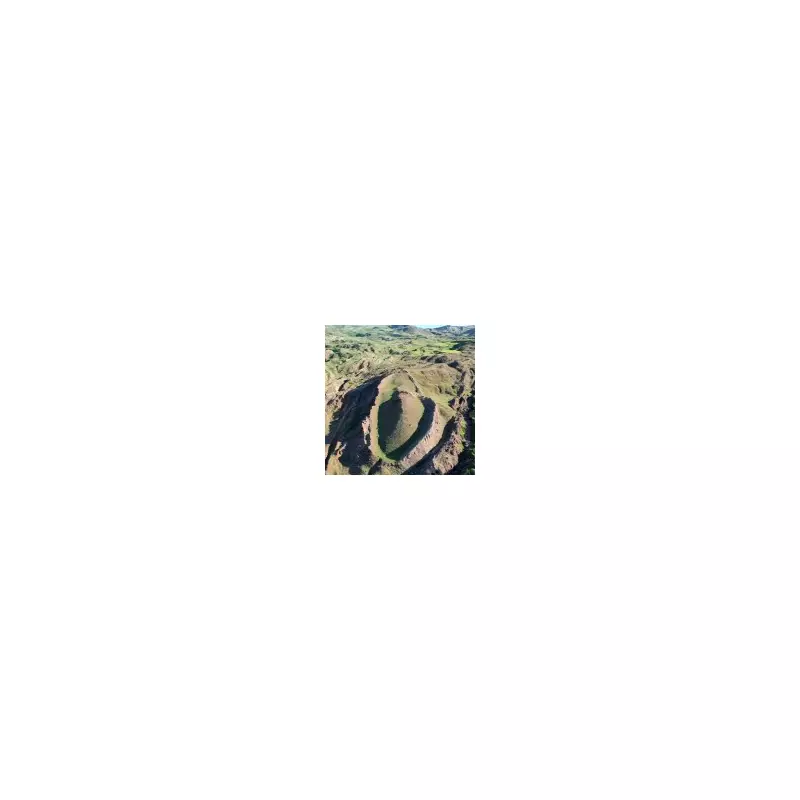
Archaeologists in Turkey have uncovered ancient pottery fragments near a site long associated with the legend of Noah's Ark, sparking fresh debate and calls for the area's protection. The ceramics point to human settlement in the region between 5500 BC and 3000 BC, a timeframe that overlaps with traditional Biblical chronologies for the great flood.
Discovery at the 'Boat-Shaped' Site
The significant finds were made during road construction work close to the Durupinar Formation in Agri province, eastern Turkey. This distinctive, boat-shaped geological structure has been a focal point for Ark hunters since its identification by Captain Ilhan Durupinar in 1959. Professor Dr Faruk Kaya from Agri Ibrahim Cecen University confirmed the pottery pieces were discovered near the alleged outline of the Ark at the Dogubayazit site on the slopes of Mount Ararat.
Subsequent erosion from heavy rain and earthquakes over the decades has gradually revealed more of the formation's outline. Its peculiar shape and proximity to Mount Ararat—the peak named in the Book of Genesis as the Ark's resting place—have fuelled speculation for generations. Some researchers note that the site's dimensions broadly correspond to the Biblical description of the Ark being 300 cubits long, 50 cubits wide, and 30 cubits high.
Scientific Analysis and Timeline Alignment
Rock and soil samples from the formation, analysed at Istanbul Technical University, indicate the area could have supported sustained human life from the Chalcolithic period onwards. Professor Kaya stated that the dating of the newly found pottery broadly aligns with traditional estimates of Noah's lifetime. This scientific work is being coordinated by the Mount Ararat and Noah's Ark Research Team, a formal collaboration established in 2022 between Agri Ibrahim Cecen University and Istanbul Technical University, involving experts in geophysics, chemistry, and geoarchaeology.
The findings provide a tangible archaeological context for the area, moving beyond mere geological curiosity. They suggest a human presence during the very era that some scholars and believers link to the flood narrative, though they do not constitute direct proof of the Biblical event itself.
Urgent Calls for Protection Amid Souvenir Hunting
The revelations have been accompanied by urgent appeals for the site to be formally safeguarded. Archaeologists have raised serious concerns about tourists removing stones and fragments as souvenirs, potentially damaging what they consider an important heritage location. Professor Kaya has warned that visitors have been taking material, including stones with markings, from the area.
He emphasised the need for immediate action, stating: 'This formation and its surroundings must be protected, and the removal of stones, rocks or similar material from the site must be prevented.' The call highlights the tension between public fascination with the site and the preservation of its archaeological integrity for future study.