Illustration: Guardian Design/Getty
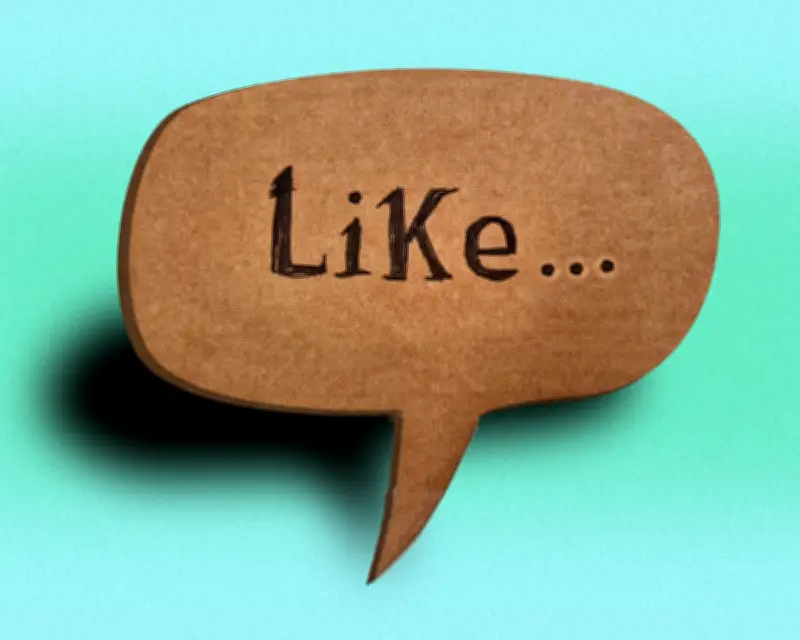
The hill I will die on: I really don’t like ‘like’ – or other imprecise and redundant speech
Junk speak, like junk food, encourages verbal littering. It has to be one of the worst things about life in Britain
I live in the Norfolk countryside, and what irritates me most about living here is the deluge of litter that gets thrown out of car windows in the lane outside my house. It is always from junk food outlets, so the question arises as to which way round things are: does junk food turn you into an antisocial moron, or is it that only antisocial morons eat junk food? Could it be an unfortunate confluence of both?

I never eat it, and never throw litter out of my window. QED. I do find other ways of being antisocial, I suppose, but farts disperse on their own and don’t have to be picked up by passing dog walkers and irate householders.
What winds me up the most about our national life in general is the fashion for imprecise and redundant speech. I inherit this deep-seated misosaskopeslexis* from my father, who was disdainful of the transatlantic accent we all affected in the 1960s and 1970s, and the now forgotten vocabulary that went with it (hey, wow man, cool, far out, heavy, groovy etc).
Like him, I had a classical humanist education in which I was carefully taught how to construct sentences, and how to link them into a coherent train of thought. Nowadays, of course, everyone is affecting a generic Thames corridor accent that is pure Essex. Glottal stops are thriving like Himalayan balsam on the banks of a beck. It is part of the continuing tragedy of our loss of regional dialect. Oi’m a proper vexed bout thaht, bor. Oi’d a rather be a hearin good ol Mardle, speakin pussnally*.
The imperialism of Essex doesn’t quite drive me bonkers, however. What gets my goat is the fashion for larding one’s speech with delays and interpolations that are designed to make one think that the speaker is cool, relaxed, on trend and modest.
I once went to speak to a sixth-form group where one perfectly intelligent young woman said “like” so much that it took her five minutes to say something that should have taken five seconds. The effect was embarrassing and bewildering. Afterwards, in private, I begged her to stop doing it.
The hill I will die on: Voice notes have made my generation a bunch of self-absorbed bores | Annabel Martin
Read more
Nowadays, I can’t even listen to Radio 4. It doesn’t care about my demographic any more; it’s been rejigged for younger people who say “like”, so that for fluent speakers such as myself it feels like being hit repeatedly on the head with a foam rubber mallet by a stoned Barbary ape. I sometimes wonder whether this junk speech has any connection with the consumption of junk food. And rural littering.
“Like” may be the most annoying of the grammatical fillers (it’s even more common than “um” and “er”) but it’s hardly the only one. I would kind of like (like) to sort of (like) strike speechless all those who (sort of like) think it’s cool to kind of sort of waste everybody’s time with their (like) contentless blether. And stuff. And shit.
* Hatred of pointless words. It’s Greek. Don’t look it up; I made it up myself. I think it might be useful.
* Mardle is the dialect of Norfolk. Louis de Bernières’s fourth novel, Captain Corelli’s Mandolin, became a worldwide bestseller in 1994
Explore more on these topics

- Language
- The hill I will die on
- Fast food
- Norfolk
- Food