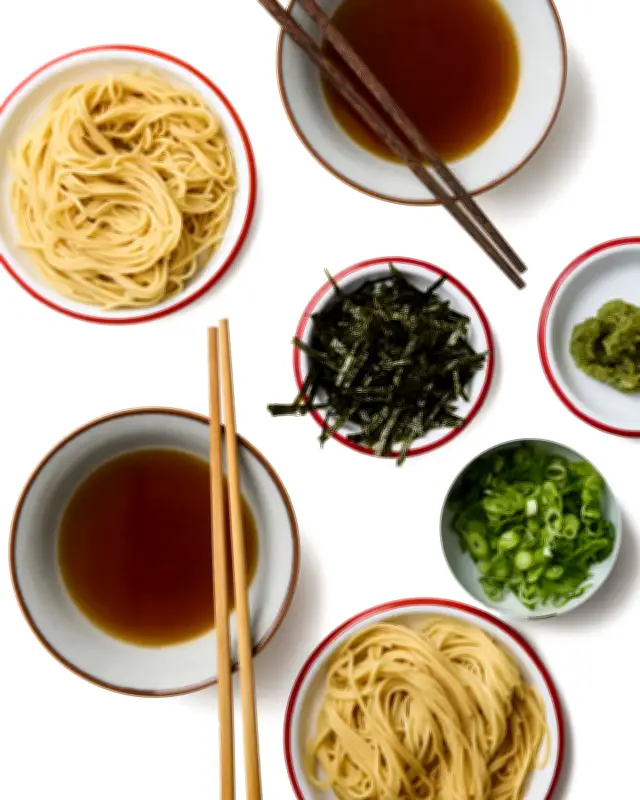
Zaru soba, Japan's cold buckwheat noodle dish served with a savory dipping sauce, offers a nutty, salty, and sweet solution for hot summer days, ready in just 15 minutes. According to Namiko Hirasawa Chen of Just One Cookbook, it's her family's "go-to meal when the summer heat and humidity soar," a simple yet satisfying dish that can be enhanced with crunchy salads, sweet seafood, or creamy tofu sides.
The dish traditionally features cold, slippery noodles paired with an intense sauce made from soy sauce, mirin, and dashi. While traditionally served on a bamboo mat called a zaru to drain the noodles, home cooks can use a regular plate or bowl. For those avoiding gluten, 100% buckwheat noodles and a gluten-free soy sauce like Kikkoman's are available, though standard soba noodles are widely found in UK supermarkets.
Choosing and Cooking the Noodles
Yumiko Maehashi of RecipeTin Japan notes that buckwheat noodles' nutty flavor is best enjoyed cold, quoting a Japanese article: "some soba fanatics would not consider the soba in hot soup as 'soba'." She explains that soba brands often indicate the ratio of buckwheat to wheat flour, with more buckwheat providing more flavor and higher cost, and that "in general, the more expensive dried soba noodles cook to al dente better."
Cook the noodles in unsalted water, swirling them for the first 15 seconds to prevent clumping. After cooking, rinse thoroughly under cold water to cool quickly and remove excess starch, which would otherwise make the noodles sticky. Chen recommends an iced water dunk, though the author finds no significant texture difference. If noodles tangle, rinse again and drain well.
Preparing the Dipping Sauce
Maehashi advises the proper eating method: "pick up a few strands of noodles and dip only the bottom half of them into the dipping sauce by simply lowering the chopsticks," avoiding dropping all noodles in to preserve the noodle flavor. The sauce, called mentsuyu, combines salty soy sauce, sweet mirin, umami-rich kombu seaweed, and dried smoked tuna flakes (katsuobushi).
Ready-made dashi stock or bottled mentsuyu are convenient substitutes, but homemade is easy. Chen and chef Aya Nishimura add sake for complexity, while Nishimura and chef Maori Murota include brown sugar for sweetness. Nishimura also adds shiitake mushrooms, which the author finds overwhelming but suggests as a fish substitute. The sauce should be chilled for a few hours, and leftover kombu and katsuobushi can be saved to make furikake rice seasoning.
Chef Masaki Sugisaki of Dinings SW3 in London recommends a traditional finish: "once you have finished the noodles, heat the reserved noodle cooking water and add it to the dipping sauce. It is traditional to drink this as a soup, because the water contains nourishing minerals."
Accompaniments and Serving
Common accompaniments include shredded nori (making it nori soba), fiery wasabi, and spring onions. Murota suggests daikon and garlic chives or leek whites instead of spring onions, and both she and Nishimura include grated ginger. Toasted sesame seeds add texture. The author emphasizes simplicity: "try to avoid the temptation to load it up like a salad before you've even tried it."
The recipe serves two and includes 2 x 75g bunches of soba noodles, optional nori, spring onions, wasabi, and a sauce made from kombu, soy sauce, mirin, optional sake, brown sugar, and katsuobushi. Preparation takes 10 minutes, cooking 10 minutes, plus 30 minutes infusion and 2 hours chilling. The sauce is made by soaking kombu in cold water, adding other ingredients, boiling, then adding katsuobushi and chilling. Noodles are boiled, rinsed, and served with the sauce and accompaniments, with the final step of adding cooking water to remaining sauce for a broth to drink.