Indian cuisine is deeply embedded in British culture. But do those of us without subcontinental origins know about the history behind it, beyond apocryphal stories about how chicken tikka masala was devised? On the whole, I would say no, which is why Oudh 1722 is both intriguingly exotic and tantalisingly familiar.
The brainchild of double Michelin-starred Brummie chef Akhtar Islam, this Borough restaurant is an explicit attempt to evoke the cookery of the royal court of 18th-century Lucknow, which stood as the capital of Awadhi cuisine — a sort of slow-cooking-centric melting pot of Mughal, Persian and Central Asian influences.
An Impressively Sprawling Menu That Would Wow a Royal
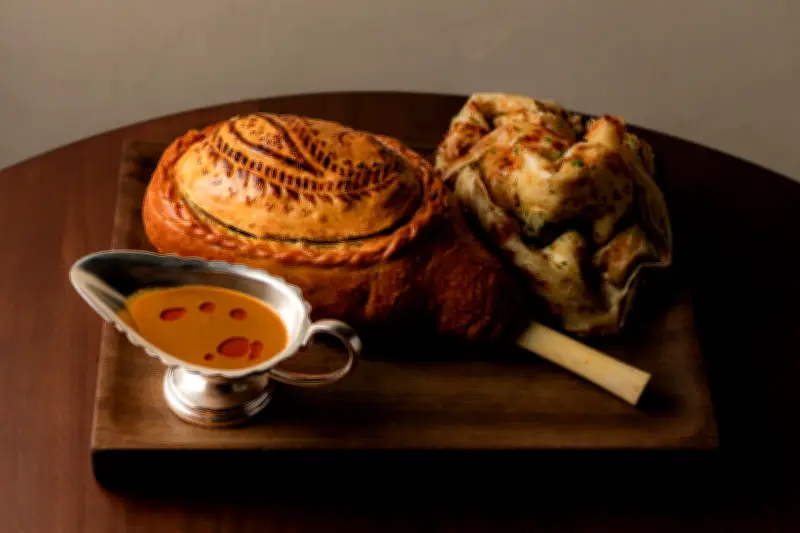
When it comes to how realistically Islam has been able to recreate 304-year-old recipes (1722 being the year the Lucknow court was established), it is safe to say these are his own spins. But in an impressively sprawling menu, there is plenty that would wow a royal. Some of the food is outright blingy: many dishes come bedaubed in vivid blue and yellow petals, and our ras malai (juicy, cardamommy, great) took it to the next level by sprinkling on gold leaf. This is not Salt Bae ostentation, though; it just feels like every dish — even relatively simple ones — is signed off with the sort of flourish you might expect for a noble table.

It is an intriguing balancing act. There are theatrical dishes here, like a creamy, spicy malai murgh chicken leg strewn with flowers, or the gargantuan lasooni jinga king prawn with raw mango. There is also an astonishing pappad selection that offers incredible volume, array, and contrast in textures, practically a meal in itself. And how about hollow fried gol guppa dough balls with a spicy jaj-jeera liquid you pour in yourself and pop into your mouth like a small sun, served on an entirely extra bed of sprouting moong?
Nonetheless, it all has a historical grounding — it is not just chef Islam showing off — and the restaurant building has a charmingly unvarnished quality: a listed, limewashed former hatmaker's with a homely quality pleasingly at odds with all that gold leaf.
The Elephant in the Room
Well, that was me at the end, as for all the fine dining flourishes, this is incredibly hearty food. The core of the meal is the dum: mountainous slow-cooked rice dishes allegedly for two but which could feed a small army. We had the veggie Lucknowi kofta pilau, an avalanche of fragrant rice, chickpeas, and soya dumplings. We managed half of it, tops.
Is it perhaps true that for all the fiddly stuff and dazzling kaleidoscopic garnishes, Oudh 1722 boils down to a 'big portions, sturdy flavours' type affair? You could order the papads and one dum between two and stumble out groaning, having barely explored the wider menu. But actually, I think that is entirely fine: you can engage with this restaurant on a number of levels — it is as highbrow or lowbrow as you want it to be.
The Vibe
A surprisingly low-key listed building in the Borough backstreets.
The Food
Hearty but high-concept Awadhi cuisine with a historic bent and astonishing presentation.
The Drink
An entertaining eclectic international wine list (I had a Japanese white) and fun, subcontinental spins on classic cocktails, such as mango chutney margarita.
Time Out Tip
Do not underestimate the size of the portions. If you are going to order widely (and you should!), then plan to doggy bag without shame.