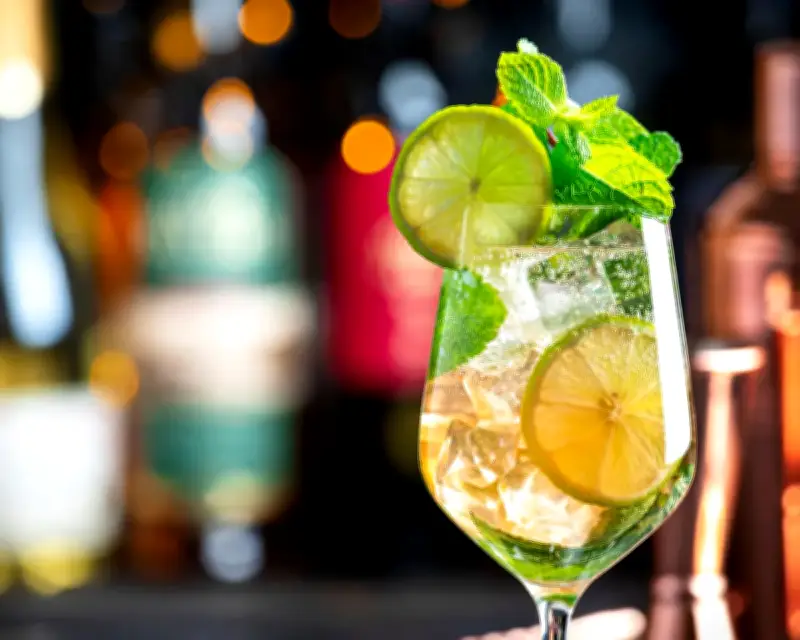
This summer, UK web searches for “Hugo spritz”, an elderflower-flavoured aperitif, have overtaken searches for “Aperol spritz” for the first time, according to recent data. The spritz craze shows no signs of slowing down, with pub chains now calling anything fizzy and served in a large glass over ice a spritz – and charging £10-plus for it. Examples include Echo Falls blue raspberry spritz, pink gin spritz at Slug & Lettuce, raspberry vodka and honey spritz at Young's, and Malibu cranberry spritz at Stonegate.
The traditional spritz formula
Traditionally, the spritz is an Italian cocktail made from prosecco, a bitter aperitif or liqueur, and a splash of soda water. While Venetian bartenders judge by eye, there is a simple 3-2-1 formula for making a spritz at home: three parts prosecco, two parts liqueur, and one part soda water. The recommended measurements are 75ml prosecco, 50ml liqueur, and 25ml soda water, with the option to scale down to 60ml/40ml/20ml or up to 90ml/60ml/30ml while keeping the same ratios. Adjustments can be made to make the drink stronger or weaker, such as omitting the soda.
For those who prefer not to drink wine-based cocktails, shandy is also seeing a resurgence. Ocado sales have increased 40% year on year, and the craft brand Shandy Shack is now stocked in M&S. Being half beer and half soft drink, it is another summery thirst-quencher that is easy to make at home and, in theory, shouldn't get you too intoxicated.
Five bittersweet spritzes
All recipes make one drink. Pour the liquids into a large glass with ice, stir briefly, and garnish.
- Select spritz: The bittersweet aperitif Select (17.5% ABV) was created in Venice in 1920, and the original spritz (AKA spritz Veneziano) was born. Select contains 30 herbs and botanicals, most noticeably rhubarb roots. 75ml prosecco, 50ml Select, 25ml soda water, green olive to garnish.
- Campari spritz: Bitter Campari (25%) was invented near Milan in 1860 from a still-secret blend of herbs, spices, and fruit peels; the spritz version came later. 75ml prosecco, 50ml Campari, 25ml soda water, slice of orange to garnish.
- Aperol spritz: All-conquering Aperol (11%) was created in Padua in 1919 from a mix of herbs, roots, and fruits. It is sweeter and less alcoholic than most similar bittersweet liqueurs. 75ml prosecco, 50ml Aperol, 25ml soda water, slice of orange to garnish.
- Cynar spritz: Artichoke-based, herbal Cynar (16.5%), also from Padua, was first made in 1952. 75ml prosecco, 50ml Cynar, 25ml soda water, twist of lemon or grapefruit peel to garnish.
- Vermouth spritz: Sweet red vermouth (15-18%), a fortified wine, emerged in Turin in the late 18th century; dry white vermouth appeared in Chambéry, France, a couple of decades later. Either can be used in a spritz, or mixed with tonic water. 75ml prosecco, 50ml red or white vermouth, 25ml soda water, slice of orange (red) or lemon (white) to garnish.
Five alternative spritzes
- Hugo spritz: The fresh and floral Hugo is a recent addition to the spritz canon. It is said to have been invented in a bar in Naturno, northern Italy, in 2005. The original recipe used lemon balm syrup, which was replaced by more widely available elderflower cordial. Today, it is more common to use elderflower liqueur, such as the French St-Germain (20%). Some add a shot of gin for an extra kick. 75ml prosecco, 50ml elderflower liqueur, 25ml gin (optional), 25ml soda water, fresh mint to garnish.
- Limoncello spritz: A light, zesty citrus spritz made from limoncello (26-30%), a lemon-flavoured liqueur first produced around 1900 in Naples, the Amalfi coast, and Sicily. 75ml prosecco, 50ml limoncello, 25ml soda water, slice of lemon and sprig of mint or thyme to garnish.
- Italicus spritz: Another newer spritz, made from the bergamot-flavoured Italicus Rosolio di Bergamotto (20%), which has been produced near Turin since 2016. 75ml prosecco, 50ml Italicus, 25ml soda water, green olive to garnish.
- Sarti spritz: Casa Sarti, a liqueur-maker, was founded in Bologna in 1885, but Sarti Rosa (14%) was only launched in 2023. It makes a sweet, almost tropical spritz flavoured with blood orange, mango, and passionfruit. 75ml prosecco, 50ml Sarti Rosa, 25ml soda water, slice of lime to garnish.
- Amaretto spritz: Almond-flavoured amaretto (21-28%), a sweet liqueur from Saronno in Lombardy, has got in on the spritz action. It’s a good option for chillier days. 75ml prosecco, 50ml amaretto, 25ml soda water, slice of lemon and a cocktail cherry to garnish.
Three non-Italian spritzes and seven shandies
Lillet spritz: Maison Lillet was founded in Podensac, Bordeaux, in 1872. Today, Lillet – an aromatised wine – comes in red, white, and rosé versions. Like vermouth, any can be used in a spritz or mixed with tonic. 75ml prosecco, 50ml Lillet Blanc, Rouge or Rosé, 25ml soda water, slice of lemon (Blanc), orange (Rouge) or grapefruit (Rosé) to garnish.
Kir spritz: Crème de cassis (15-20%), a blackcurrant liqueur, first appeared in Burgundy in 1841. It’s best known as a component of kir (mixed with white wine) and kir royal (mixed with champagne), but also works well in a spritz. 75ml prosecco, 50ml crème de cassis, 25ml soda water, blackcurrants and a sprig of thyme to garnish.
Kumquat spritz: Kumquats were introduced to Corfu in 1846 and have been turned into liqueur (20-25%) since the 1920s. Today, the kumquat spritz is the island’s bright orange alternative to Aperol. 75ml prosecco, 50ml kumquat liqueur (or orange liqueur), 25ml soda water (or ginger beer, which is popular in Corfu), kumquat (or slice of orange) to garnish.
Shandies couldn’t be any easier to make – they are a 50:50 ratio of beer and mixer (adjust to taste). The recommended measurements are 220ml of soft drink and 200ml of beer, using a chilled glass, pouring the soft drink in first, then slowly adding the beer.
- Classic lager shandy: Try cloudy or still lemonade to mix things up. 220ml lemonade, 200ml lager.
- Shandygaff: The original British shandy, which dates back to 1853. You could also try it with root beer as the mixer. 220ml ginger beer or ginger ale, 220ml ale or bitter.
- Radler: Popular in Germany and Austria, in lemon and grapefruit flavours. 220ml pink grapefruit soda, 220ml lager.
- Russ: A drink particularly associated with Bavaria, Germany. 200ml lemonade, 220ml wheat beer.
- Fruit shandy: Try rose or raspberry lemonade, blood orange or lime soda, or elderflower presse. 220ml fruit soda, 220ml pale ale.
- Cola shandy: Yes, it’s a thing – it’s known as beer-cola in France, mazout in Belgium, and diesel in Germany. 220ml cola, 220ml lager.
- Portergaff: The beer writer Sophie Atherton also recommends pairing porter with raspberry lemonade, and stout with cream soda. 220ml lemonade or ginger beer, 220ml porter or stout.
These recipes offer a range of options for summer refreshment, from the classic Italian spritzes to innovative shandies, providing both alcoholic and lighter alternatives for various tastes.