Gus Van Sant's New Thriller Explores Violent Revenge and Generational Divides
In a revealing interview from his Los Angeles home, acclaimed director Gus Van Sant discusses his latest film Dead Man's Wire, a tense thriller about a man taking violent revenge against a system he believes has wronged him. The film dramatizes the true story of Tony Kiritsis, who in 1977 took a mortgage broker hostage in Indianapolis with a shotgun wired to the victim's head during a 63-hour standoff broadcast live on television.
From Pasolini's Dismissal to Modern Parallels
Van Sant reveals a surprising early encounter with legendary Italian filmmaker Pier Paolo Pasolini in 1975, just months before Pasolini's murder. "I was there with other students and he asked us what ideas we had," Van Sant recalls. "My answer got kind of lost in translation. I said I thought literature could effortlessly show thoughts and ideas travelling through time whereas cinema was just figures talking. I said I wanted to transfer what literature could do into film." Pasolini's response was blunt: "He said he thought that was pointless," Van Sant laughs.
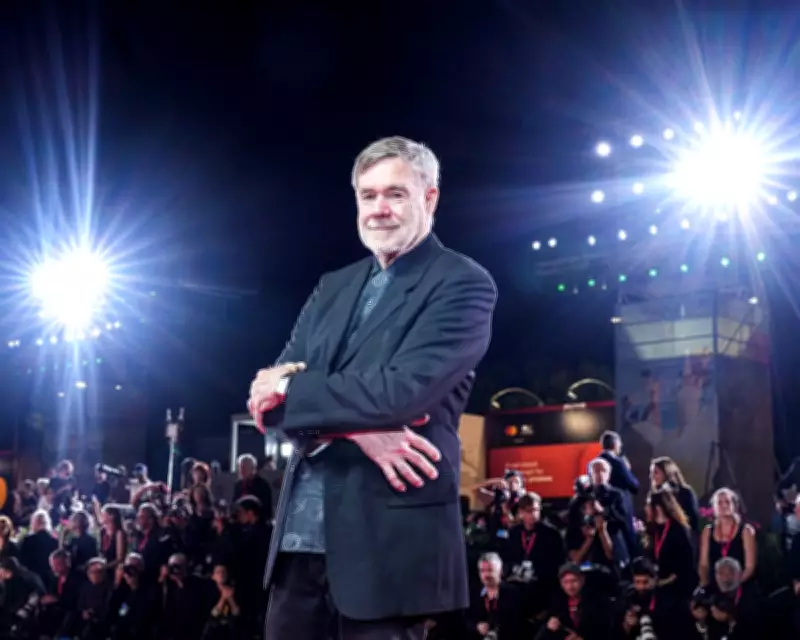
The director, now 73 and speaking from his porch with mountains visible behind him, has built a four-decade career that includes queer landmarks like My Own Private Idaho, mainstream successes like Good Will Hunting, and arthouse award-winners including the Columbine-inspired Elephant. His new film stars Bill Skarsgård as the volatile captor, with Colman Domingo as a DJ broadcasting from the crime scene and Al Pacino in a cameo as the unapologetic mortgage company boss.

The Luigi Mangione Connection and Generational Divide
During pre-production on Dead Man's Wire, real-world events created unexpected parallels. In December 2024, UnitedHealthcare CEO Brian Thompson was shot dead in Manhattan, with 27-year-old Luigi Mangione set to stand trial this summer for the killing. Mangione allegedly referred to the health insurance industry as "parasitic," creating what Van Sant recognized as a modern David-and-Goliath story mirroring his film's themes.
"We realized it was going to influence the way people would receive the film. And it has," Van Sant states. He observed a stark generational divide in responses to the Mangione case. "My assistant at the time, who was in his mid-20s, said he thought there should be a statue erected to Mangione in Central Park," the director reveals. "We started talking about the differences between how people of his age viewed it – some thinking Mangione was a hero – and what people of my generation thought, which is that it was murder."
The Mangione phenomenon has developed a queer, camp edge, with radical filmmaker Bruce LaBruce pledging to direct a "Luigi Mangione sex cult movie" and Luigi: The Musical set to open in New York coinciding with the trial. Van Sant acknowledges Mangione's model-esque appearance contributes to the sensational reaction, noting "If he looked different, there probably wouldn't have been as sensational a reaction."
Casting Choices and Directorial Philosophy
Dead Man's Wire presents an interesting casting contrast: while documentary footage shows the real Tony Kiritsis as a middle-aged, ordinary-looking man, Skarsgård brings Hollywood glamour to the role. Van Sant defends the choice: "Oh, we had plenty of old, ugly guys. But I thought Bill would work well." He notes Skarsgård's own experience with height insecurity, as the actor was short as a child before growing rapidly.
Van Sant's directorial approach has often been described as enigmatic. Casey Affleck, who starred in three of his films, called the filmmaker "a mystery" and "a tough nut to crack." James Franco, who appeared in Milk, noted Van Sant "seems like he's doing so little – you feel like you're not being directed at all." This innate calmness has made him an ideal interpreter of sensitive subjects from Columbine to Kurt Cobain.

Cinematic Evolution and Lasting Influence
Despite Pasolini's initial dismissal, Van Sant believes he eventually realized his cinematic ambitions through the influence of Hungarian auteur Béla Tarr, who died earlier this year. "I thought, 'Oh, he's actually done what I hoped to do,'" Van Sant explains. "I always wanted to play with the way films were cut. Rules about continuity bothered me. Now everyone is filming their own stuff and posting it online, and they don't know or care about those rules. But Béla changed things by simply not cutting. The shots went on and on."
Van Sant's career has seen periods of both mainstream success and experimental exploration. While it has been seven years since his last film and nearly two decades since the Oscar-winning Milk, his return with Dead Man's Wire demonstrates his continued relevance in examining societal tensions. The film arrives in UK cinemas on March 20, offering both a tense thriller and a commentary on contemporary generational conflicts.
As the interview concludes, Van Sant – described by the journalist as presenting "a picture of serene level-headedness – a regular Gus Van Sanity" – remains an enigmatic figure whose films continue to explore alienation, discord, and the human condition with unique perspective and patience.