Turkish Cinema's Defiant New Wave Confronts Erdoğan's Autocracy
In a powerful display of artistic resistance, Turkish cinema is experiencing a remarkable resurgence of politically outspoken filmmaking that directly challenges President Recep Tayyip Erdoğan's autocratic regime. Two groundbreaking films, İlker Çatak's Yellow Letters and Emin Alper's Salvation, recently captured the Berlin International Film Festival's highest honors, signaling that dissenting voices continue to thrive despite increasing political repression.
Berlin Triumph for Turkish Dissent
The 2024 Berlinale witnessed an unprecedented moment for Turkish cinema when both the Golden Bear and Silver Bear awards went to politically charged Turkish productions. Yellow Letters, directed by İlker Çatak, claimed the festival's top prize, while Emin Alper's Salvation secured the Silver Bear Grand Jury Prize. These victories represent more than artistic achievement—they mark a defiant statement against Turkey's current political climate.
Both films share significant connections beyond their political themes. They were co-produced by Liman, an independent Turkish film company, with producers Nadir Öperli and Enis Köstepen collaborating across both projects. These mid-career filmmakers represent a new generation of Turkish cinema that has emerged from the ashes of Yeşilçam, Turkey's national film industry that collapsed in the late 1980s.

Examining Turkey's Political Reality
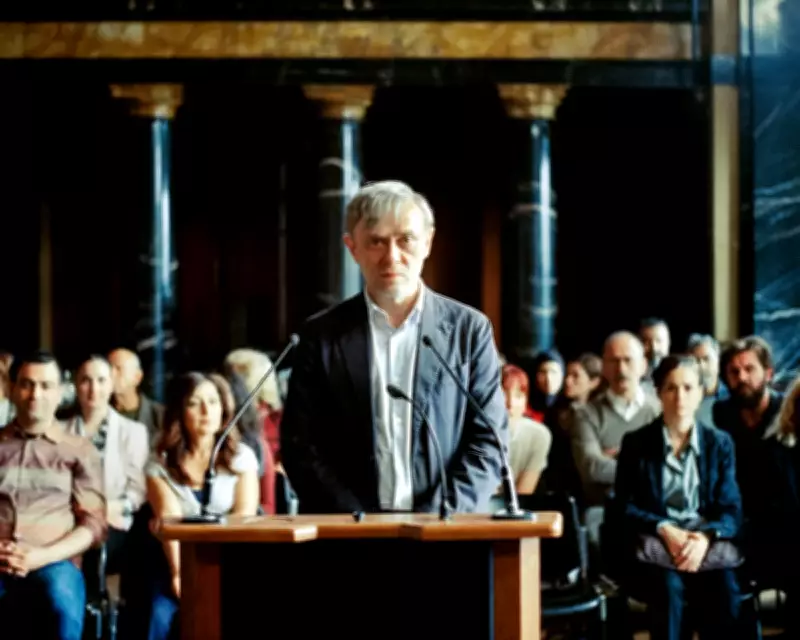
Yellow Letters offers a chilling portrayal of life under Erdoğan's regime through the story of Derya and Aziz, a couple purged from their academic and theatrical positions. The film explores the devastating consequences of Turkey's 2016 academic purges, when over 1,000 academics faced "civil death" after signing a peace petition. Director Çatak, born in Berlin to Turkish immigrants, shot the film in Germany, using Berlin and Hamburg as stand-ins for Ankara and Istanbul to emphasize the universal nature of political repression.
The film's title refers to the yellow envelopes containing dismissal notices that became symbolic of the purges. Aziz, a university professor played by Tansu Biçer, loses his position after encouraging students to participate in anti-war protests, while his wife Derya (Özgü Namal) is removed from state theater. The couple's subsequent ostracization—even by their landlord who fears police reprisal—illustrates how fear permeates everyday life under autocracy.
Historical Echoes and Contemporary Warnings
Emin Alper's Salvation takes a different but equally powerful approach, examining Turkey's complex ethnic tensions through the lens of rival Kurdish tribes in eastern Anatolia. Loosely based on the 2009 Bilge village massacre in Mardin, the film explores how charismatic leaders weaponize religious rhetoric and irrational fears to incite violence. The story centers on Mesut (Caner Cindoruk), a mystic leader who convinces his followers that salvation requires eliminating their rivals.
Alper's film serves as a broader warning about strongman politics globally, drawing parallels between Erdoğan's Turkey and other nations where leaders exploit fear and division. The film's examination of "village guards"—state-employed militias with near-immunity for violent acts—reveals the dangerous consequences of state-sanctioned paramilitary forces.
A New Wave with Deep Roots
This emerging generation of Turkish filmmakers consciously embraces the legacy of Yılmaz Güney, the imprisoned and exiled Kurdish director whose masterpiece The Road won the Palme d'Or at Cannes in 1982. Like Güney, who smuggled his film out of Turkey during military rule, today's directors continue the tradition of breaking silences about political repression.
The contrast with Turkey's cinematic past is striking. During the relatively optimistic 2000s, when Turkey pursued EU membership and celebrated cultural achievements like Orhan Pamuk's Nobel Prize, Turkish cinema often avoided direct political confrontation. While director Nuri Bilge Ceylan developed his subtle approach to Turkey's political landscape, most films embraced orientalist tropes that pleased the Ministry of Culture and Tourism.

Cinema in an Electoral Autocracy
Today's Turkey presents a dramatically different landscape. Political scientists now classify the country as an electoral autocracy, where dissent carries severe consequences. Istanbul's leftist mayor Ekrem İmamoğlu has been imprisoned for over a year, LGBTQ+ activities face complete prohibition, and social media criticism can jeopardize careers in both public and private sectors.
The cultural sector has operated under what many describe as an "uncanny hush" since the violent suppression of the 2013 Gezi Park protests. When director Nejla Demirci addressed the academic purges in her 2023 documentary The Decree, the government banned all screenings and distribution, leading to the cancellation of Turkey's prestigious Antalya Golden Orange festival when it refused to show the film.
Despite these challenges, Yellow Letters and Salvation demonstrate that Turkish cinema remains a vital space for political discourse. Çatak continues to work in Germany, while Alper maintains his position at Istanbul Technical University and directs the influential Sinematek arthouse theater. Their films represent not just artistic achievements but acts of courage in a climate where speaking truth to power carries real risks.
As Yellow Letters opens in German cinemas and prepares for its Turkish release on March 27, and Salvation continues its festival run, these films signal that Turkey's cinematic voice remains defiantly alive, continuing a tradition of dissent that stretches back through decades of political turmoil.