The Rise of Pseudo-Biopic Films: When Fiction Meets Real-Life Celebrities
In today's cinematic landscape, a fascinating trend has emerged that challenges traditional storytelling boundaries. Film-makers are increasingly exploring the murky territory between biography and fiction, creating what industry observers call "pseudo-biopics" - stories that borrow heavily from real celebrities' lives while maintaining enough fictional elements to avoid being classified as traditional biographies.
Redefining the Biographical Genre
The familiar disclaimer "The characters and events portrayed in this film are fictitious" has taken on new meaning in contemporary cinema. Rather than serving as mere legal protection, this statement has become a creative starting point for film-makers who want to explore celebrity culture without being constrained by factual accuracy. Recent releases demonstrate this approach with increasing sophistication and frequency.
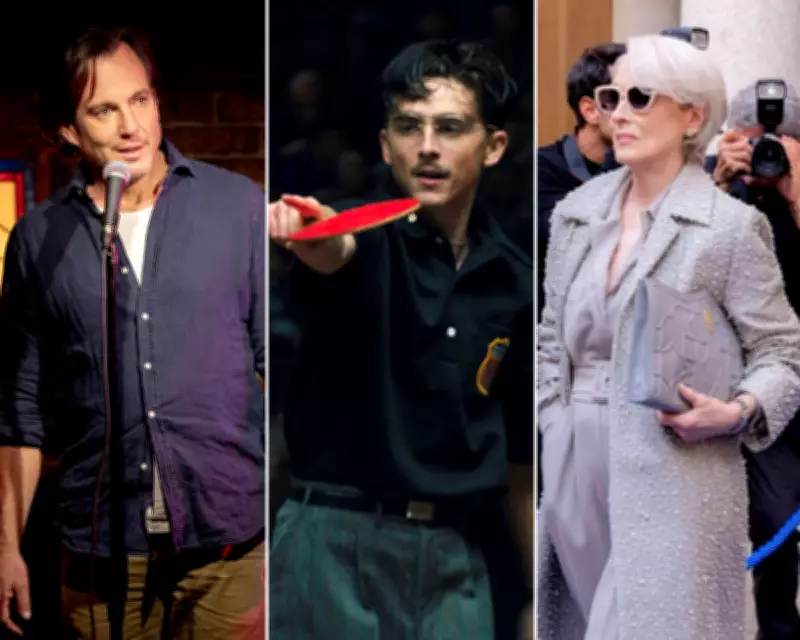
Marty Supreme transforms 1950s table tennis phenomenon Marty Reisman into fictional character Marty Mauser, borrowing key elements of Reisman's persona while inventing new narrative directions. Similarly, Is This Thing On? draws inspiration from comedian John Bishop's early career but reimagines him as New York comic Alex Novak. The upcoming film The Prince, directed by Cameron Van Hoy and written by David Mamet, promises to explore aspects of Hunter Biden's life through fictional proxy Parker Scott.

The Creative and Practical Advantages
Film-maker Brit McAdams, who directed Paint starring Owen Wilson as a Bob Ross-inspired character named Carl Nargle, explains the practical benefits of this approach. "Movies are very hard to make," McAdams notes. "You need to find a script, star and millions of dollars in a world where a lot of films don't make money. Playing off of a character or world that people know makes things a bit easier."
This strategy allows creators to leverage audience familiarity while maintaining creative freedom. As McAdams observes, "Primary Colors isn't about Bill Clinton, The Devil Wears Prada isn't about Anna Wintour. But evoking them is a wink to the audience and makes people feel like they're in on the joke from the jump."
Legal Protection and Creative Freedom
From a legal perspective, even minor alterations to names or details can provide significant protection against lawsuits while opening up creative possibilities. The 2006 film Dreamgirls demonstrates how this approach works in practice - while clearly inspired by The Supremes and Diana Ross, the fictionalized characters can explore narrative directions that a strict biography could not.
"Breaking away from the actual person affords you opportunities to explore themes that may not have existed in a specific person's life," McAdams explains. "Or elements of that person's life that no one wants to talk about. Or, frankly, things that are just more interesting."
Blurring the Lines Further
Some recent productions have pushed this concept even further by having celebrities play versions of themselves within fictional frameworks. The film The Moment features British singer-songwriter Charli XCX portraying a fictionalized version of herself preparing for a tour. Co-writer Bertie Brandes describes the approach as creating "intentional, smudgy kind of verisimilitude" that blends documentary and fiction elements.
"I'd be happy if someone watched this and thought it was a genuine documentary," Brandes says. "We blend footage from different platforms and formats, our cameos play themselves, it all adds to this very intentional approach. While some of the specifics are obviously fictional, all of this could - and does - happen."
Responding to Genre Fatigue
The rise of pseudo-biopics may represent a creative response to audience fatigue with traditional biographical films. With several recent straight biopics underperforming at the box office, including The Smashing Machine, Springsteen: Deliver Me From Nowhere, and Christy, film-makers are seeking new approaches to celebrity storytelling.

Pseudo-biopics offer the best of both worlds: they attract audiences familiar with the real-life inspiration while providing narrative surprises and creative freedom. This trend shows no signs of slowing, with Chicken Shop Date creator Amelia Dimoldenberg recently announcing plans to produce and star in a romantic comedy about a celebrity interviewer - potentially playing a version of herself.
As this cinematic trend continues to evolve, it raises important questions about truth, fiction, and our cultural fascination with celebrity. These films challenge audiences to consider where biography ends and fiction begins, creating a new space for storytelling that acknowledges our shared cultural knowledge while pushing creative boundaries.