Tourette's Campaigner John Davidson Details Bafta Outbursts and Issues Sincere Apology
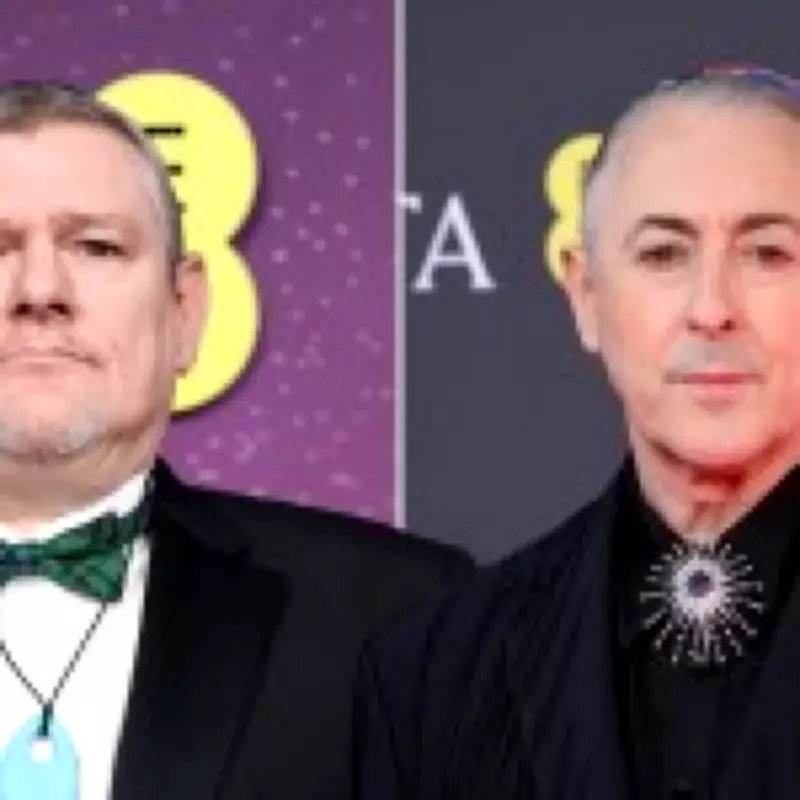
John Davidson, the prominent Tourette's syndrome campaigner, has publicly revealed the distressing details of his involuntary outbursts during the recent Bafta film awards ceremony. The 54-year-old, whose biographical drama I Swear was nominated for six awards, experienced multiple tics that included shouting offensive language at host Alan Cumming and actors Michael B. Jordan and Delroy Lindo.
The Incident and Its Aftermath
During the Sunday night ceremony, Davidson's condition manifested in several ways that sparked significant controversy. He shouted the N-word at actors Michael B. Jordan and Delroy Lindo while they were presenting an award on stage. This incident was particularly contentious because the BBC failed to edit it from the broadcast, despite the event being pre-recorded two hours earlier.
In the days following the ceremony, Davidson issued a heartfelt apology, stating he was 'deeply mortified if anyone considers my involuntary tics to be intentional or to carry any meaning.' He has since reflected on the events with profound regret, describing feeling a 'wave of shame' as the impact of his actions became clear.

Understanding the Tics and Their Triggers
In an exclusive interview with Variety, Davidson explained the nature of his condition and how specific moments during the ceremony triggered his outbursts. 'The most offensive word that I ticked at the ceremony, for example, is a word I would never use and would completely condemn if I did not have Tourette's,' he emphasized.
Davidson detailed how his tics are often triggered by what he sees or hears. When Bafta's chair began speaking, he shouted 'Boring.' More notably, when host Alan Cumming made a joke about his sexuality involving Paddington Bear, Davidson experienced homophobic tics that led to him shouting 'paedophile' - likely triggered because Paddington Bear is a children's character.
'Throughout the Baftas I ticked perhaps 10 different offensive words,' Davidson shared, while specifically addressing the racial slur directed at Jordan and Lindo. 'I completely understand its significance in history and in the modern world.'
Living with Tourette's and Coprolalia
Davidson suffers from coprolalia, a symptom of Tourette's that causes involuntary utterance of socially inappropriate words or phrases. He explained that living with this condition can be 'distressing' and often leads to 'discrimination and isolation.'
'When socially unacceptable words come out, the guilt and shame on the part of the person with the condition is often unbearable and causes enormous distress,' Davidson continued. 'I can't begin to explain how upset and distraught I have been as the impact from Sunday sinks in.'
The campaigner emphasized that his tics 'have absolutely nothing to do with what I think, feel or believe. It's an involuntary neurological misfire. My tics are not an intention, not a choice and not a reflection of my values.'
Previous Incidents and Broader Context
This is not the first time Davidson's condition has caused public controversy. In 2019, when receiving his MBE from Queen Elizabeth II, he shouted 'f*** the Queen.' That same year, during a security check at the Palace of Holyroodhouse in Edinburgh, he yelled 'I've got a bomb' when his car was being searched by police.
Davidson, who was diagnosed with Tourette's at age 12 and was the subject of the 1989 BBC documentary John's Not Mad, has reached out to the studio that produced Sinners to personally apologize to Jordan, Lindo, and production designer Hannah Beachler. Beachler reported that a racial slur was aimed at her as she made her way to dinner after the show.
Industry Response and Questions Raised
Following the incident, Delroy Lindo expressed that he and Jordan 'did what we had to do' while presenting, but wished 'someone from BAFTA spoke to us afterward.'

Davidson has questioned why he was seated near a microphone, stating: 'I have to question whether this was wise...knowing I would tic.' He had expected the BBC to blur out his comments during the broadcast.
On Monday, Bafta issued an 'unreserved apology' for the 'very offensive language that carries incomparable trauma and pain for so many.' The organization stated: 'We take full responsibility for putting our guests in a very difficult situation and we apologise to all. We will learn from this and keep inclusion at the core of all we do, maintaining our belief in film and storytelling as a critical conduit for compassion and empathy.'
The incident has sparked broader conversations about disability awareness, broadcast standards, and how public events accommodate individuals with neurological conditions. Davidson's case highlights the complex intersection of involuntary medical symptoms and social responsibility in high-profile settings.