I Want Your Sex Review: Olivia Wilde's Electric Performance Almost Saves Gregg Araki's Tame Comeback
This year's Sundance film festival has been marked by a distinct sense of nostalgia, with a lineup that looks back rather than forward. Amidst retrospective screenings and tributes to founder Robert Redford, Gregg Araki's long-awaited return, I Want Your Sex, promised to revive the provocative, in-your-face spirit of 90s and early 00s indie cinema. However, while Olivia Wilde delivers a magnetic performance, the film struggles to recapture the infectious energy of Araki's earlier work.
A Nostalgic Return to Sundance's Provocative Roots
Sundance has traditionally championed emerging filmmakers, but this edition has embraced its history with open arms. On opening day, Rachel Lambert's Carousel evoked memories of quiet, character-driven indies, while Araki's I Want Your Sex aimed to resurrect the era's more audacious acts of rebellion. Araki, a beloved enfant terrible of the festival, has premiered most of his films here, from The Doom Generation to Mysterious Skin. Introducing his comeback to a packed audience, he detailed the decade-long journey to bring this project to life, billed as a "return to form."
The film certainly revisits Araki's signature style: vibrant colours, unfettered sex, and madcap plotting. Yet, it lacks the boisterous vitality that defined his peak. For a while, the nostalgia almost works. Araki hasn't ventured into this kitschy territory since 2010's Kaboom, and early scenes, like Cooper Hoffman and Mason Gooding crafting a vagina from chewed gum, spark curiosity about what Araki might say about today's cultural moment. Unfortunately, the answer proves to be disappointingly little.

Olivia Wilde's Femme Fatale Steals the Show
The film's saving grace is Olivia Wilde, who delivers an electric turn as provocative artist Erika Tracy. Araki has compared her to "old-time stars" like Ingrid Bergman or Greta Garbo, and while it's hard to imagine those icons wielding a dildo, Wilde brings a magnetically old-school femme fatale allure to the role. Every eye in the room is drawn to her whenever she appears, commanding attention with a vampy, powerful presence.
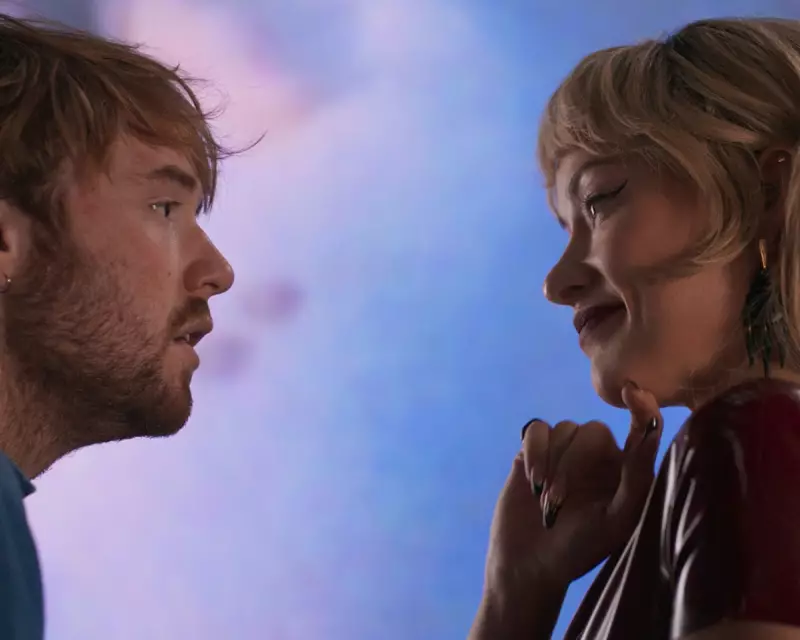
Erika takes under her wing Elliot, played by Cooper Hoffman, a sexually inexperienced assistant she quickly identifies as a submissive toy. Their dynamic explores a dom-sub relationship, with Elliot blindfolded, pegged, and spanked at her whim. Araki gender-swapped the pair post-#MeToo, using their age gap to comment on stereotypes about horny millennials versus prudish Gen Z-ers. In an early discussion, Erika laments the "retro sex negativity" of Elliot's generation, while she scoffs at the "woke police" and enjoys degrading him to highlight base impulses.
Lacklustre Execution and Mismatched Chemistry
Despite setting up this didactic thesis, Araki fails to expand upon it meaningfully. The sexual scenes between Wilde and Hoffman are surprisingly tame, even with near-total nudity. Played-for-laughs moments involving dildos, handcuffs, and ball gags do little to shock or amuse, perhaps poking fun at straight notions of perversion. The relationship shifts from kinky to conventional too quickly, undermining any tension.
While Wilde and Mason Gooding, who plays a believably gay and slutty character, grasp the campy tone required for an Araki romp, Hoffman feels miscast. He acts as if in a different, less heightened film, reminiscent of a Woody Allen comedy audition. The pair share no chemistry, sexual or comedic, making it hard to believe any genuine enjoyment or connection exists, despite numerous semi-naked scenes.
An Underwhelming Romp That Fails to Captivate
I Want Your Sex is more suggestively cheeky than genuinely raunchy. Araki's choice to portray sex as harmless and silly in an era where it's often demonised is admirable, but the execution lacks fun. At 90 minutes, the film feels longer, with unexciting hijinks—a fizzling threesome, a flamed-out murder plot, and more dildos—that never achieve the amusement or propulsion they should.

The film seeks shock, arousal, and debate but barely holds attention. Olivia Wilde's performance as a vampy artist almost salvages the experience, yet Gregg Araki's return to his campy, dayglo roots ultimately underwhelms, leaving audiences nostalgic for the provocative energy of his past triumphs rather than thrilled by his present effort.