The Hunt for Gollum: A Step Too Far for Middle-earth's Expanding Universe?
As the seemingly endless river of Tolkien adaptations continues to flow, the upcoming film The Hunt for Gollum appears to represent a potential breaking point for the beloved franchise. With Ian McKellen's Gandalf taking a backseat role and the story expanding on mere fragments of J.R.R. Tolkien's original text, concerns are mounting about creative overreach.
Gandalf's Diminished Role in the New Quest
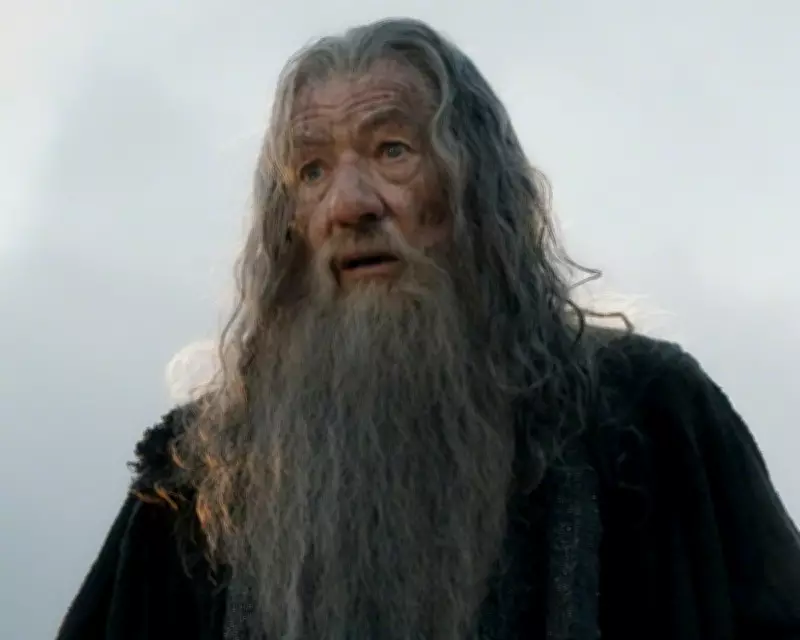
Now in his 80s, Ian McKellen has revealed that his portrayal of Gandalf the Grey in next year's The Hunt for Gollum will be strategically sedentary. According to the actor, the wizard will operate more as a mission controller while Aragorn takes charge of the actual quest to find the elusive creature.
"The script is designed to appeal to people who like Lord of the Rings," McKellen told the Times. "It's an adventure story, Aragorn trying to find Gollum with Gandalf directing operations from the sidelines."

This represents a significant departure from the original novels, where Gandalf and Aragorn searched together for decades to locate Gollum. The once-roaming wizard of mystery and myth now finds himself reduced to what might be described as Middle-earth's first remote operations manager.
Expanding a Brief Mention into Full Feature
The film's official synopsis, revealed by Tolkien fan site TheOneRing.net, describes a story that sounds more like a Gollum biopic than the scattered fragments of backstory mentioned in passing during the original trilogy. The description promises to explore:
- Young Sméagol's life before The One Ring consumed him
- Aragorn's perilous journey through Middle-earth's darkest corners
- Untold truths about Gollum's fractured soul and backstory
- Events set between Bilbo's disappearance and the Fellowship's formation
Directed by original cast member Andy Serkis and produced by Peter Jackson with the creative team behind the Oscar-winning trilogy, the film aims to bridge the beloved movies with new characters and returning heroes.
The Dangers of Franchise Overextension
This expansion of minimal source material highlights a fundamental tension between Tolkien's original approach and modern Hollywood franchise logic. Tolkien wrote vast, elliptical mythic histories where:
- Entire wars were summarized in half a paragraph
- Crucial events occurred off-page
- The author understood that not everything needed dramatizing
In contrast, contemporary Hollywood has developed what might be called a horror of empty space. If a character once spent three sentences doing something in the original text, that now constitutes at least one feature film, two streaming spin-offs, and potentially a tie-in podcast.
Casting Challenges and Creative Compromises
The casting situation further complicates matters. Viggo Mortensen has indicated he would only return as Aragorn if the character's age somehow tallied with his own 67 years, which creates timeline complications. Recasting a single major character for a movie most Tolkien fans never requested would be challenging enough; replacing two might make the production resemble a Middle-earth tribute act.
The unfortunate suspicion is that this is exactly what's happening - a nostalgia mining operation that must be kept operational at all costs, even if it means stretching the source material beyond recognition.
The Risk of Creative Dilution
There's a genuine danger that in trying to wring every last story from Middle-earth, the franchise may end up leaving Tolkien's world feeling rather like Bilbo himself under the ring's influence: thin, stretched, and scraped like butter over too much bread.
What began as a richly detailed mythological universe risks becoming a commercial enterprise where every minor character gets their own origin story, every passing mention becomes a feature film, and the original magic gets diluted through endless expansion.
As The Hunt for Gollum approaches, the question remains: can the Tolkien franchise sustain this level of expansion without losing the very qualities that made it special in the first place?