The Sound of Defiance: Ukrainian Music as Resistance in Wartime
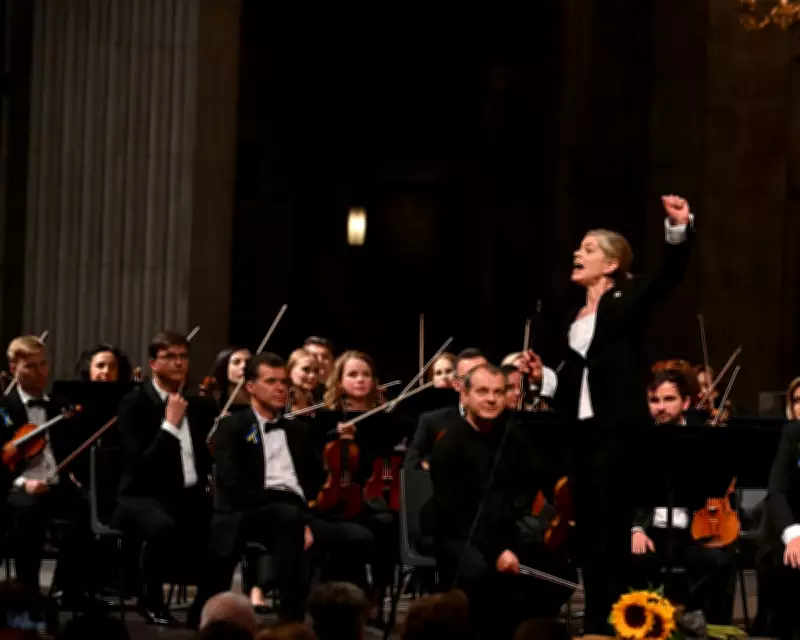
It begins with a collective scream—a visceral cry of anguish from every musician on stage. Ukrainian composer Anna Korsun's composition Terricone stands as one of the most emotionally devastating artistic responses to the war that commenced four years ago. Born in Donbas, Korsun draws inspiration from the region's slag heaps, known as terricones, which symbolize humanity's relentless reshaping of landscapes. Her work received its world premiere by the Bournemouth Symphony Orchestra under Ukrainian conductor Kirill Karabits in early 2023, capturing the global shock and horror following the invasion.
Artistic Responses to Conflict
The performance in Poole left an indelible mark on audiences, translating the fear and desolation of war-torn emotional landscapes into sound. Russian conductor Vladimir Jurowski, an outspoken critic of Putin's regime, later brought this powerful piece to London as part of a bold Ukrainian-Russian program with the London Philharmonic Orchestra. Korsun's creative courage exemplifies how Ukrainian musicians and composers are navigating existence and creativity amidst ongoing conflict.
Other performances have further illuminated the cultural realities of the war for UK audiences. Opera Aperta's Chornobyldorf, staged at the Huddersfield Contemporary Music Festival in November 2022, blended opera with video installation and folk-punk ritual to create a breathtaking exploration of post-Soviet, post-nuclear Ukrainian history. This Kyiv-based company's work demonstrates how seismic historical forces find expression through innovative artistic forms.

Confronting Classical Music's Political Hypocrisies
Beyond individual compositions, the war has exposed longstanding hypocrisies within classical music culture. Russian conductor Valery Gergiev's close ties to Putin's regime were evident as early as 2012, yet only after the conflict began did the international community seriously interrogate these connections, leading to cancellations of his performances and contracts outside Russia. This belated reckoning highlights how political complacency has long permeated the classical music world.
For many Ukrainian musicians, the new reality involves conscious rejection of Russian cultural elements. As Nazarii Stets of the Ukrainian Freedom Orchestra explains, "no Russian words from my lips, no Russian music from my hand." Founded and conducted by Keri-Lynn Wilson, this ensemble has toured and recorded works like Beethoven's Fifth and Ninth Symphonies—both composed during times of conflict and historically mobilized as ideological soundtracks. Their recording of Symphony No. 5 particularly captures what Stets describes as "the sound of fierce hope," where musical purpose becomes intertwined with calls for peace and action.
The Enduring Urgency of Musical Messages
Four years into the conflict, the war has settled into a terrifying steady state of horror that risks fading from western headlines. Yet for millions of Ukrainians, trauma remains ever-present. Works like Korsun's Terricone reveal the deeper emotional and psychological consequences of prolonged conflict, serving as some of the world's most urgent musical communications.
Meanwhile, Hungarian composer György Kurtág celebrates his 100th birthday with a musical legacy that offers a different response to conflict. His radical journey inward produced works where each note pulses with energy and possibility. His Játékok (Games) series features aphoristic piano pieces that play with infinity through minimal means, while his opera based on Beckett's Endgame premiered when he was 92. These compositions demonstrate how artists across generations and contexts find ways to process and transcend geopolitical turmoil through creative expression.
As Ukrainian musicians continue to fight for freedom through their art, their work serves as both documentation of current realities and hopeful anticipation of peace. The feverish intensity of their performances reminds global audiences that cultural resistance remains a vital form of survival and solidarity in times of conflict.