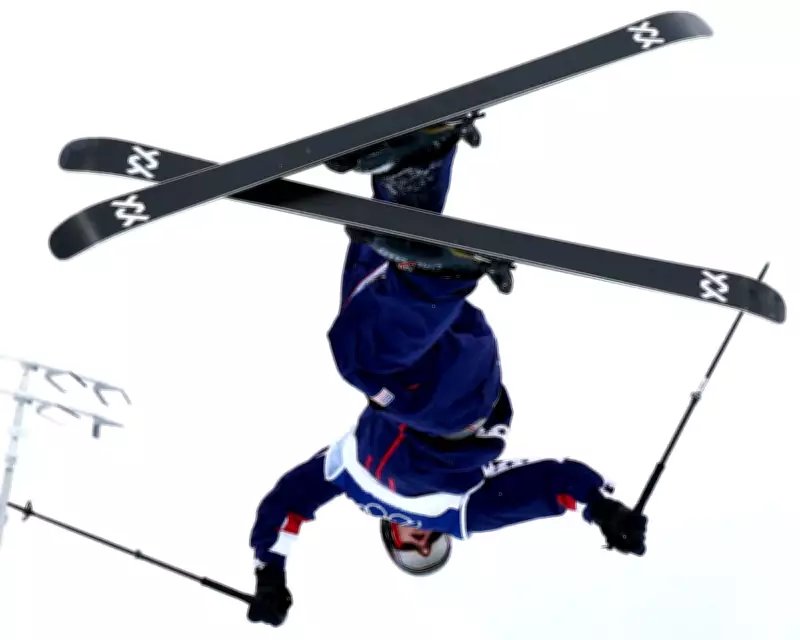
Hunter Hess Defies Political Criticism with Resilient Olympic Performance
American freeskier Hunter Hess delivered a powerful response to former President Donald Trump's derogatory comments during the Winter Olympics in Livigno, qualifying for the men's halfpipe final on Friday. After completing his run, Hess flashed an L-sign with his hand, directly addressing Trump's characterization of him as a "real loser."
'Leaning Into' the Controversy
"Apparently I am a loser," Hess stated when questioned about his gesture. "I am leaning into it." The 27-year-old athlete emphasized that he stands by his original statements about having mixed feelings representing his country, which initially sparked Trump's criticism. "I stick with what I said," Hess affirmed, demonstrating his commitment to personal integrity amidst political pressure.
The Emotional Toll of Public Scrutiny
Hess revealed that the past two weeks have been "the hardest of my life" following Trump's comments and the subsequent wave of abuse directed toward him. "There was a lot of noise and I've never been subject to that type of criticism," he explained. The skier credited his family's support and his passion for skiing with helping him navigate the challenging period. "Skiing has saved my life, time and time again, and it seems to have done so again," Hess reflected emotionally.
Motivation Through Adversity
Rather than allowing the controversy to derail his Olympic dreams, Hess used the criticism as motivation. "I sacrificed my entire life to make this moment happen," he declared. "I'm not going to let controversy like that get in my way." The athlete reiterated his love for the United States, expressing frustration that his patriotism had been questioned. "I love the United States of America. I cannot say that enough," Hess emphasized, adding his happiness to represent Team USA.
Competing Through Injury
Hess's performance becomes even more remarkable considering he competed while managing multiple injuries. Following a training accident, he revealed: "I had a haematoma, so they had to drain some blood last night, and then I had an MRI on my shoulder and that came back OK, just some bone bruising." The skier also suspected a broken hand and knee pain, making his qualifying run particularly impressive.
Solidarity Among Athletes
The American skier found support from fellow competitor Gus Kenworthy, who has faced similar criticism for political statements during the Games. "We had a training camp in Laax and we just chatted about it, kind of how we got through the hardship," Hess shared. Kenworthy, who qualified ninth for the final, offered valuable advice about managing public scrutiny. "He gave me some pointers, which was really nice," Hess acknowledged.
The Inherent Risks of Extreme Sports
The competition highlighted the dangers of halfpipe skiing when favorite Finley Melville Ives required medical attention after a serious crash. British skier Liam Richards, who witnessed his friend's fall, commented on the sport's risks: "The adrenaline that comes out of landing the runs and landing new tricks, it's the best feeling in the world. Obviously we do risk ourselves, but we signed up for that."
Hunter Hess's journey through political controversy, personal injury, and Olympic pressure demonstrates the complex intersection of sports and politics in modern athletics. His resilience serves as a testament to athletes' ability to maintain focus and performance despite external challenges and criticism.