Tens of thousands of Londoners gathered in parks and viewing points across the capital on the evening of August 12 to witness the most significant solar eclipse in decades. More than 90 per cent of the Sun was obscured by the Moon, the highest level of blockage visible above UK skies since the total eclipse of 1999.
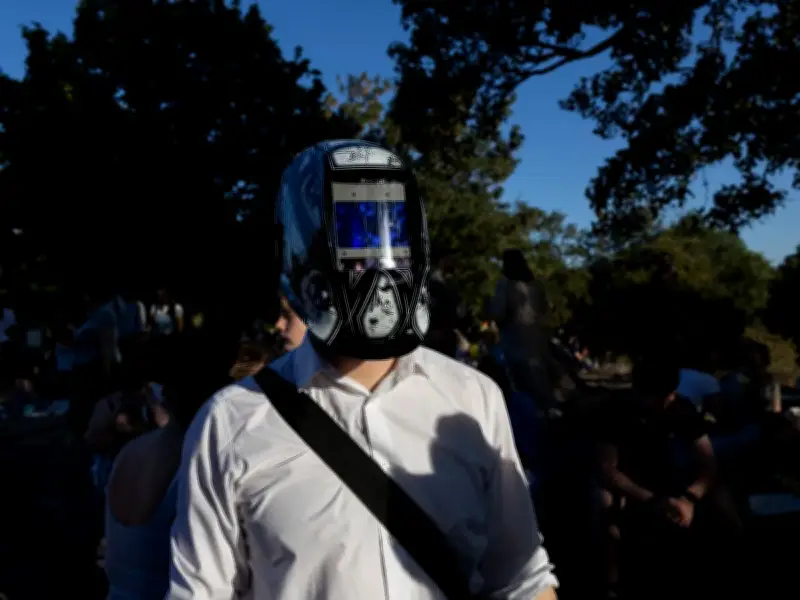
Crowds assembled at popular locations including Primrose Hill in Camden, Telegraph Hill in Nunhead, and Parliament Hill. Many wore special ISO 12312-2 certified glasses, while others used homemade viewers crafted from cereal boxes and colanders. Some brought chairs and snacks, and photographers equipped their cameras with specialised filters to protect their equipment from damage.
Celebrations and Safety Warnings
At the Royal Observatory Greenwich, the eclipse’s peak was met with a rendition of Bonnie Tyler’s “Total Eclipse of the Heart” and exclamations of “oh my god” and “this is so cool.” The Royal Greenwich Observatory reported selling approximately 15,000 pairs of eclipse glasses in the last month, which sold out. Social media footage showed people waiting in two-hour lines outside corner shops to purchase the glasses.
Experts had warned that only ISO 12312-2 glasses provided safe eye protection, as regular sunglasses were insufficient. Following the eclipse, Google searches for “sore eyes” in the UK increased by 650 per cent compared to the same time on Tuesday, according to data referenced in the report.
Homemade Viewing Methods
Many who missed out on glasses adopted creative alternatives. The cereal box method, which turns a standard cardboard box into a pinhole projector, was widely used. Others used kitchen colanders, where each hole acts as a tiny pinhole camera, projecting an array of eclipse images onto white paper. Some attendees at Greenwich Park had brought their eclipse glasses from Japan, while even dogs were photographed enjoying the event, such as one at King’s Stairs Gardens in Bermondsey.
Post-Eclipse Meteor Shower
Hours after the eclipse, stargazers were treated to the Perseid meteor shower, which peaked in the early hours of August 13. Those in rural areas had a better chance of a clear view of the shower, which lit up the night sky across the UK.
The event marked a rare celestial occasion that brought Londoners together in shared wonder, with many expressing awe and excitement. The combination of the eclipse and subsequent meteor shower provided a memorable night for astronomy enthusiasts and casual observers alike.