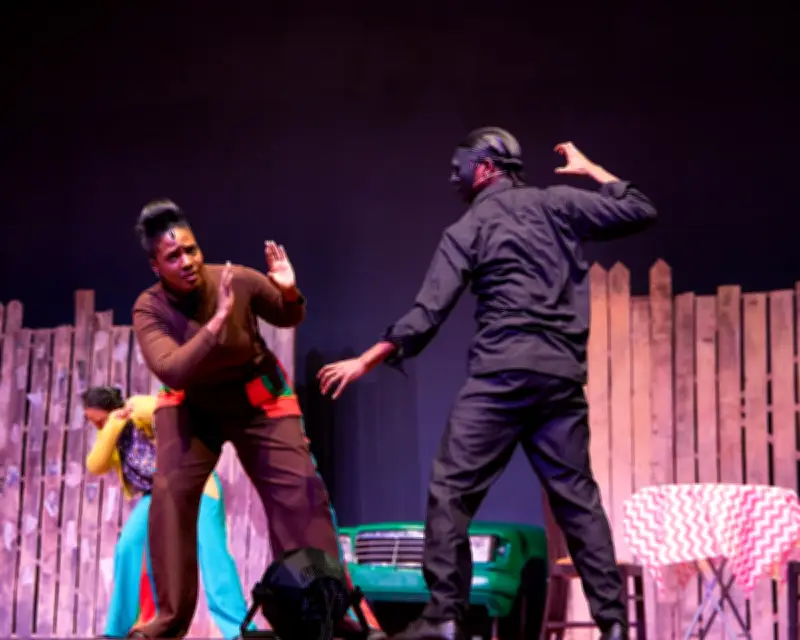
The autobiographical play Free Me, by Kenyan theatre and TV producer Gathoni Kimuyu, returned to the stage in Nairobi this month amid a surge in gender-based violence (GBV) across the country. The production, staged at the Chandaria Jain Social Group auditorium, draws on Kimuyu's own experience of an abusive marriage to encourage victims to speak out.
Graphic scenes spark gasps and tears
In one scene, a husband unleashes a volley of blows and slaps on his wife, pushing her to the floor. "I wish I could spare you this," the wife tells the audience. "My husband beat me up as if we were in a bar fight. Except, in a bar someone fights back." The performance elicited audible gasps from the audience, reflecting the raw reality of domestic abuse.
Rising femicide and public outcry
Kenya has seen a sharp increase in femicide and abuse in recent years. In January 2025, after nationwide marches in 2024 and online campaigns such as #StopKillingUs, #EndFemicideKe and #TotalShutDownKe, the government formed a technical working group to identify trends, hotspots and causes of GBV and femicide. The group's report cited patriarchal structures and gender inequality as key factors, and recommended amending the law to define femicide as a distinct offence and for the president to declare GBV a national crisis. However, the government has yet to implement these recommendations, and GBV cases continue to dominate headlines.

Play's timely return
"When we look at the numbers in Kenya right now, cases of femicide, sexual abuse, physical abuse – any type of abuse against women – are very high," said Kimuyu, who also serves as producer and head of marketing for the play. "And the numbers just keep rising and rising." She added: "One of the reasons why we're restaging this show is because of how important it is to the conversations that we're having now and for the change that we're looking for as women and as a country."
A life story in four stages
Free Me covers Kimuyu's life from her teenage years in Nairobi's eastern outskirts in the early 2000s to the present. Five actors portray her at different ages: the mischievous 16-year-old; the 21-year-old who marries and begins to suffer abuse; the 25-year-old who gives birth and leaves the marriage; and the 30-year-old who rebuilds her life. Mugambi Nthiga, the show's director and co-writer, said: "This is a play about gender-based violence about someone who lived [through it], but it's being staged in a reality where there's more than one woman every day who is not so lucky [and] who doesn't get to have the same kind of ending that this play does." He added: "This is not just a story. This is someone's true story. And it's a story of someone who's able to get out of it."
Educating both sides
Renee Gichuki, who plays Kimuyu at age 16, said the play is timely because GBV "has become a crisis." "The person standing next to you has experienced it or knows someone who has experienced it," she said. "We are educating and we are shedding light to both parties to know what can be done differently." Tobit Tom, who plays the abusive husband, said acting the role "comes with a lot of heaviness" but that men are the main perpetrators and must address the issue seriously.
Audience reactions
Wambui Njeri, a 24-year-old businesswoman, said after watching the show that it humanised victims and showed that perpetrators could be anyone. "This makes it very clear that it's your everyday woman, it's your everyday man," she said. Her friend Patrick Muchiri, 40, a communications practitioner, added: "As men we really need to do better … Yes, we are the head of families and the head of societies. But that doesn't translate to belittling or looking down or causing violence or harm."

Hope for change
In the play, Kimuyu's character stays with her husband for two years despite the abuse. When she finally leaves, his character says: "You are never going to find anyone who loves you like I love you." The audience laughs derisively, then cheers as she replies: "Your love is exactly the kind of love I'm walking away from. For ever." Kimuyu hopes the play encourages victims to speak out without shame and shifts the conversation to hold abusers accountable. She chose to tell her own story rather than fiction "because there's nothing that resonates harder for people than a story about someone they know. To see someone survive and actually be on this side makes people believe that it's possible."