Dreambite Collective's Edinburgh Fringe debut, the play Cruising, will cost over £10,000, and almost nobody involved is getting paid, highlighting the steep financial barriers facing emerging artists at the world's largest arts festival.
At 1am, less than 24 hours before leaving London for her Edinburgh Fringe debut, actor Clare Stenning was still painting the set in her garden. Once she gets to Edinburgh, things are unlikely to become much more restful. Alongside performing almost every day for the best part of a month, she'll continue working her normal day job remotely because, unlike her theatre work, that job actually pays her.
Costs and unpaid labour
Her co-star Davy Roderick is preparing to spend hours thrusting flyers at strangers despite admitting the prospect makes them 'feel ill', while writer Katrina Bennett has spent months juggling the production with multiple other roles and a full-time job. All three will also be sharing Edinburgh with an enormous inflatable whale named Gail, who they hope might convince a few passing strangers to buy a ticket.
For Dreambite, bringing their new play Cruising to Pleasance Courtyard will cost over £10,000. 'It's really hard,' Bennett tells Metro. 'Our budget, I think, is costing us 13 grand, and that is with no one getting paid, apart from a director.'
The money disappears with impressive speed: accommodation, PR, insurance, set, props, costumes, software licences and all the small, deeply unsexy costs involved in transforming something that once lived in a Google Doc into an actual professional production. Bennett says she was told early on that simply having a good play was nowhere near enough. You need buzz. You need previews. You need reviewers.
From open access to financial barrier
The festival grew out of eight companies turning up in Edinburgh uninvited in 1947 and performing anyway, after being excluded from the inaugural Edinburgh International Festival. Its mythology is built on open access, scrappiness and the idea that nobody needs to give you permission to make something strange or unique. Technically, that is still true. Financially, 'anyone can do it' now comes with a fairly substantial asterisk.
Bennett knows that better than most. Four years ago, she was offered the chance to bring another play to the Fringe through a partnership with Pleasance and regional theatres. She had to turn it down because she couldn't afford to go. This time, things aligned differently. After a reading of Cruising at the Omnibus Theatre in January, Bennett invited Pleasance's head of theatre along. A follow-up conversation ended with the suggestion that they bring it to Edinburgh, at which point excitement was swiftly followed by the slightly less romantic task of opening a spreadsheet and asking whether any of this was financially sane.
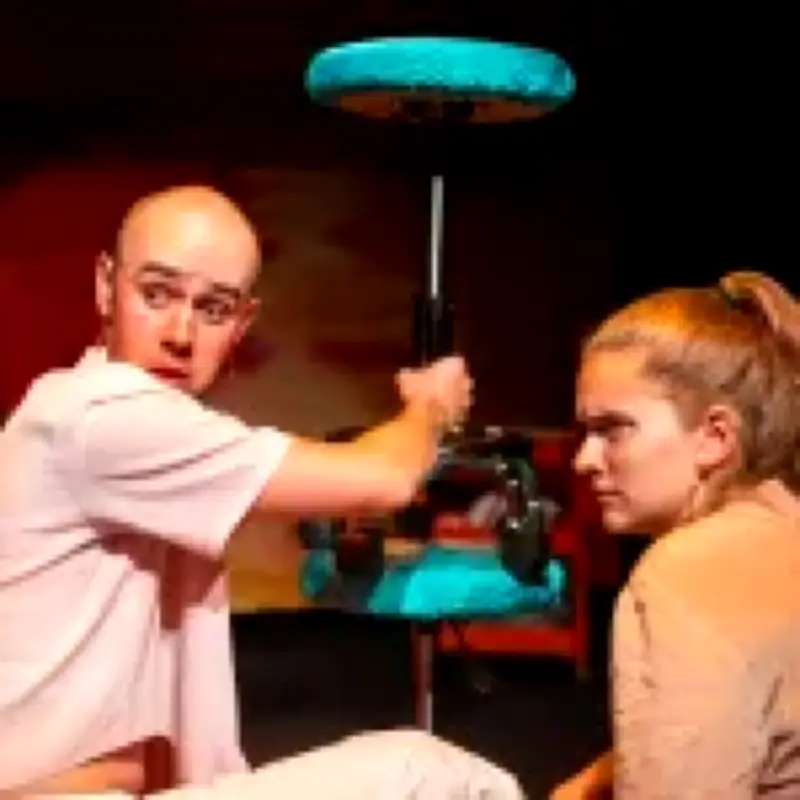
Cruising is a 'queer rom-com about two climate activists trying to destroy a cruise ship', according to Bennett. Amelia, a dancer working aboard a Mediterranean cruise, meets Sam, who is there on holiday. Margaritas are drunk, flirting happens, and everything is heading neatly towards a holiday fling until they discover they are both in an open relationship with the same person. Naturally, this leads to competitive eco-sabotage, with the play sneaking questions about climate collapse, anti-protest laws and collective action inside something warm, funny and gloriously messy.
Marketplace pressures and the dream
Roderick says their understanding of the Fringe was once of a place where artists could arrive with something half-formed, experiment in front of audiences and let the show evolve over the month. Now, with so much money and career capital riding on the trip, it feels 'much more like a marketplace'. 'Everything has to be perfect when I get there because the stakes are so high,' they say. 'We've spent all this money and this is my chance for the show to move forward in some way.'
For Bennett, one of the biggest draws is simply having so many industry people in one city at the same time. In London, getting producers, programmers or literary managers to see a new fringe show can feel like asking a Cabinet minister to come round for dinner. In Edinburgh, at least there is a chance they're already nearby, probably clutching six flyers and running late for something.
The company has managed to keep accommodation costs relatively low through friends of friends, while crowdfunding and creative fundraising have helped absorb some of the rest. Stenning will work her day job throughout the festival, and Bennett has put some of her own money into the production. The actors are not being paid.
Stenning is matter-of-fact about it. 'I'm lucky that they're super chill and let me work remotely,' she says of her employer. 'I didn't have to take a holiday for a month.' She points out that theatre is struggling everywhere, that everything is more expensive and more saturated, and that dwelling too heavily on the financial reality can become paralysing. 'If you spend too long thinking about it, then you're not going to get anything done because it's just going to crush you down with the hard truth of reality.'
Surviving the Fringe with hope
Dreambite aren't expecting to make a profit from Edinburgh. Thanks partly to the money made from previews, however, they currently aren't expecting to lose money either. 'And that is a huge f**king deal,' Stenning says. It may be the most telling measure of success at the modern Fringe.
Bennett has only experienced Edinburgh from the other side before, working front of house at Assembly as a student, but she remembers it as 'the best month of my life'. She says it was the first time theatre seemed bigger than the Shakespeare and Arthur Miller she'd encountered at school, a place where it could be strange and funny and political and built by people who looked more like her. Now she's going back with her own play. 'It feels like a huge luxury to actually get to spend a month doing the thing I want to do and meeting other creative people and doing it with my two besties,' she says.
Roderick feels the same contradiction. Being surrounded by thousands of people all desperately trying to make theatre work can be slightly horrifying if you think about it for too long. Turn the thought around, though, and you are surrounded by thousands of people making things because they love making them. 'That's really invigorating,' they say.
And, almost too neatly, the amount of work required to get Cruising to Edinburgh has ended up embodying the argument of the play itself. It is, at heart, a show about collective action; about what happens when people stop trying to fix enormous problems alone and start relying on one another. The production has been built in much the same way. Friends have helped paint the set. Parents have contributed money and volunteered to flyer. People donated to the crowdfunder. One friend turned up to help paint a canvas drop despite having a broken arm. Six people may get the primary production credits, Stenning says, but the thing really exists because of everyone standing behind them. 'It's such a labour of love,' she says.
Cruising runs at Pleasance Courtyard, Bunker Three, at 12.50pm until August 31. Tickets start at £11.