As the pioneering BalletBoyz company celebrates its 25th anniversary and Billy Elliot returns to the stage, the landscape for male dancers appears transformed from the turn of the century. Yet a certain macho dismissiveness remains, according to those at the forefront of the art form.
BalletBoyz: A Name That Stuck
“We always thought BalletBoyz was a really stupid name. We wanted not to be BalletBoyz,” says William Trevitt, co-founder of the company. The BBC landed them with that tag after Trevitt and Michael Nunn made a cheeky backstage documentary at London’s Royal Opera House. Their laddish charm won fans, and when they founded their own company—first just the two of them, later expanded to 10 men—the name stuck. It carries a slight hint of the Chippendales, as Trevitt recalls: “We had a theatre manager coming and saying: ‘Could you ask the dancers to take their shirts off in the second act?’”
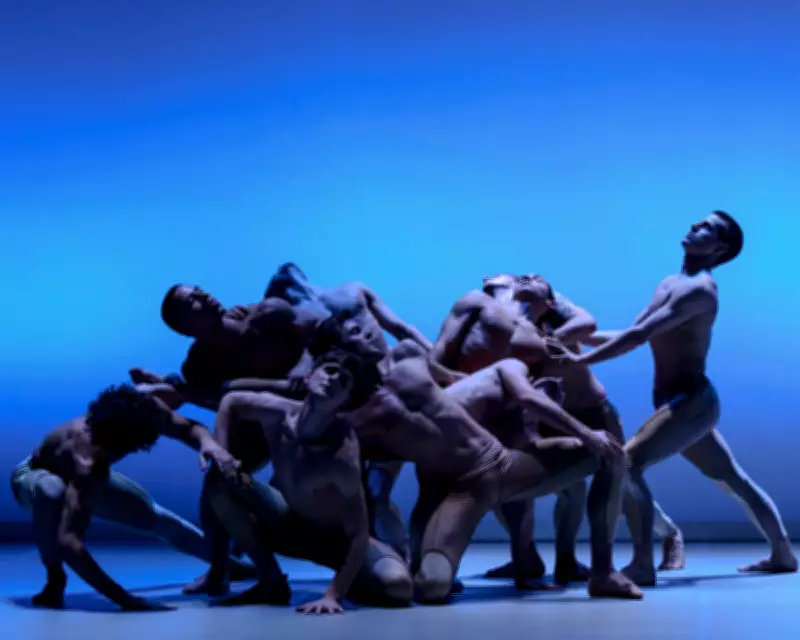
BalletBoyz heads out on tour this month to celebrate its 25th anniversary. Over two and a half decades, Nunn and Trevitt have done much for the image of men dancing. It was never their intention to make a statement, but they commissioned new repertoire that wasn’t about romantic partnering, but “two matching energies and exploring the balance between them,” as Trevitt puts it.

The Billy Elliot Effect
Around the same time, the film Billy Elliot (2000) told the story of a miner’s son who wanted to dance, culminating in a leap into Matthew Bourne’s all-male Swan Lake. The film became a multi-award-winning musical, with a new national tour opening this autumn. The so-called “Billy Elliot effect” seemed to change the profile of male dancers, with rumours that one year more boys than girls auditioned for the Royal Ballet School.
“It’s cool to dance now, isn’t it,” says Layton Williams, who was the ninth Billy Elliot on stage and a Strictly runner-up. “My nephew is dancing on TikTok with his mates, and he’s a proper lad.” Peter Darling, choreographer of the film and musical, has seen a rise in numbers and talent. “When we started auditioning for the musical, five years on from the film, we found one ballet dancer. But cut to 2026, there are boys doing ballet, boys doing contemporary dance.”
Persistent Stigma
But Nunn disagrees: “I think what hasn’t changed is there’s still a big stigma around men dancing. That hasn’t changed at all.” Statistics paint a mixed picture. Applications to the Royal Ballet Lower School rose 227% from 1999-2000 to pre-Covid, but girls’ applications rose 349%. The International Dance Teachers Association saw a boost in boys taking exams from 2005, but numbers dropped post-Covid. Of those taking ISTD exams, only 3-4% identify as male.
The Royal Ballet School has also seen a post-Covid drop in younger boys, who often start dancing after accompanying sisters to class. When classes went online, boys missed that experience. School dance education has suffered too: GCSE dance entrants are down 60% since 2008, and A-level numbers halved.
“We know that boys have always been underrepresented in dance,” says Laura Nicholson from One Dance UK. “But the gap widened dramatically with the collapse of dance education in schools. There’s a persistent misconception that boys aren’t interested, but we consistently see strong appetite.”
Changing Attitudes
BalletBoyz took professional dancers into schools for workshops. “That definitely works to get boys into dance,” says Nunn, who himself started after a school trip to the ballet aged 14. He kept it a secret from his south London friends, resisting ballet at first “because it was seen as effeminate.” But he found it “tremendously challenging” and stuck with it.

Kevin Young attended a BalletBoyz workshop in Glasgow in the 2000s. He turned up to audition “in my football shorts and basketball top. I could just do Michael Jackson really well. I was the only boy in the year. I had to pretend to my friends, and even my family, that I was going to do breakdancing, because that was cool.” Now a teacher for the Royal Academy of Dance, he says: “It’s become more socially acceptable to dance. Twenty years ago I would have had one boy in my class, now I’ve got six or seven.” Yet he recalls a student who refused to do a Bob Fosse piece: “My dad cannot see me on stage doing this.” The student later apologized after Young explained that moving differently doesn’t make you less masculine.
“What is it about a man standing in first position that is threatening?” asks Darling. “It’s insane.”
Media Influence
Dance on TV has helped. Ashley Banjo and Diversity inspired multitudes after winning Britain’s Got Talent in 2009. Banjo says he got stick for dancing at school “when the other boys were going to play football and rugby. It’s just being different. Of course I wanted to fit in but I was never apologetic.” He notes that dance has shifted online: “Some of the biggest TikTok and Instagram creators are dancers. Dance is now associated more with TikTok than with the Royal Ballet. That has really opened up doors and taken away the stigma.”
Social media dances are big business. “If you can get a viral dance on TikTok it will guarantee your song will be in the Top 10,” says Young. Tom Holland, the Spider-Man actor and former stage Billy Elliot, is often cited as an example—an action hero who also dances in videos.
Strictly Come Dancing
When Williams did Strictly, he wanted to show that being a man dancing could mean many things. “One day you’ll see me in a trackie, the next I’m glammed up. I can put on a cheeky pixie wig, or a suit and be super masculine.” Williams and Kuzmin dancing together was a big step forward, though Nunn and Trevitt had tried to get a same-sex tango on Strictly in 2007 but were told: “We can’t have two men dancing together.” That has since changed.
The Joy of Dance
Back in the BalletBoyz studio, dancers rehearse with choreographer Russell Maliphant. Dressed in baggy sweats, pairs of men lift and manipulate each other’s weight with Zen-like focus. “The desire to move is instinctive,” says Darling. “When you’re immersed in dancing it’s complete escapism,” says Williams. “It’s amazing for your physical and mental health.”
Seven-year-old Louie from London is one of four boys in his dance classes. “If I’m down one day and I go dancing it just makes me feel a lot better,” he says. What would he say to a boy interested in dance? “We all have equal rights. They should do it!”
Still Pointless: BalletBoyz at 25 is at Sadler’s Wells, London, 12-16 May; touring to 11 July. Billy Elliot the Musical is at the Adelphi Theatre, London, to 31 July; touring 4-28 November. Diversity: Soul is at Cliffs Pavilion, Southend-on-Sea, 10 May.