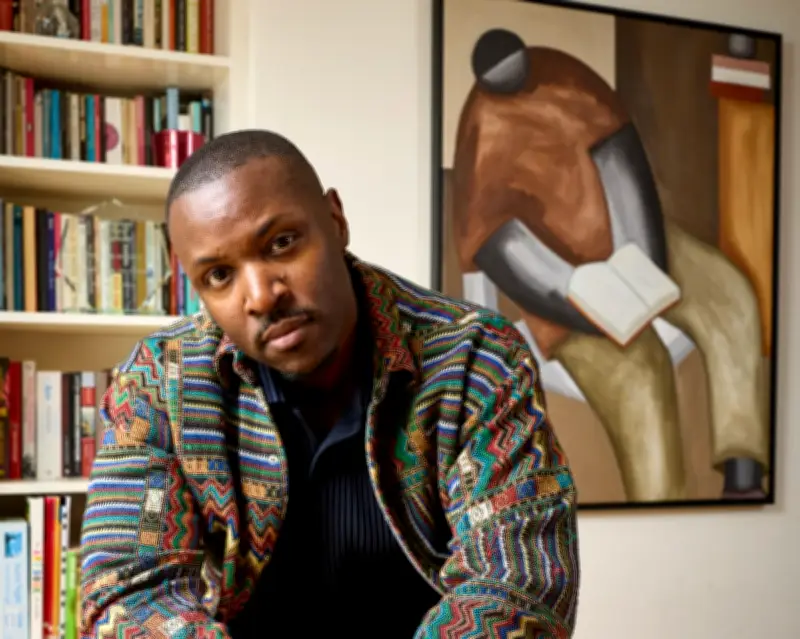
Symeon Brown's new book, The Good, the Black and the Boujee, is the result of interviews with about 1,500 members of Britain's black middle class. It argues that class is the 'elephant in the room' in conversations about race, and that the black Britons who come closest to power are disproportionately middle class. Brown, a Channel 4 News correspondent, says that 'to be black in Britain is so often to be assumed to be working class', masking the reality of a growing black professional class.
From Tottenham to the top: a tale of two classmates
Brown and David Lammy attended the same primary school in Tottenham. Lammy went on to become a cabinet minister, while Brown became a journalist. In 2010, Lammy told Brown he could 'never become prime minister, because you sound like where you come from'. Brown recalls this as a pivotal moment, illustrating how class shapes opportunities.
The book explores the tension between the unprecedented visibility of black Britons in politics and culture, and the persistence of structural inequalities, highlighted by Black Lives Matter protests and the toppling of Edward Colston's statue. Brown argues that the success of figures like Kemi Badenoch, Stormzy, and Daniel Kaluuya is real, but a handful of people crossing class boundaries is not the same as collective progress.
Class, not race, is the missing link
Brown's research reveals that class has been consistently missing from conversations about race. He found that black Britons are often assumed to be working class, which masks the fact that those who achieve prominence are often middle class. This assumption, he says, has prevented a reckoning with the role of class in black British life.
Some 'bona fide black elites' were unhappy about the book, with some refusing to participate. Brown says they feared it would be an exposé. He acknowledges that being black and middle class is not the same as being white and middle class, but insists that 'it doesn't mean that we shouldn't interrogate it'.
The fragmented nature of the black middle class
Brown notes that the middle class itself is fragmented, with varying social, economic, and political capital. In politics, he points out that black politicians often have to have more elite credentials than white candidates. He cites Lammy, who attended a selective school and Harvard Law School, and Kwasi Kwarteng, who went to Eton and Oxbridge.
Among black professionals Brown surveyed, almost one in four had attended a fee-paying school, and 72% of those had their fees paid by their parents. This challenges the popular image of the scholarship kid and underscores the role of family wealth in educational advancement.
Representation has been 'unsatisfying'
Brown argues that representation has been the end goal, but it has been unsatisfying. He points to the muted response among some black voters to Lammy's departure from government as evidence of the limits of symbolic progress. He also criticizes the co-option of black Britain by corporate and individualist ideals, which he says has replaced the radicalism of his parents' generation.
Brown also addresses online debates about 'proximity to whiteness' and dating patterns, arguing that class is often the primary factor. He found that black women are more likely to be middle-class professionals than black men, and many struggle to find partners who match their class status.
A 'multi-class' identity
Brown describes himself as 'multi-class', noting that he will never be read as middle class because of his accent. He is part of an emerging black professional class that embraces black cultural products, from Detty December in Nigeria to Paris's Fête de la Musique. However, he acknowledges that this cultural flourishing exists alongside a large black working class that remains disenfranchised, as seen in unresolved Windrush cases.
Brown argues that black Britain has become more stratified, even as it is often treated as a single group. He also criticizes the political focus on the 'white working class', which can pit struggling groups against each other rather than fostering solidarity.
The middle-class bargain is falling apart
Finally, Brown notes that the economic foundations of middle-classness are shifting, with wage stagnation and rising costs making the category less secure. 'If we think about what it means to be middle class, whatever your race, at this moment in time,' he says, 'it means to be poorer, less influential, and doing work of lesser stature than 30 years ago.'
The irony, he concludes, is that just as black Britain has developed a sizable middle class, the middle-class bargain itself is beginning to fall apart.