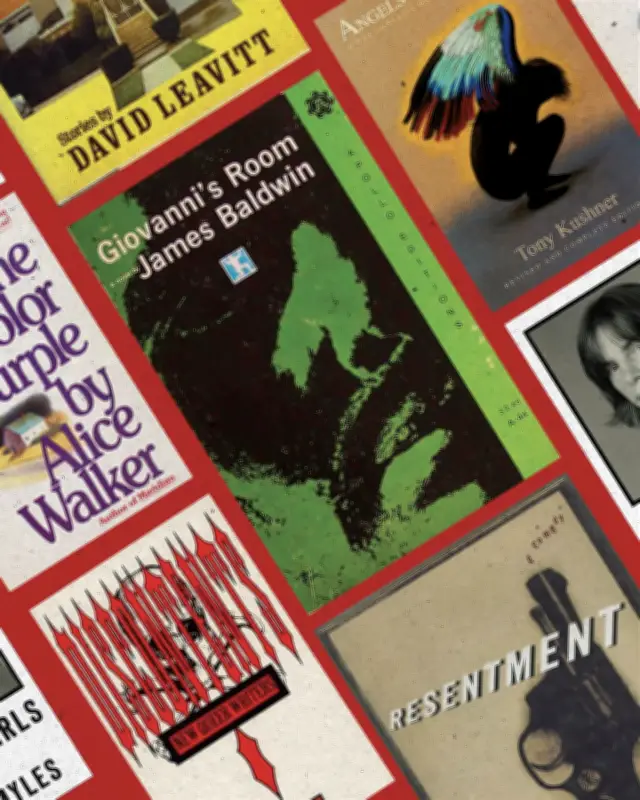
The Guardian asked nearly two dozen leading queer writers to select their favorite LGBTQ+ book from the United States, in celebration of Pride month and the upcoming 250th anniversary of America. The choices range from 20th-century classics to little-known treasures, reflecting the diversity of queer American life.
Sarah Schulman on The Heart Is a Lonely Hunter by Carson McCullers
Sarah Schulman praises Carson McCullers' debut novel, published in 1940, for its queer and trans characters and its depiction of working people's rights. McCullers, who changed her name from Lula Carson Smith and wore suits, transgressed gender and the color bar. Schulman notes that McCullers won a scholarship to Juilliard but gave her money to a female sex worker and returned home. She married fellow writer Reeves McCullers, and the two had a tumultuous relationship. McCullers died at age 50, mirroring the struggles of Tennessee Williams and Truman Capote. Schulman still reads McCullers with wonder.
Michael Cunningham on The Sun Also Rises by Ernest Hemingway
Michael Cunningham calls this the least widely acknowledged queer novel in American literature. It tells the story of Jake Barnes, an American impotent from war wounds, and Lady Brett Ashley, an Englishwoman who wears men's sweaters and has her hair brushed back like a boy's. Cunningham argues that the love story between Brett and Jake is about the Q in LGBTQ+, insisting that queer applies to all sorts of writers and characters. He hopes the distinction between LGBTQ+ and serious writers retires by 2026.
Robert Glück on The New American Poetry Edited by Donald Allen
Robert Glück found this anthology in the 1960s, when homosexuality was considered a crime and a disease. The book shaped postwar American poetry into schools, with almost 30% of the 44 poets being queer. Glück discovered Philip Whalen, Robert Duncan, John Ashbery, and Frank O'Hara, among others. The book fell apart from use, and later Glück became friends with some of these poets and with editor Donald Allen, who published a book on his Grey Fox imprint.
Bryan Washington on Light From Uncommon Stars by Ryka Aoki
Bryan Washington describes this novel as defying description: a deal with the devil, a damned violinist, a teenage trans runaway, and a queer love story with interstellar refugees. It is a love letter to California, doughnuts, found families, and the costly choices marginalized communities make. Washington praises Aoki's prose as some of the most gorgeous in English.
Melissa Febos on Chelsea Girls by Eileen Myles
Melissa Febos recalls reading this book as a young teenager, living in a small Massachusetts town and not knowing anyone gay under 35. Myles' New York read like a dream sequence, with drinking, danger, and erotic fun. Febos clung to the line, 'With a woman I felt whole, not different,' as proof that she could aspire to be an artist, a mess, a lover.
Kaveh Akbar on Feeld by Jos Charles
Kaveh Akbar compares Charles' work to Paul Celan translating German using German. Charles, educated as a musician and medievalist, strips English down and reconfigures it into a new pidgin of pre-Chaucerian Anglo-Saxon and millennial text-speak. Akbar calls it a work of genius, a trans poet de- and re-constructing a language that never anticipated a life like hers.
Imogen Binnie on Period by Dennis Cooper
Imogen Binnie found this novel while working at The Strand bookstore in New York. She was immediately obsessed with Cooper's depiction of dazed, blunted queerness in the George Miles Cycle. Binnie says Cooper's depiction of deeply inarticulate young people driven by overwhelming needs made it possible for her to become a person. She credits Cooper with saving her life.
Brontez Purnell on The Bell Jar by Sylvia Plath
Brontez Purnell, a depressed gay Black boy in Alabama, was given this novel by his English teacher. He adopted it as a queer novel about social isolation, suicidal ideation, and hope. Purnell notes that Plath lost her battle with reality and committed suicide just before the cosmic shift that made her plight more apparent. He hopes his books will do something similar and that he lives to see it.
Samuel R Delany on Giovanni's Room by James Baldwin
Samuel R Delany recalls reading this 1956 novel, where narrator David has a passionate sexual relationship with a bartender named Giovanni in Paris. David struggles with guilt and failing as a 'real man.' Giovanni is arrested and executed for murder. Delany notes that in one scene, characters have breakfast at Les Halles, and when he got to Paris, he did the same with friends before Les Halles was torn down in 1973.
Andrea Lawlor on Discontents: New Queer Writers Edited by Dennis Cooper
Andrea Lawlor purchased this 1992 anthology at A Different Light in New York. It gathered over 50 writers, including New Narrative greats, dyke novelists, zinesters, cartoonists, literary gays, and sex writers. Lawlor used the contributor bios as a reading list and calls it an essential time capsule now out of print, blaming capitalism.
Kay Gabriel on Counternarratives by John Keene
Kay Gabriel describes this collection as 13 movements animating 500 years of life in the Americas. Keene inhabits layer after layer of social and political consciousness, showing queer sexualities emerging as conditions change. Gabriel wishes she could read it again for the first time.
Hilton Als on Lesbian Nation by Jill Johnston
Hilton Als praises Johnston, who started as a dancer and wrote for the Village Voice. Her writing was like dancing: sinewy, turning in circles. Johnston argued for lesbian separatism and self-determination. Als calls her brilliant, outrageous, and uncompromising, and says he loved her.
Rumaan Alam on Family Dancing by David Leavitt
Rumaan Alam found this debut story collection at a used bookstore as a teenager. Leavitt had snuck homosexuality into the New Yorker. Alam was shocked to read a story where the protagonist understands his gayness at age 12 and has a supportive mom. The title says it: family is Leavitt's subject, and Alam found it revolutionary that an American family might include a gay guy.
Jordan Tannahill on Angels in America by Tony Kushner
Jordan Tannahill calls this eight-hour play a reckoning with the AIDS crisis under Ronald Reagan. Kushner tackled American mythologies of faith, capital, and identity, while keeping the play human-scaled and filled with humor. Tannahill says it reminds him of the miracle of great art: its political and moral force, its capacity for the transcendent.
Davey Davis on Resentment: A Comedy by Gary Indiana
Davey Davis describes this novel as a reverse roman à clef about a murder trial resembling the Menendez brothers. Indiana's hilarious, terrifying, and erotic novel anticipates contemporary American life. Davis reads it for the furious integrity smuggled in its core.
Wayne Koestenbaum on Stage Fright: Plays from San Francisco Poets Theater by Kevin Killian
Wayne Koestenbaum praises Killian, who held San Francisco together. Killian's plays, written for San Francisco Poets Theater, thrive on lunatic juxtapositions. In Island of Lost Souls, characters include Jack Kerouac, William S Burroughs, and Julie Andrews. Koestenbaum calls Killian a principled absurdist who uncovers a sweet-tempered core within literary anarchy.
Daniel Lefferts on The Shards by Bret Easton Ellis
Daniel Lefferts says Ellis's novel is a coming-of-age story, slasher thriller, and ethnography of 1980s Los Angeles. It follows a closeted gay teen named Bret during his senior year, as a serial killer murders local teenagers. Lefferts calls it a blood-splattered epic of homosexual resentment and longing.
Eileen Myles on A Woman Is Talking to Death by Judy Grahn
Eileen Myles describes this 1973 poem as a dark, complicated chant that indicts America's military, lethal racism, and the danger in love between women. It recounts Grahn's experience of being drummed out of the military for being a dyke. Myles says it should be taught in schools across the country.
Kyle Carrero Lopez on Inheritance by Taylor Johnson
Kyle Carrero Lopez calls this debut poetry collection a high-caliber lyric beauty from a Black, trans perspective. The poems are meditative, sensual, and cerebral, investigating essential questions of being. Lopez believes it can stand as a classic of early 21st-century poetry.
Jordy Rosenberg on Return to Nevèrÿon series by Samuel R Delany
Jordy Rosenberg calls this four-volume series the Das Kapital of 20th-century US fiction. It allegorizes deindustrialization, finance capital, the AIDS epidemic, and racism through a slave rebellion led by a homosexual liberator. Rosenberg says it is demanding, life-altering, and gorgeously filthy.
Danez Smith on The Color Purple by Alice Walker
Danez Smith says this novel shows the transformational power of queerness. When Shug Avery kisses Celie, everything in her life queers and opens. Smith notes that the novel has inspired two Oscar-nominated films and a Tony-winning play, and that Walker wrote the hell out of that book.
Rita Mae Brown on Becoming a Man by Paul Monette
Rita Mae Brown says Monette's autobiography reveals the depth of self-loathing and repression. Monette won the National Book Award in 1992. Brown quotes insights like 'privacy is essentially benign while secrecy is not.' She says his pain drips on every page, and readers will feel his freedom and acceptance of self.
Chukwuebuka Ibeh on Memorial by Bryan Washington
Chukwuebuka Ibeh calls this debut novel a shimmering, generational achievement. It follows a couple whose relationship strains when one loses his father and flies to Japan, while his mother stays with his partner. Ibeh says it is a timeless portrait of family, love, and self-alienation with a shattering finale.