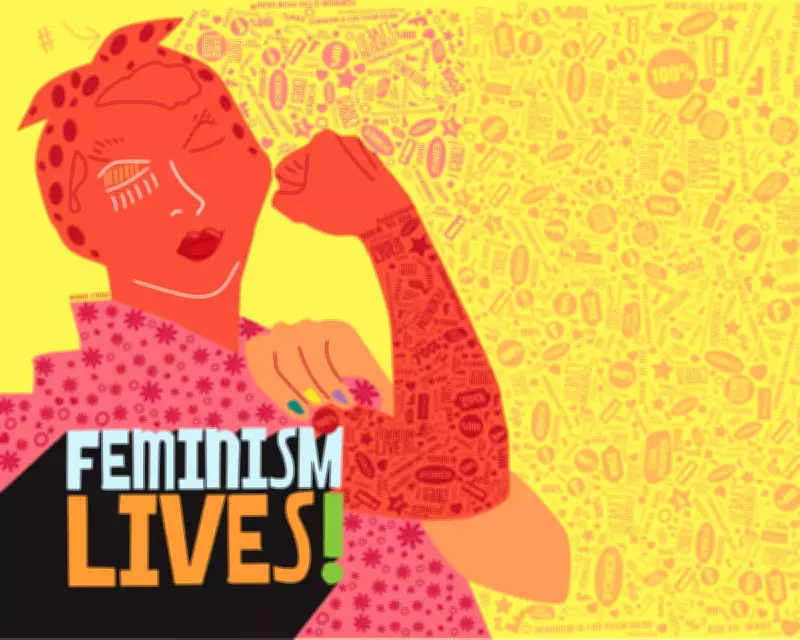
Feminism's Resilience: Why Reports of Its Death Are Greatly Exaggerated
Feminism is far from dead, yet people persistently write its obituary. Over the decades, I have witnessed countless premature death announcements, with a recent surge fueled by misconceptions. These declarations often stem from two flawed assumptions that distort the reality of the women's movement.
The Flawed Assumptions Behind Feminist Obituaries
The first assumption is that we have reached the end of the story, where a final verdict on feminism can be rendered. In this view, sixty years after the 1960s feminist surge, the process should be complete, and if total victory hasn't been achieved, then failure is inevitable. This perspective is naively defeatist, ignoring that millennia of patriarchy entrenched in law, culture, and economics cannot be dismantled in a single lifetime.
The second assumption is that isolated events can serve as weathervanes for feminism's failure. Recent popular candidates include the overturning of Roe v Wade in 2022, the #MeToo movement, and the Epstein files. However, these are often misinterpreted without considering broader global contexts and incremental progress.
#MeToo: A Catalyst for Tangible Change
When assessing #MeToo, it is crucial to recognize it was not a sudden deus ex machina event. It emerged from years of feminist upheaval, building on earlier work to educate the public about the pervasiveness of gender violence. This movement challenged stereotypes that protected abusers and fostered editorial willingness to expose figures like Harvey Weinstein.
The impact has been profound but often overlooked. Prior to #MeToo, only three U.S. states had passed anti-harassment reforms. Since 2017, 70 workplace anti-harassment laws have been enacted across 40 states, with over 3,000 pieces of legislation influenced by the movement. A 2021 nationwide law ended forced arbitration for sexual assault and harassment, granting victims court access. These legislative changes enhance accountability and protection, though they rarely make headlines due to their complex, incremental nature.
Obituary writers frequently declare #MeToo a failure whenever high-profile abuse cases surface, ignoring that increased reporting and prosecutions may result from these very shifts. The most significant impact of #MeToo is akin to environmental victories: the crimes prevented, the abuse not committed because perpetrators face greater risks. High-profile convictions, such as those of Weinstein, Danny Masterson, R Kelly, and Sean Combs, serve as warnings in a society now more willing to listen to victims.
The Epstein Files and Broader Feminist Progress
The Epstein files, stemming from Julie K Brown's investigative journalism, continue to expose elite complicity and terminate reputations. This ongoing revelation underscores that #MeToo's influence persists, educating the public on an ideology where some are deemed too important to hold accountable. Notably, men like congressmen Thomas Massie and Ro Khanna have actively campaigned for file releases, reflecting broader engagement beyond women's work.
To understand feminism's journey, one must recall how much has changed. Decades ago, queer people were nearly invisible due to criminalization and stigma. Today, visibility has increased through relentless advocacy, with public figures from Elton John to Leo Varadkar normalizing LGBTQ+ identities. This transformation highlights that progress is possible through sustained effort.
Reproductive Rights and the Backlash
The overturning of Roe v Wade is often cited as a feminist setback, but a global perspective reveals expansion in countries like Ireland, Spain, Mexico, and Argentina. Over the past 30 years, 60 countries have broadened abortion rights, while only four, including the U.S., have narrowed them. In the U.S., only 13 states have banned abortion entirely, affecting less than 30% of women, with others strengthening reproductive rights.
This struggle is ongoing, amid a backlash fueled by punitive rage and racist anxieties. However, public opinion favors abortion rights, with nearly two-thirds of Americans supporting legal access and over three-quarters of those under 30 agreeing. Laws contradicting such sentiment are unlikely to endure permanently.
The Gender Revolution and Ongoing Challenges
Feminism has catalyzed a gender revolution, gradually equalizing roles in public and private spheres. Women have entered the workforce, while men increasingly participate in domestic life. Studies show that in the 1960s, married women did seven times more housework and four times more childcare than their husbands. Today, women do twice as much, indicating progress albeit incomplete.
Parenting norms have shifted dramatically, with fathers spending more time with children and redefining fatherhood beyond the breadwinner-disciplinarian model. Same-sex households further challenge gender inequality templates, threatening patriarchal orders.
Conclusion: The Middle of the Story
We are in the middle of a long journey toward equality, with feminism driving profound changes. While the manosphere and online misogyny pose threats, most men have embraced feminist principles, often unconsciously. The key is to remember past injustices, from the shaming of figures like Britney Spears to restricted reproductive rights, to appreciate how far we have come.
Feminism's achievements over 60 years are immense but risk being forgotten. Every step forward has required work, struggle, and education. As a witness to dizzying transformation, I urge continued effort. Do not stop now; the story is far from over, and the fight for equality remains well worth pursuing.