The Cambridge Dictionary has officially declared 'parasocial' as its Word of the Year for 2025, highlighting a phenomenon millions will recognise but may not have had a name for.
What Does Parasocial Mean?
The term is defined as relating to a one-sided connection that an individual feels towards a famous person they have never actually met. This announcement was made on Tuesday 18 November 2025.
Have you ever felt a strange familiarity with television presenter Alan Carr, speculated on Taylor Swift's next move, or thought you could predict Donald Trump's actions? If so, you've experienced a parasocial relationship.
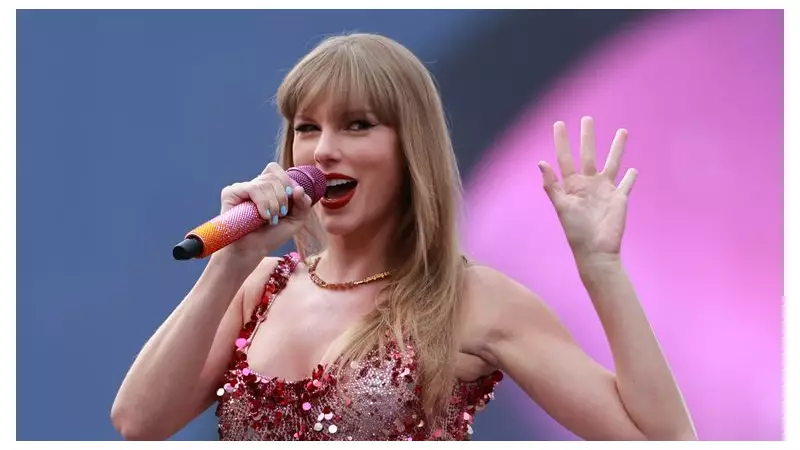
Psychologists have extensively studied how these one-sided connections are reshaping modern concepts of fame, fandom, and celebrity. A prime example cited was the public reaction to pop superstar Taylor Swift and American footballer Travis Kelce's engagement announcement. Countless fans reported feeling a powerful, personal connection to the couple's joy, despite the vast majority having no real-life interaction with them.
The Growing Impact of Parasocial Bonds
This phenomenon is not limited to traditional celebrities. The parasocial relationships forming between the public and online influencers, or even AI chatbots, represent a rapidly expanding trend in how people connect.
Remarkably, many individuals now place a higher value on these imagined relationships than on some of their real-world interactions. A 2024 study revealed that while friends and family still best meet emotional needs, parasocial relationships with YouTubers were valued more highly than connections with casual acquaintances or work colleagues.
Colin McIntosh from the Cambridge Dictionary noted the term's journey into the mainstream. "What was once a specialist academic term has become mainstream," he stated. "Millions of people are engaged in parasocial relationships; many more are simply intrigued by their rise." This public fascination was confirmed by a significant spike in searches for the word on the dictionary's website.
A Historical Term with Modern Dangers
The word 'parasocial' itself is not new; it dates back to 1956. It was coined by two University of Chicago sociologists who observed television viewers forming attachments to on-screen personalities that mirrored their relationships with real friends and family.
Simone Schnall, a Professor of Experimental Social Psychology at the University of Cambridge, issued a warning about the modern iteration of this trend. "We've entered an age where many people form unhealthy and intense parasocial relationships with influencers," she said.
She explained that this leads to an illusion of intimacy and trust, fostering extreme loyalty towards someone who is completely unaware of the admirer's existence. "Yet it's completely one-sided," she emphasised.
Professor Schnall linked this trend to a breakdown in trust towards mainstream media, causing people to turn to individual personalities as authoritative figures. After consuming hundreds of hours of their content, viewers begin to see these personalities as friends, family, or even cult leaders.
She also highlighted that the rise of AI tools like ChatGPT, which people often treat as a companion, adds a new, complex dimension to parasocial relationships. "This is an illusion of a relationship and group think, and we know young people can be susceptible to this," she cautioned.
These relationships carry other risks, primarily through constant social comparison. Following a curated version of someone else's life can lead to the development of unhealthy ideals and unrealistic expectations for one's own life.
Other Notable New Words
The Cambridge Dictionary also added several other new words to its pages this year, capturing the spirit of the times. These include:
- 'delulu': A slang term playfully derived from 'delusional'.
- 'skibidi': A nonsensical, viral gibberish word.
- 'tradwife': An abbreviation for 'traditional wife'.
- 'slop': Refers to very low-quality online content, particularly that generated by AI.
- 'memeify': The act of turning an event, image, or person into a widely shared internet meme.