George Bennett, a transformative figure in international broadcasting, has passed away at the age of 91. His remarkable career, which spanned over two decades, left an indelible mark on the BBC's coverage of Africa, pioneering practices that continue to influence global journalism today.
Early Career and Rise at the BBC
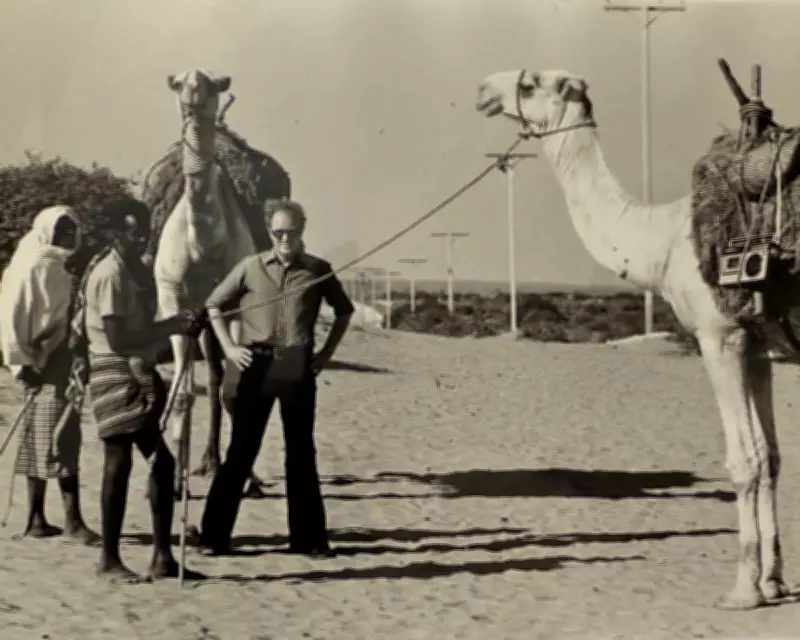
In 1963, Bennett responded to an advertisement for a talks writer in the African section of what was then known as BBC External Services, later rebranded as the World Service. This opportunity launched his 26-year tenure in broadcasting to Africa, with the final 13 years spent as head of the BBC's output to the continent in English, Swahili, Hausa, and Somali.
Revolutionizing African Coverage
Bennett possessed a unique talent for identifying and nurturing skilled individuals to produce compelling radio programmes. During the 1970s and early 1980s, production staff in the African Service were dissatisfied with the Bush House newsroom's reporting on Africa. In response, Bennett spearheaded the recruitment of a dedicated team of stringers for the English-language daily news programmes, Focus on Africa and Network Africa.

This innovative approach fundamentally transformed the service's output, setting a precedent for the entire BBC. Today, the corporation predominantly relies on African journalists to report on the continent, a direct legacy of Bennett's visionary leadership.
Unprecedented Audience Reach
Under Bennett's guidance, the African Service achieved extraordinary success in audience engagement. Annual surveys conducted during his leadership revealed that the service had the greatest reach when comparing audience sizes to populations. In Africa, a higher proportion of the population tuned into BBC radio weekly than on any other continent, with the exception of the Pashto service broadcast to Afghanistan.
Notably, in some regions of northern Nigeria, the daily reach of BBC radio occasionally surpassed that of any area in the UK, underscoring the profound impact of Bennett's work.
Post-Retirement Contributions
Following his early retirement in 1989, Bennett dedicated more than 20 years to various projects across Africa. His post-BBC endeavors included overseeing the United Nations' press operation in Somalia in 1992, managing radio stations in Liberia and Sierra Leone, and providing training for the Red Cross and Red Crescent organizations.
Personal Life and Background
Born in Devonport, a suburb of Auckland, New Zealand, Bennett was the son of George, a British naval officer, and Edna, a farmer's daughter. The family relocated to the UK in 1936 and never returned to New Zealand. During World War II, Bennett saw his father infrequently and lived with his mother and relatives in Bristol or in rented accommodations.
He attended Colston's school in Bristol, now renamed Collegiate school, and earned a state scholarship to St Catherine's College, Oxford, where he studied English. Bennett completed his national service with the Royal West African Frontier Force in Nigeria.
In 1966, he married Georgina Codjoe, a Ghanaian general practitioner, with whom he had a son, Jeremy. The couple divorced in 1976. The following year, Bennett married Pramila Ramgulam, a Mauritian sociologist, and they had three children: Indrani, Kieran, and Jonathan.
He is survived by Pramila, his four children, and eight grandchildren, leaving behind a legacy that extends far beyond his professional achievements.